
Transport
Future Flying
Is Electric Aviation the Answer? Here's What's Coming
Aviation connects the world, but planes still rely on fossil jet fuel, producing CO2, contrails, and other climate-warming emissions. So can humans clean up flight without giving up long-distance travel? Electric aircraft, sustainable aviation fuels, synthetic e-fuels, green hydrogen and smarter aircraft designs are all part of the race to make zero-carbon flight possible.
(Illustrated guide coming soon)
1.8overall
How this solution scores
- Impact3 / 5Aviation is a small share of emissions but one of the hardest to remove.
- Speed2 / 5Efficiency helps now, but clean fuels and new fleets take decades.
- Cost1 / 5Sustainable jet fuels cost far more than normal kerosene.
- Readiness1 / 5Efficient planes exist, but clean fuels and electric aircraft are a long way off.
- Nature2 / 5SAF feedstocks compete for land, and contrails add warming.
Quiz
Question 1 of 10
Roughly how much of global warming is aviation responsible for?
Score 0 / 10
Transcript
Humans have always dreamed of flying, and while many attempts were made, nature usually had other gravity-based ideas [1-4]. But finally, thanks to a combination of sheer stubbornness and a concerning disregard for personal safety, brothers Orville and Wilbur Wright cracked the code in 1903 [5].
Unfortunately, defying nature comes with a cost…
The pollution pumped out by planes is responsible for around 4% of global warming [6,7,8].
Clearly, solutions are needed.
Today, most planes burn a fossil fuel called kerosene [9,10]. The trouble is burning all that kerosene pumps out about a billion metric tons of CO2 every year [11-14], plus nitrogen oxides and other pollutants that can be even worse for the climate than CO2, especially at high altitudes [10,12,15,16].
Take soot and water vapor, for example. Together, they form contrails (those wispy lines behind planes). In some conditions, these can also trap heat [17,18].
So while CO2 from flying makes up less than 2% of global warming, the total impact of all aviation emissions is around 4% [6,7,8]. And with air travel set to double by 2050, it’s quickly becoming a bigger problem [19,20,21].
So what to do?
Well, several advancements are driving the shift to cleaner skies.
Following in the footsteps of the Wright brothers, engineers have been making planes slicker, lighter, and more efficient [22]. For example, most modern aircraft already use curved winglets to cut drag and save up to 5% in fuel [23,24,25].
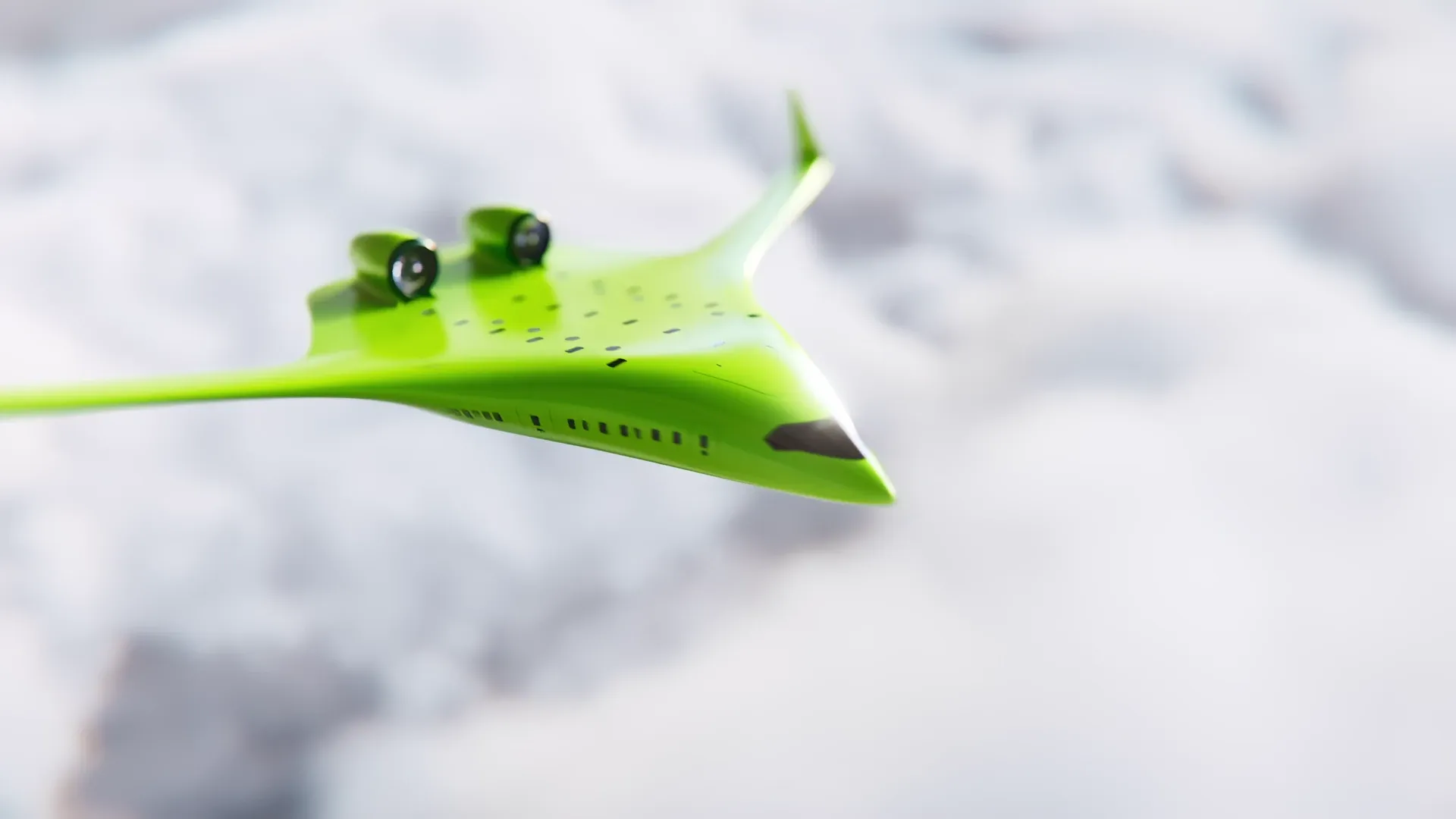
But why stop there? Box wing configurations can slash fuel use by up to 22% and are being planned for the 2030s [26-30], while blended wing designs could cut fuel use by as much as 30% and enter service within a decade [31-35].
And that’s just the outside of the plane…
By upgrading old engines to the latest designs, airlines are cutting emissions by as much as 15-25% [11,22,36,37]. Many aircraft companies are now using lightweight carbon composites [11,37-40] and 3D-printed parts in everything from engines to airframes to make their planes lighter than ever [41-48].
And it's not just airframes that can be slimmed down: With better planning and logistics, flight paths can be streamlined for greater efficiency to cut 10% off emissions without even touching the design [49-53]. The result? Less fuel burned and lower emissions in the sky.
But why travel by air at all?
Advances in high speed rail make long-distance travel cleaner, cheaper, and more comfortable than ever [54,55,56]. In fact, for distances up to 800 km, high speed rail is even quicker than flying! [57-60] It’s estimated that in Europe, 20% of short-haul flights could be replaced by high speed rail [57,61,62,63].
Curbing demand by going digital presents another easy solution. The COVID-19 pandemic proved that video conferencing, remote work, and virtual collaboration can connect people and businesses without the need to fly at all [64,65,66].
For when flying is necessary, many airlines use carbon offsetting schemes to cancel out carbon emissions [67,68,69]: by planting trees, using Direct Air Carbon Capture (DAC), or funding renewable energy.
The trouble is the environmental impact of all these offsets has been tiny compared to that of flying:
- Trees take decades to grow.
- Direct Air Capture of CO2 shows promise but is still expensive and operates at too small a scale to make a difference.
- Funding renewables does nothing to address aviation’s emissions directly [69-73].
So to truly clean up the skies, planes need a new power source!
It might seem obvious to copy cars and swap fuel for batteries, but modern batteries can weigh up to 50 times more than jet fuel for the same energy output! So a full-sized electric passenger jet would struggle to leave the runway, let alone cross the Atlantic [74-79].
Instead, electric propulsion would work best for small aircraft and shorter journeys [80]. In fact, the first experimental electric planes are already flying in the USA, UK, and China [81-85]. Batteries can also be paired with traditional engines in experimental hybrid setups [77,79]. These planes might one day travel over 1,000 kilometers [86,87,88].
And with batteries getting cheaper and more powerful, fully electric commercial passenger planes are on track to fly short journeys of under 500km within a decade [89-93].
Unfortunately, medium and long-haul flights are responsible for the majority of aviation's emissions. They probably won’t be able to go electric until at least 2090, so humans still need other solutions [14,74,75,94].
Enter Sustainable Aviation Fuel, or SAF. These carbon-neutral fuels work in today’s engines without needing any significant modifications [95-98].
So what’s the catch?
Well, the most common types are biofuels. These can be made from plants, but growing these plants unsustainably can take up farmland [99,100,101].
Today, these fuels account for less than 1% of aviation fuel [102-105], so scaling up production could mean choosing between food and fuel. If handled badly, it could even lead to deforestation, releasing carbon and defeating the whole purpose of using it! [10,106,107,108]
Safeguards are being put in place to reduce the impact on food [109-114], but a much more promising option is to use sustainable, non-food sources like seaweed, microalgae, or even used cooking oil [11,115,116].
In fact, European airlines are already turning to SAFs made from recycled fats and cooking oils. Together, these make up around 55% of their planned supply of sustainable fuels [117,118]. And biofuels made from microalgae have received major investment in the USA and have been successfully tested in Japan [119,120,121].
Another option is green hydrogen. Made using renewable electricity to split hydrogen from water, green hydrogen is a clean-burning wonder fuel that leaves nothing behind but water vapor [122,123]. Not only does it eliminate CO2 entirely, but it can reduce harmful nitrogen oxides by around 86% as well [124].
So what are the drawbacks?
Well, even hydrogen creates contrails, those streaky clouds that can annoyingly trap heat [124]. Storing and transporting it is also quite tricky, requiring high-pressure tanks or supercooled liquid storage [122,125,126].
Even so, aircraft companies are racing to develop the hydrogen planes of the future, and the renewable electricity needed to make hydrogen is growing fast [127-130]. If all goes to plan, hydrogen planes could be here as early as 2035 [131-134].
But that’s still a long wait. Is there any way to use green hydrogen now, in existing planes?
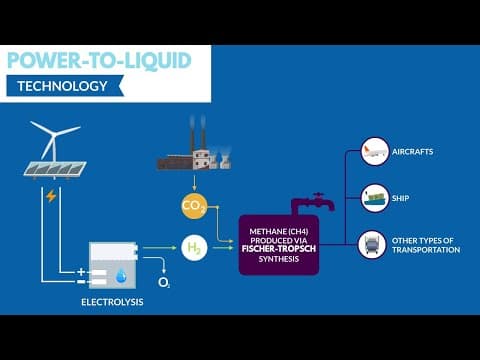
Yes! Green hydrogen can be combined with captured carbon from the air (at a ratio of 3 to 1) to create a synthetic sustainable aviation fuel, known as Power-to-Liquid or e-SAF [135-139]. This can be used in today’s planes without modification [94,140-143]. It's already being used in test flights and could be scaled up significantly over the next decade [140-147].
It’s estimated that e-SAF will make up more than 50% of all sustainable aviation fuel by 2050, helping to keep emissions down before true hydrogen planes really take off! [148]
Zero-carbon flight is an essential and inevitable part of the green energy transition. It might take time, but given it took just 44 years for humans to go from the first powered flight to breaking the speed of sound, they are more than capable of rising to the challenge! [149,150,151]
With the International Air Transport Association and the UN’s International Civil Aviation Organization both targeting net-zero by 2050, the race is on! [152-155]
The world’s airlines are taking strides toward better fuel efficiency: Sustainable fuels and green hydrogen production are being scaled up, and next-generation batteries are developing fast [156-160]. So with technology accelerating, momentum building, and a policy framework to support it all, zero-carbon flight will be the next milestone in a long history of innovation.
It’s no longer a question of if… it’s just a question of when!
Expert Advisors
3
We would like to thank
Haldane Dodd
Air Transport Action Group
Executive Director
Dr. Maximilian Held
H2Global Foundation
Chief Operating Officer
Dr. Candelaria Bergero
University of Wisconsin-Madison
Center for Sustainability and the Global Environment
Further Videos
22 links
These resources are non-affiliated.
Overview
Aircraft Design



Electric Aircraft
Sustainable Aviation Fuel (SAF)
 What is Sustainable Aviation Fuel?Airbus
 How do we make sustainable aviation fuel?Airbus
 How Spain is pioneering the use of cooking oil as airplane fuelDW News
 Can sustainable aviation fuel clean up flying?Financial Times
 Why Batteries Will NEVER Replace Jet FuelTwo Bit da Vinci
 How Jet Fuel Is Made From TrashWSJ
Hydrogen and E-fuels (Power-to-Liquid)
 Why Hydrogen-Powered Planes Will Beat Electric PlanesCNBC
 Why Hydrogen-Powered Planes Might Be InevitableBloomberg Originals
 Hydrogen: The Fuel That Could Power Your Next FlightWSJ
 What is Power-to-Liquid? The technology explained in a simple and short mannerAS-Schneider Group
 How are e-fuels produced?eFUEL-TODAY
Further Reading
33 links
These resources are non-affiliated.
Overview
- Aviation - MIT Climate Portal
- Aviation: Benefits Beyond Borders 2020 - Air Transport Action Group
- Aviation Carbon Emissions - Aviation Environment Federation
- Net zero 2050: new aircraft technology - IATA
- What share of global CO₂ emissions come from aviation? - Our World in Data
- Non-CO2 emissions and contrails, explained - Airbus
History
- 10 Bungled Personal Flight Attempts - HowStuffWorks
- Wright brothers | Biography, Inventions, Hometown, Plane, & Facts - Britannica
Solutions — Efficiency Upgrades
- Winglets Save Billions of Dollars in Fuel Costs - NASA Spinoff
- Box wing design for more efficient aircraft | PARSIFAL Project | Results in Brief | H2020 | CORDIS - European Commission
- Imagine travelling in this blended wing body aircraft - Airbus
- Destination Green: The Next Chapter - 2019 Environmental Report - ICAO (see pages 116-121)
- The Aircrafts of Tomorrow: Insights into Carbon Fiber Composites - BIS Research
- Aircraft, Rockets, and Satellites: 3 Uses of 3D Printing in Aerospace - Keypoint Intelligence
Solutions — Digital and Rail
- High Speed Rail Systems - The Geography of Transport Systems
- How fast are rail trips between EU cities and is rail faster than air? - European Commission
- The choice between business travel and video conferencing after COVID-19 – Insights from a choice experiment among frequent travelers - Tourism Management
Solutions — Carbon Offsetting
- Aviation Carbon Offsetting - Guidelines for Voluntary Programs - IATA
- Can aviation offset carbon emissions? - Aviation: Benefits Beyond Borders
Solutions — Electric & Hybrid Aircraft
- Electric aviation: A review of concepts and enabling technologies - Transportation Engineering
- How Close Are We To Electric Planes? - Air Charter Service
- Hybrid planes could help the aviation industry decarbonize - World Economic Forum
- Performance Analysis of Regional Electric Aircraft - ICCT
- Which is more likely: electric airplanes or hydrogen-powered airplanes? - MIT Climate Portal
Solutions — SAF
- Sustainable Aviation Fuel (SAF) - IATA
- Alternative Fuels Data Center: Sustainable Aviation Fuel - US Department of Energy
- Sustainable aviation fuel - Aviation: Benefits Beyond Borders
- Sustainable Aviation Fuels - European Parliamentary Research Service
- Sustainable aviation fuels (SAF) around the world - T&E
Solutions — Hydrogen & E-fuels (Power-to-Liquid)
- Sustainable hydrogen energy in aviation – A narrative review - International Journal of Hydrogen Energy
- Green hydrogen: A guide to policy making - IRENA
- Hydrogen-powered aircraft: Fundamental concepts, key technologies, and environmental impacts - Progress in Aerospace Sciences
- Power-to-Liquids, explained - Airbus
References
170 links
- [1] 10 Bungled Personal Flight Attempts | HowStuffWorks (see article for references)
- [2] Leonardo da Vinci's Aerial Screw Invention | Leonardo Da Vinci Inventions
- [3] Leonardo da Vinci's Flying Machine Invention | Leonardo Da Vinci Inventions
- [4] First Flights | Saudi Aramco World | Internet Archive
- [5] Wright brothers | Biography, Inventions, Hometown, Plane, & Facts | Britannica
- [6] What share of global CO₂ emissions come from aviation? | Our World in Data (cites [7,8]) (see Reference Notes*)
- [7] Quantifying aviation's contribution to global warming | Environmental Research Letters (see Reference Notes*)
- [8] The contribution of global aviation to anthropogenic climate forcing for 2000 to 2018 | Atmospheric Environment (see Reference Notes*)
- [9] Jet fuels JP4 & JP7 - Chemical and Physical Information | Agency for Toxic Substances and Disease Registry
- [10] Climate change | Aviation Environment Federation
- [11] Aviation: Benefits Beyond Borders 2020 | Air Transport Action Group (see Reference Notes*)
- [12] Using Carbon Credits for Air Travel | Carbon Offset Guide
- [13] Aviation | IEA
- [14] Making Net Zero Aviation Possible | Energy Transitions Commission
- [15] Study on planet-warming contrails “a spanner in the works” for aviation industry | Imperial College London (article on Operational differences lead to longer lifetimes of satellite detectable contrails from more fuel efficient aircraft | Environmental Research Letters)
- [16] The current state of scientific understanding of the non-CO2 effects of aviation on climate | Department for Transport
- [17] Explainer: The challenge of tackling aviation's non-CO2 emissions | Carbon Brief (see Reference Notes*)
- [18] Climate Action: Addressing Contrails | ATAG (see Reference Notes*)
- [19] Projected air traffic growth runs counter to climate goals, study says | Reuters (press release of [20])
- [20] Aviation industry plans for growth ‘irreconcilable’ with Europe’s climate goals | T&E
- [21] Forecasted evolution of air transport passenger traffic | IATA (graph taken from [154])
- [22] Net zero 2050: new aircraft technology | IATA (see Reference Notes*)
- [23] Winglets Save Billions of Dollars in Fuel Costs | NASA Spinoff
- [24] Why modern airplanes have winglets | CNN
- [25] How winglets work | MTU AEROREPORT
- [26] Box wing design for more efficient aircraft | PARSIFAL Project | CORDIS | European Commission
- [27] Innovative Box-Wing Aircraft: Emissions and Climate Change | Sustainability
- [28] Exploration Of Box-Wing Aircraft Concept Using High-Fidelity Aerodynamic Shape Optimization | ICAS
- [29] Box Wing Fundamentals - an Aircraft Design Perspective | DGLR
- [30] An Overview of Box Wing Aircraft Aerodynamics and Performance | SSRN Electronic Journal
- [31] The Rise of Blended Wing Body Aircraft Reshaping Sustainable Aviation | Luminary
- [32] Imagine travelling in this blended wing body aircraft | Airbus
- [33] Blended Wing Body Aircraft: The Future of Air Transport? | Engineering.com
- [34] A first look inside JetZero’s blended wing body | Aircraft Interiors International
- [35] Aerodynamic Design and Exploration of a Blended Wing Body Aircraft at Subsonic Speed | IJAAA
- [36] Destination Green: The Next Chapter - 2019 Environmental Report | ICAO (see pages 116-121) (see Reference Notes*)
- [37] The aviation industry wants to be net zero - but not soon | The Economist | BCAC (see Reference Notes*)
- [38] Why is Carbon Fiber Preferred for Aircraft Bodies? | DragonPlate
- [39] The Role Carbon Fiber Plays in Modern Aviation | Protech Composites
- [40] The Aircrafts of Tomorrow: Insights into Carbon Fiber Composites | BIS Research
- [41] Airbus had 1,000 parts 3D printed to meet deadline | BBC News
- [42] Boeing 777X's first flight with more than 300 3D printed parts | 3Dnatives
- [43] Recent 3D Printing Applications in the Aeronautics Sector | 3Dnatives
- [44] Finnair Updates A320 Cabins With 3D Printed Parts | Aviation Week Network
- [45] Aircraft, Rockets, and Satellites: 3 Uses of 3D Printing in Aerospace | Keypoint Intelligence
- [46] How the Aerospace Industry is Finding New 3D-Printing Use Cases for Old Aircraft Parts | Aviation Today
- [47] Aerospace | Markforged
- [48] 3D printing in aircraft | 3DGence
- [49] Minimising emissions from flights through realistic wind fields with varying aircraft weights | Transportation Research Part D: Transport and Environment
- [50] 4 Ways Airlines Can Reduce Their Carbon Footprint | i6 Group
- [51] Transition to low and zero emission aviation | Transport Scotland
- [52] Air Traffic Management and the Green Deal | European Commission
- [53] Reducing transatlantic flight emissions by fuel-optimised routing | Environmental Research Letters
- [54] How Much Does High-speed Rail Substitute for Air Travel? Implications for Transport, Environmental and Energy Policies | Hong Kong University of Science and Technology
- [55] The substitution of short-haul flights with rail services in German air travel markets: A quantitative analysis | Case Studies on Transport Policy
- [56] Effects of railway speed on aviation demand and CO2 emissions in China | Transportation Research Part D: Transport and Environment
- [57] How fast are rail trips between EU cities and is rail faster than air? | European Commission
- [58] High Speed Rail Systems | The Geography of Transport Systems
- [59] Breakeven Distances between Conventional Rail, High Speed Rail and Air Transportation | The Geography of Transport Systems
- [60] Modal Competition And Substitution: High-Speed Rail Versus Air Transport | ALG
- [61] Challenges in Replacing More European Short Haul Flights by Rail | Journal of Electrical Systems
- [62] Who Says There Is No Alternative? | RMT
- [63] The potential of rail to replace short-haul flights | UECNA
- [64] The choice between business travel and video conferencing after COVID-19 – Insights from a choice experiment among frequent travelers | Tourism Management
- [65] Reducing academic flying beyond COVID-19: Drivers, alternatives, and avenues for change | The Geographical Journal
- [66] Online conferencing in the midst of COVID-19: an “already existing experiment” in academic internationalization without air travel | Sustainability: Science, Practice and Policy
- [67] Aviation Carbon Offsetting | IATA
- [68] Our Carbon Offsetting | Air Charter Service
- [69] Can aviation offset carbon emissions? | Aviation: Benefits Beyond Borders
- [70] The cost of direct air capture and storage can be reduced via strategic deployment but is unlikely to fall below stated cost targets | One Earth
- [71] Cost of direct air carbon capture to remain higher than hoped | ETH Zurich (article on Considering technology characteristics to project future costs of direct air capture | Joule)
- [72] Low latency carbon budget analysis reveals a large decline of the land carbon sink in 2023 | National Science Review
- [73] How many new trees would we need to offset our carbon emissions? | MIT Climate Portal
- [74] Performance analysis of regional electric aircraft | International Council on Clean Transportation (see Reference Notes*)
- [75] How Close Are We To Electric Planes? | Air Charter Service (cites: Technological, economic and environmental prospects of all-electric aircraft | Nature Energy) (see Reference Notes*)
- [76] Powering the Skies: The Rise of Electric and Low-Carbon Aircraft | The Faraday Institution (see Reference Notes*)
- [77] Electric aviation: A review of concepts and enabling technologies | Transportation Engineering (see Reference Notes*)
- [78] Pathways to net-zero emissions from aviation | Nature Sustainability (see Reference Notes*)
- [79] Hybrid planes could help the aviation industry decarbonize | World Economic Forum (cites: Performance Metrics Required of Next-Generation Batteries to Electrify Commercial Aircraft | ACS Energy Letters) (see Reference Notes*)
- [80] Emissions reduction potentials in business aviation with electric aircraft | Transportation Research Part D: Transport and Environment
- [81] Commander, test pilots evaluate new electric aircraft | Air Force (see Reference Notes*)
- [82] Electric Alia begins flight testing at Eglin | AFRL (see Reference Notes*)
- [83] This AutoFlight eVTOL Just Sets a New Distance Record of 155 Miles | Robb Report (see Reference Notes*)
- [84] AutoFlight achieves world's longest eVTOL flight | Airport Technology (see Reference Notes*)
- [85] First all-British electric aircraft makes successful test flights | Cranfield University (see Reference Notes*)
- [86] Electric and Hybrid Aircraft Platform for Innovation (E-HAPI) | ICAO
- [87] Ampaire's Hybrid-Electric Demonstrator Performs 1,135-Mile Nonstop Flight | Aviation Today
- [88] Hybrid-Electric Aircraft Technology | Odys Aviation
- [89] Loganair Adds BETA Technologies ALIA CTOL Aircraft to Its Fleet, Following Successful Demonstrations in United Kingdom | BETA (further technical information: March 9, 2026 - 10-K: Annual report | BETA)
- [90] ES-30™ | Heart Aerospace
- [91] Elysian Aircraft
- [92] Germany: EIB advisory backs VÆRIDION to bring fully electric nine-seater regional aircraft to market | EIB and Electric flights are coming to Denmark | VAERIDION
- [93] Lithium-Ion Battery Pack Prices See Largest Drop Since 2017, Falling to $115 per Kilowatt-Hour | BloombergNEF
- [94] What to expect when expecting electric airplanes | International Council on Clean Transportation (blog post of [74])
- [95] Alternative Fuels Data Center: Sustainable Aviation Fuel | U.S. Department of Energy (see Reference Notes*)
- [96] Sustainable Aviation Fuel (SAF) | IATA (see Reference Notes*)
- [97] Sustainable aviation fuel | Aviation: Benefits Beyond Borders (see Reference Notes*)
- [98] Sustainable Aviation Fuels | European Parliament (cites: GFAAF | ICAO) (see Reference Notes*)
- [99] Increased Biofuel Production May Harm Farmers and Climate in the US Midwest | World Resources Institute
- [100] Environmental sustainability of biofuels: a review | Proceedings of the Royal Society A
- [101] The impacts of biofuel crops on local biodiversity: a global synthesis | Biodiversity and Conservation
- [102] What is sustainable aviation fuel? | Airbus
- [103] Sustainable aviation fuels | ReFuelEU Aviation
- [104] Sustainable Aviation Fuel ‘Facilitation Initiative’ | EASA
- [105] Are aviation biofuels ready for take off? | IEA
- [106] A global analysis of deforestation due to biofuel development | CIFOR
- [107] Massive soybean expansion in South America since 2000 and implications for conservation | Nature Sustainability
- [108] Sugarcane: Brazilian public policies threaten the Amazon and Pantanal biomes | Perspectives in Ecology and Conservation
- [109] Assessing the profitability of growing dedicated energy versus food crops in four European countries | ICCT
- [110] Dedicated crops for advanced biofuels: Consistent and diverging agronomic points of view between the USA and the EU‐27 | Biofuels, Bioproducts and Biorefining
- [111] Dedicated Energy Crop - an overview | ScienceDirect Topics
- [112] Biofuels - Energy System | IEA
- [113] The battle for biomass: A systematic review of food-feed-fuel competition | Global Food Security
- [114] Can biofuels policy work for food security | DEFRA
- [115] Microalgae biofuels: illuminating the path to a sustainable future amidst challenges and opportunities | Biotechnology for Biofuels and Bioproducts
- [116] Biofuel production from Macroalgae: present scenario and future scope | Bioengineered
- [117] SAF around the world | T&E (see pdf) (see Reference Notes*)
- [118] What is sustainable aviation fuel (SAF) and why is it important? | Air bp
- [119] Sustainable Aviation Fuel Produced from Waste Wood and Microalgae Supplied to Regular Flights | NEDO
- [120] ANA Conducted a Flight Using Sustainable Aviation Fuel Produced from Microalgae | ANA Group Corp.'s Information
- [121] From the Sea to the Sky: United Invests $5 Million in Algae-based Fuel Producer Viridos | Aviation: Benefits Beyond Borders
- [122] Sustainable hydrogen energy in aviation – A narrative review | International Journal of Hydrogen Energy (see Reference Notes*)
- [123] Green hydrogen: A guide to policy making | IRENA (see Reference Notes*)
- [124] The Emissions of Water Vapour and NOx from Modelled Hydrogen-Fuelled Aircraft and the Impact of NOx Reduction on Climate Compared with Kerosene-Fuelled Aircraft | Atmosphere (see Reference Notes*)
- [125] Hydrogen | MIT Climate Portal
- [126] Hydrogen-powered aircraft: Fundamental concepts, key technologies, and environmental impacts | Progress in Aerospace Sciences
- [127] Renewable energy highlights | IRENA
- [128] Massive global growth of renewables to 2030 is set to match entire power capacity of major economies today, moving world closer to tripling goal | IEA
- [129] Renewable Energy Progress Tracker – Data Tools | IEA
- [130] Renewable Energy | Our World in Data (cites: Statistical Review of World Energy - 73rd Edition | Energy Institute)
- [131] NAPKIN | Heathrow (archived) (see Reference Notes*)
- [132] Developing a global ecosystem to support hydrogen-powered flight | Airbus (see Reference Notes*)
- [133] Decarbonizing aviation: Making net zero possible | McKinsey (see Reference Notes*)
- [134] Airbus postpones development of new hydrogen aircraft | Reuters (see Reference Notes*)
- [135] Power-to-Liquids, explained | Airbus (see Reference Notes*)
- [136] Power-to-Liquids – A scalable and sustainable fuel supply perspective for aviation | German Environment Agency (see Reference Notes*)
- [137] Revolutionizing Aviation: Understanding The Transformative Power of Power-to-Liquid Fuels | 4AIR (see Reference Notes*)
- [138] Flexible conversion of CO2 and EE-H2 to middle distillate components by Fischer-Tropsch synthesis in microreactors using novel Fe catalysts (MikroFe) | DGMK (see Reference Notes*)
- [139] Carbonate-catalyzed reverse water-gas shift to produce gas fermentation feedstocks for renewable liquid fuel synthesis | Cell Reports Physical Science (see Reference Notes*)
- [140] Flight100 Executive Summary | Virgin Atlantic
- [141] Update on 100% SAF testing and recent achievements | ACT SAF | ICAO
- [142] Future Flight: Gulfstream G600 Achieves Transatlantic First on 100% Sustainable Fuel | PPI
- [143] United Flies World’s First Passenger Flight On 100% Sustainable Aviation Fuel Supplying One Of Its Engines | GE News
- [144] The D328 Uplift flying testbed becomes the first large aircraft to successfully fly with 100% synthetic zero aromatics fuels | Deutsche Aircraft
- [145] Sasol ecoFT and Deutsche Aircraft join forces to accelerate Power-to-Liquid (PtL) aiming for carbon-neutral flight | Aviation: Benefits Beyond Borders
- [146] Pathway to net zero aviation: Developing the UK sustainable aviation fuel mandate | T&E
- [147] The SAF Mandate: an essential guide | GOV.UK
- [148] Introducing Project SkyPower | Project SkyPower (see pdf) (see Reference Notes*)
- [149] Breaking the Sound Barrier: Chuck Yeager and the Bell X-1 | National Air and Space Museum
- [150] NASA Langley 100: Breaking the Sound Barrier | NASA
- [151] Research in Supersonic Flight and the Breaking of the Sound Barrier | NASA
- [152] ICAO’s 2050 net-zero CO2 goal for international aviation | ICCT
- [153] Resolution A41-21 | ICAO
- [154] Fly Net Zero | IATA
- [155] Net zero carbon 2050 resolution | IATA
- [156] Trends in batteries – Global EV Outlook 2023 – Analysis | IEA
- [157] Sustainable Aviation Fuels (SAF) | ICAO
- [158] SAF Volumes Growing but Still Missing Opportunities | IATA
- [159] Global Energy Perspective 2023: Hydrogen outlook | McKinsey
- [160] Hydrogen | IEA
Reference Notes
11
Total global warming impact of aviation emissions
Although carbon dioxide emissions from aviation account for less than 2% of the total contribution to global warming, the overall climate impact of flying is considerably larger. Aviation produced roughly 2.14% of total global CO₂ emissions in 2024 A,B (just under a billion metric tons), but aircraft also emit water vapor, nitrogen oxides, soot, and other particles and aerosols at high altitudes, where they interact with atmospheric chemistry and cloud formation in ways that trap both incoming solar radiation and re-emitted longwave radiation from the Earth which stops it from escaping, both of which amplify warming. Contrails and contrail-induced cirrus clouds, in particular, enhance the greenhouse effect by trapping infrared radiation (see reference note below for [17,18]), while nitrogen oxides lead to ozone formation, another greenhouse gas. When these non-CO₂ effects are combined with direct CO₂ emissions, the total radiative forcing from aviation is estimated to be about 3.4-4% of human-driven warming, making aviation’s climate footprint roughly double what its carbon dioxide emissions alone would suggest.
Note on the warming effect of contrails
Contrails are ice-crystal clouds formed by aircraft at cruising altitude, made out of condensation trails of water vapor (from fuel combustion and the surrounding atmosphere). Water vapor can condense onto aircraft aerosol emissions, such as soot (carbon) particles. These clouds are short-lived, but the colder and more humid the air is, the longer they persist.
These clouds can influence Earth’s energy balance in two opposing ways. During the day, their bright, reflective surfaces can scatter and reflect a portion of incoming solar radiation back into space, exerting a short-lived cooling effect by reducing the amount of sunlight that reaches the surface. At the same time, however, contrails act like thin cirrus clouds, efficiently absorbing and re-emitting longwave infrared radiation emitted from Earth’s surface. This process traps heat within the lower atmosphere, producing a net warming influence that is particularly pronounced at night, when the absence of incoming solar radiation means only the heat-trapping effect remains. Overall, the warming effect of contrails tends to outweigh their reflective cooling effect. However, the mechanisms behind this effect are still poorly understood, and research is constantly being conducted to further quantify the overall impact and the conditions required.
Upgrading Engines
The cited 15-25% figures generally describe the fuel-efficiency improvement of newer-generation aircraft and engine combinations over the aircraft they replace, rather than changing only the engine on an existing airframe. Results vary by aircraft class, route and operating conditions [11,22,36,37].
Batteries vs Jet Fuel
The “50 times” comparison contrasts energy stored per unit mass of current batteries with the chemical energy contained in jet fuel per kilogram. It is a useful raw fuel-mass comparison, rather than a complete propulsion-system comparison: electric motors are substantially more efficient than turbine engines, while battery packs also require casing and thermal management and retain their mass after discharge. The relative mass can therefore vary, although batteries still store far less usable energy for their weight, which remains the central limitation [74-79].
Capabilities of current electric aircraft
Flight tests of prototype electric aircraft have been conducted in several locations, notably in the UK, USA, and China. These tests involved short flight durations between airfields in close proximity, or longer flights that involved laps of airfields, under carefully controlled airspaces. These tests were conducted by private companies or respective air forces, displaying the capabilities of electric aircraft. However, fully electric commercial aircraft are still under development, with plans to go airborne within the decade. These will be regional flights of less than 500km, with minimal passenger capacity, as shown in [89-93]. Electric medium and long-haul flights (from international flights up to intercontinental and trans-Atlantic distances) are projected to be commercially viable by the 2090s [14,74,75,94]. However, some industry and academic experts have suggested that is a very optimistic estimate, and some believe that electric aircraft over long-haul distances will never be commercially viable.
Carbon Neutrality of SAF
Sustainable aviation fuel still releases CO₂ when burned. Its potential climate benefit is primarily assessed across the fuel’s lifecycle, because biogenic carbon or carbon captured from the air can replace the release of newly extracted fossil carbon. However, actual emissions savings depend on the type of feedstock used to produce the fuel, land-use changes involved, energy used in production and transport, additionality (whether claimed indirect savings would have happened anyway) and the proportion blended with conventional fossil fuel. Different SAF pathways can therefore deliver markedly different levels of emissions reduction [95-100,135,136].
SAF used by European Airlines
CORRECTION: Around 55% of European airlines’ publicly announced SAF commitments and supply agreements are expected to come from used oils and fats, including animal fats, used cooking and other waste oils. This describes agreements and planned contracts, rather than fuel already in use as implied in the video.
Hydrogen Fuel Emissions
Hydrogen contains no carbon, so hydrogen fuel cells only produce water at the point of use. Hydrogen combustion produces water vapor and can also cause nitrogen and oxygen in the air to react and form nitrogen oxides.
The approximate 86% NOₓ reduction reported by [124] applies to its specified aircraft configuration and is not a universal reduction rate.
Overall lifecycle emissions (and thereby emissions savings relative to conventional jet fuel) associated with hydrogen fuel depend on renewable-powered hydrogen production in place of carbon-intensive methods, plus indirect emissions from the energy and infrastructure required to produce, cool, compress, transport and store the hydrogen as well [122-126].
Timeline for commercial hydrogen-powered aircraft
Estimates have been made for when the first hydrogen-powered aircraft will be commercially available. Early industry and government scenarios placed entry into service at around 2035-2040 [131-133]: McKinsey & Company [133] estimated that in an optimistic scenario, hydrogen planes could be available from 2035, but Business-as-Usual and Prudent scenarios suggested a later market entry of 2040. This optimism was shared by Heathrow Airport and the UK Government [131] who suggested that this aircraft could be used domestically from 2035, regionally by 2040. However, these are projections rather than confirmed delivery schedules. The UK source itself is now archived, raising questions about whether more recent updates have rendered these predictions unlikely.
Airbus’ ZEROe program [132] has aimed to introduce a hydrogen-powered aircraft into service by 2035, but in February 2025, announced that this project had been postponed, citing that the technology was developing slower than anticipated, indicating a delay of 5-10 years [134]. Several months later, they had still not indicated a clear timeline for their first hydrogen-powered aircraft, cutting the budget for the project.
SAF Power-to-Liquid Carbon-Hydrogen Ratio
The 3:1 figure describes the chemical ratio between molecules, rather than their relative weight or volume. In simplified terms, producing e-SAF requires roughly three hydrogen molecules for every molecule of captured carbon dioxide. The precise balance varies somewhat with the production process and final fuel. For example, [136] gives an H₂-to-CO feed ratio of approximately 2:1 - captured CO₂ may first be converted to CO, which consumes additional hydrogen. No single input ratio applies to every production route, but 3:1 provides a useful guide to the underlying chemistry.
2050 e-SAF Projection
The Project SkyPower figure is a forward-looking industry projection based on e-SAF expanding rapidly with sufficient investment and policy support. It is not an established market forecast or guarantee. The outcome will depend on how quickly production scales, but the projection illustrates the substantial role e-SAF is expected to play by 2050.