
Electricity
Solar Power
Why Solar Power Is the Future of Our Planet
Could humans power the entire planet from a desert? We explore this idea and other options, from rooftop solar to agrivoltaics to floating solar arrays. We show how solar power actually works, and explore new materials like perovskite that turn windows into solar panels. Solar is now the cheapest source of energy in human history, but there are still some problems to overcome...
Download the Guide4.6overall
How this solution scores
- Impact5 / 5Sunlight is Earth's biggest energy source, and solar is scaling fastest.
- Speed5 / 5Solar farms go from permit to power in months, scaling fast.
- Cost5 / 5The cheapest electricity ever produced; it pays for itself.
- Readiness5 / 5Mature, mass-produced and installed in almost every country.
- Nature3 / 5Low harm, but panels need materials and big solar farms take space.
Guide
This is the illustrated transcript of the film.


Quiz
Question 1 of 10
What is Archimedes said to have used against invading Roman ships?
Score 0 / 10
Transcript
For thousands of years, humanity has looked at the sun with awe, wonder, and squinty eyes. They’ve worshipped it, measured time with it, and they love to bathe (and occasionally burn themselves) in its rays.
But what if the sun could be more than a tanning device? What if it could replace fossil fuels and solve humanity’s energy problems?
Welcome to the world of solar power!
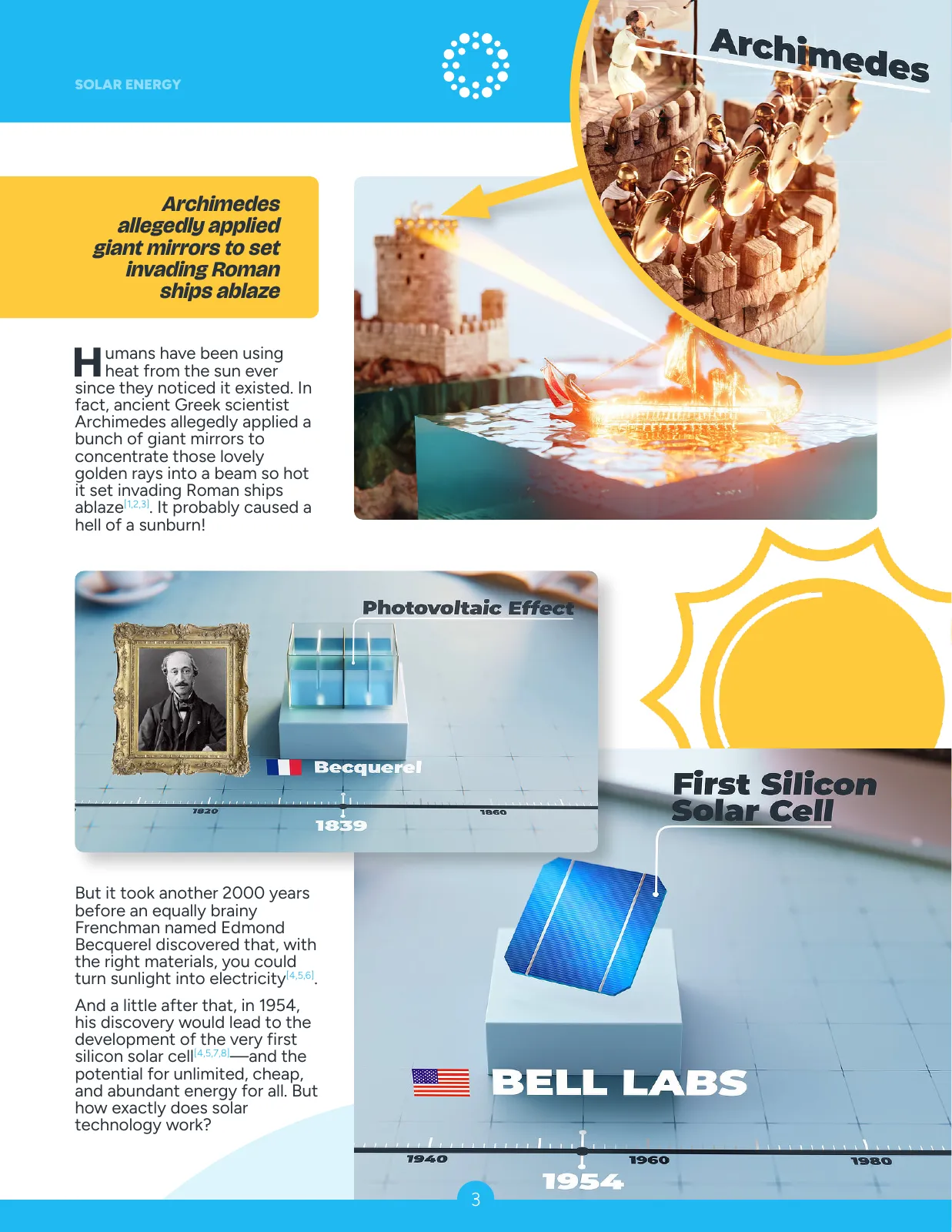
Humans have been using heat from the sun ever since they noticed it existed. In fact, ancient Greek scientist Archimedes allegedly applied a bunch of giant mirrors to concentrate those lovely golden rays into a beam so hot it set invading Roman ships ablaze [1,2,3]. It probably caused a hell of a sunburn!
But it took another 2000 years before an equally brainy Frenchman named Edmond Becquerel discovered that, with the right materials, you could turn sunlight into electricity [4,5,6].
And a little after that, in 1954, his discovery would lead to the development of the very first silicon solar cell [4,5,7,8], and the potential for unlimited, cheap, and abundant energy for all. But how exactly does solar technology work?
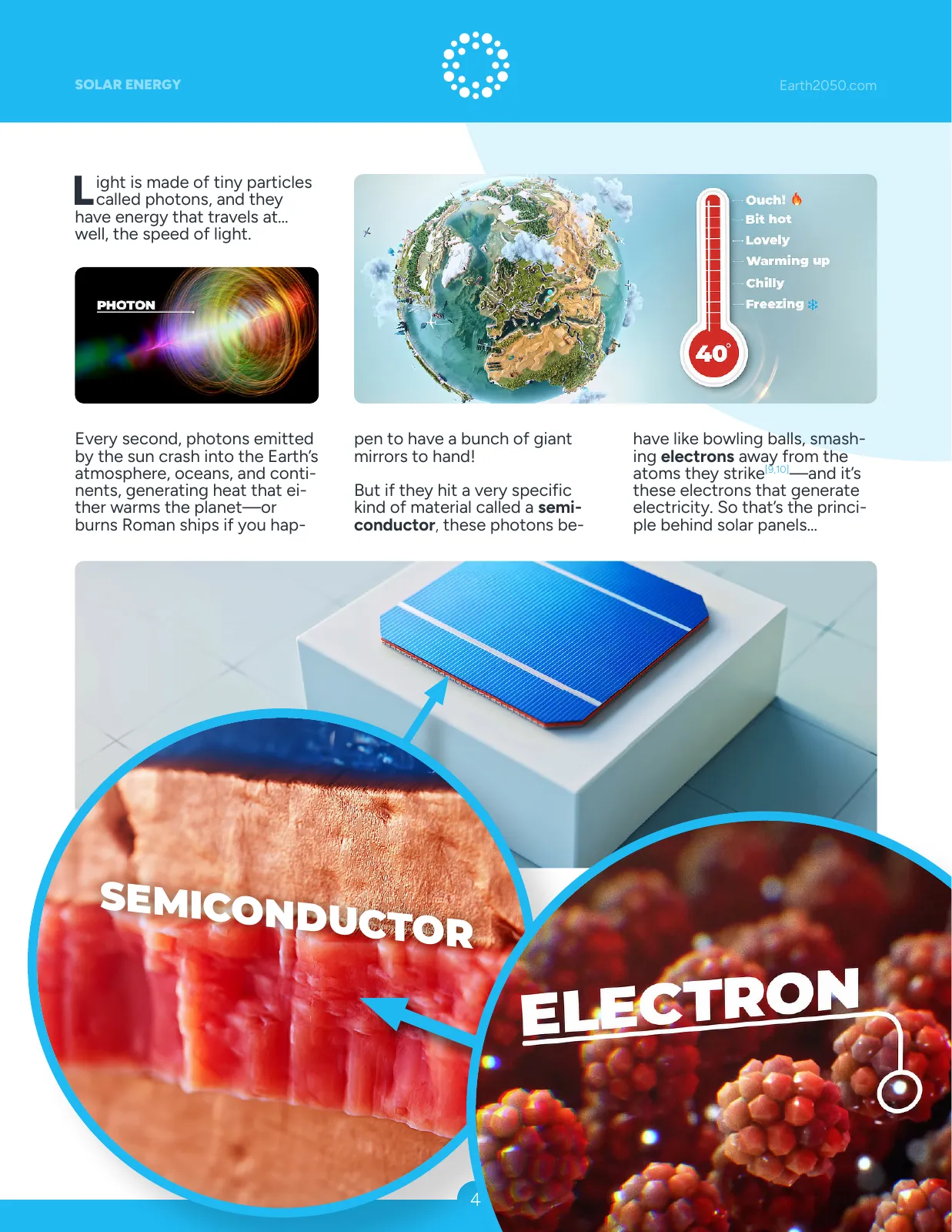
Light is made of tiny particles called photons and they have energy that travels at… well, the speed of light.
Every second, photons emitted by the sun crash into the Earth’s atmosphere, oceans and continents, generating heat that either warms the planet… or burns Roman ships if you happen to have a bunch of giant mirrors to hand!
But, if they hit a very specific kind of material called a semiconductor, these photons behave like bowling balls, smashing electrons away from the atoms they strike [9,10]. And it’s these electrons that generate electricity. So that’s the principle behind solar panels…
But could this technology really meet humanity’s insatiable appetite for energy?
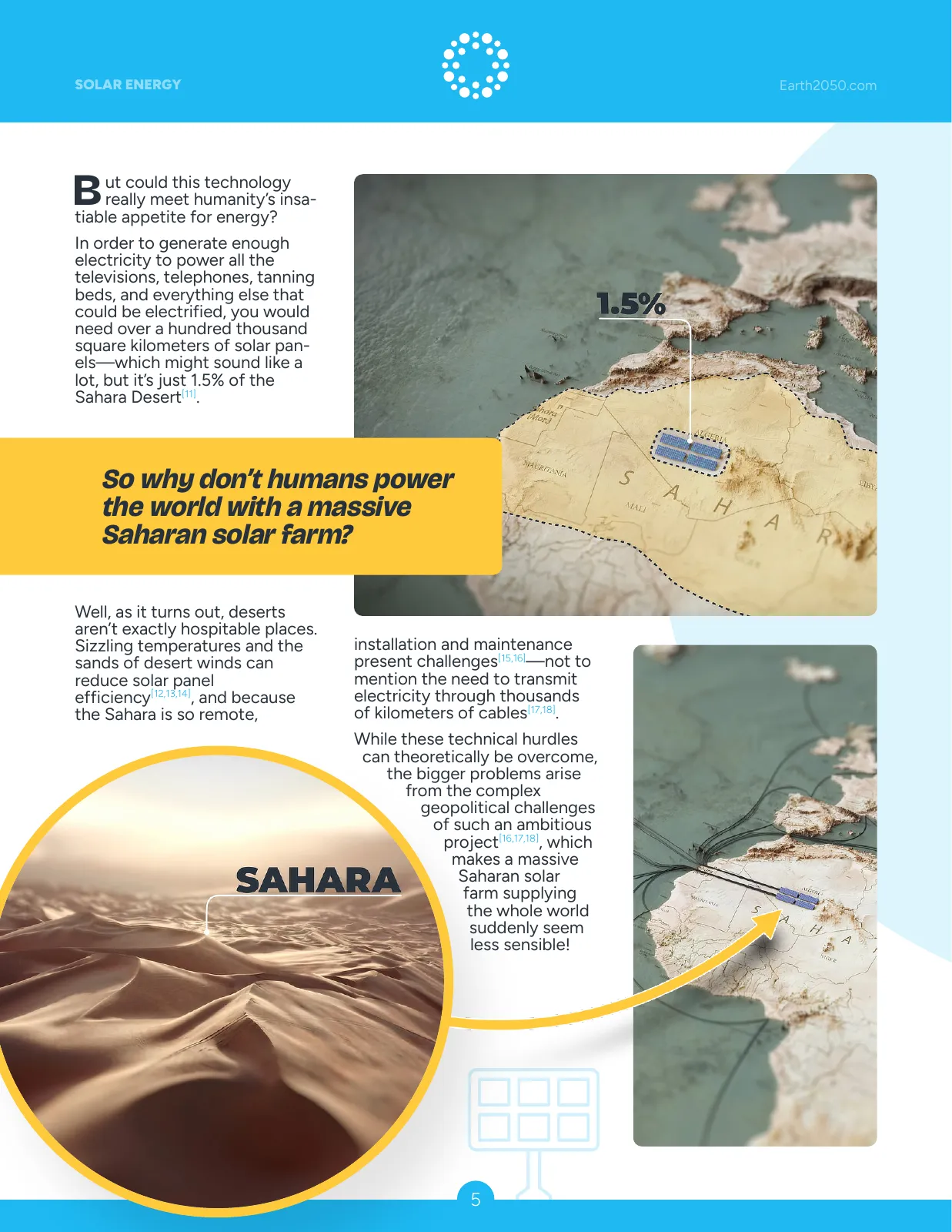
In order to generate enough electricity to power all the televisions, telephones, tanning beds, and everything else that could be electrified, you would need over a hundred thousand square kilometers of solar panels [11], which might sound like a lot, but it’s just 1.5% of the Sahara Desert [11].
So why don’t humans power the world with a massive Saharan solar farm?
Well, as it turns out, deserts aren’t exactly hospitable places. Sizzling temperatures and the sands of desert winds can reduce solar panel efficiency [12,13,14], and because the Sahara is so remote, installation and maintenance present challenges [15,16], not to mention the need to transmit electricity through thousands of kilometers of cables [17,18].
While these technical challenges can theoretically be overcome, the bigger problems arise from the complex geopolitical challenges of such an ambitious project [16,17,18], which makes a massive Saharan Solar farm supplying the whole world suddenly seem less sensible!
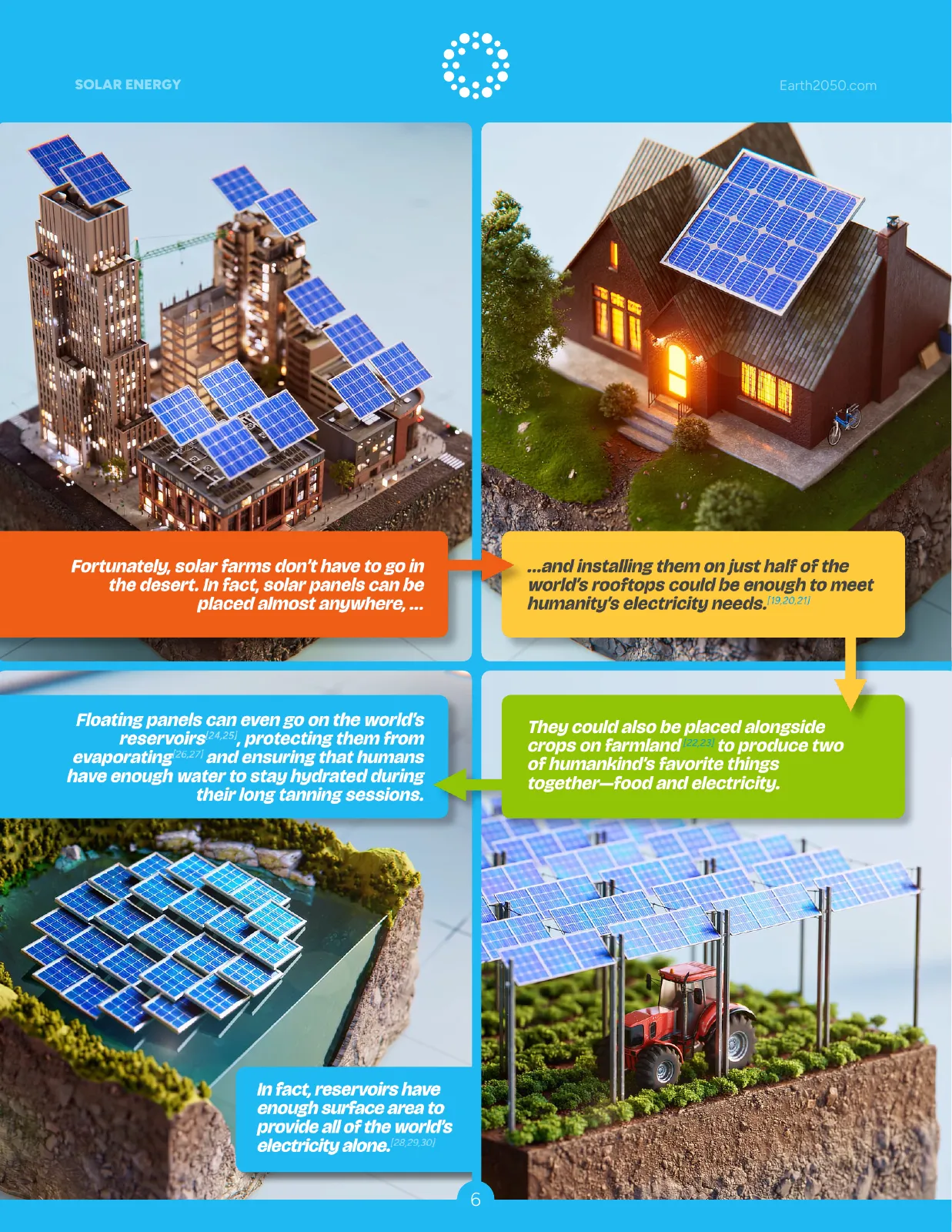
Fortunately, solar farms don’t have to go in the desert. In fact, solar panels can be placed almost anywhere, and installing them on just half of the world’s rooftops could be enough to meet humanity’s electricity needs [19,20,21].
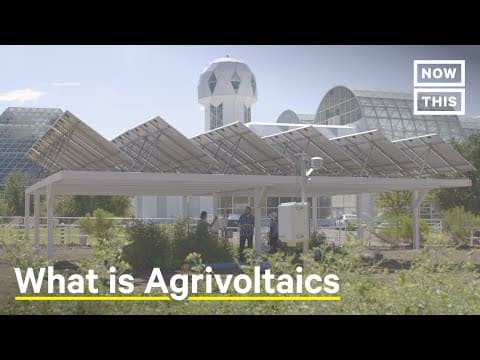
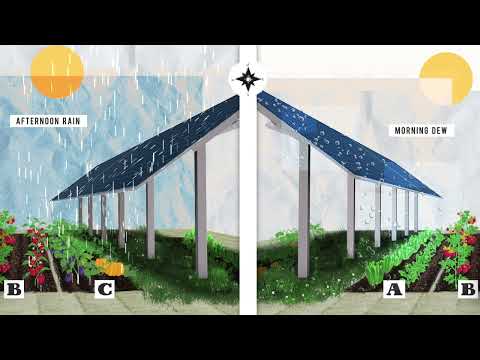
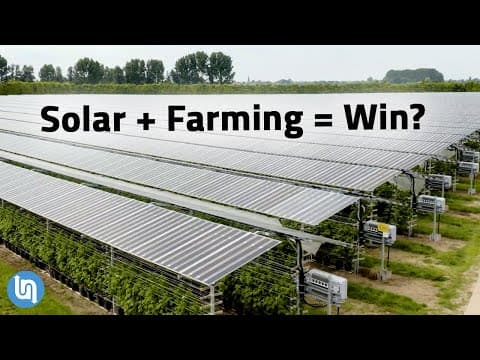
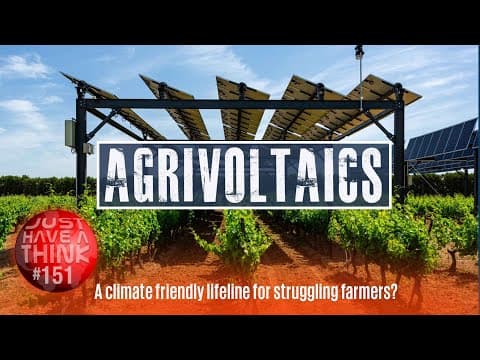
They could also be placed alongside crops on farmland [22,23] to produce two of humankind's favorite things together: food and electricity.
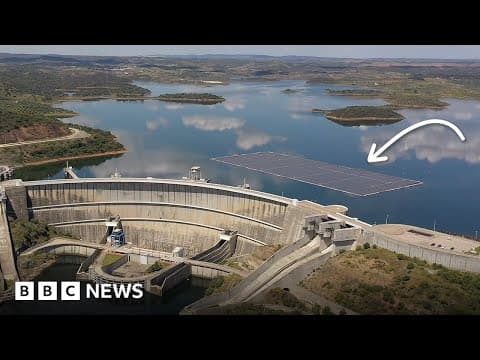
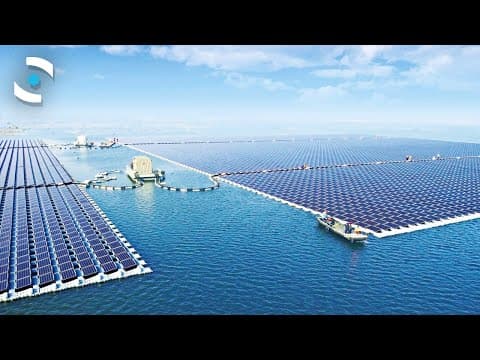
Floating panels can even go on the world’s reservoirs [24,25], protecting them from evaporating [26,27] and ensuring that humans have enough water to stay hydrated during their long tanning sessions. In fact, reservoirs have enough surface area to provide all of the world’s electricity alone [28,29,30].
So, it’s certainly possible for solar panels to power the world, but is it practical?
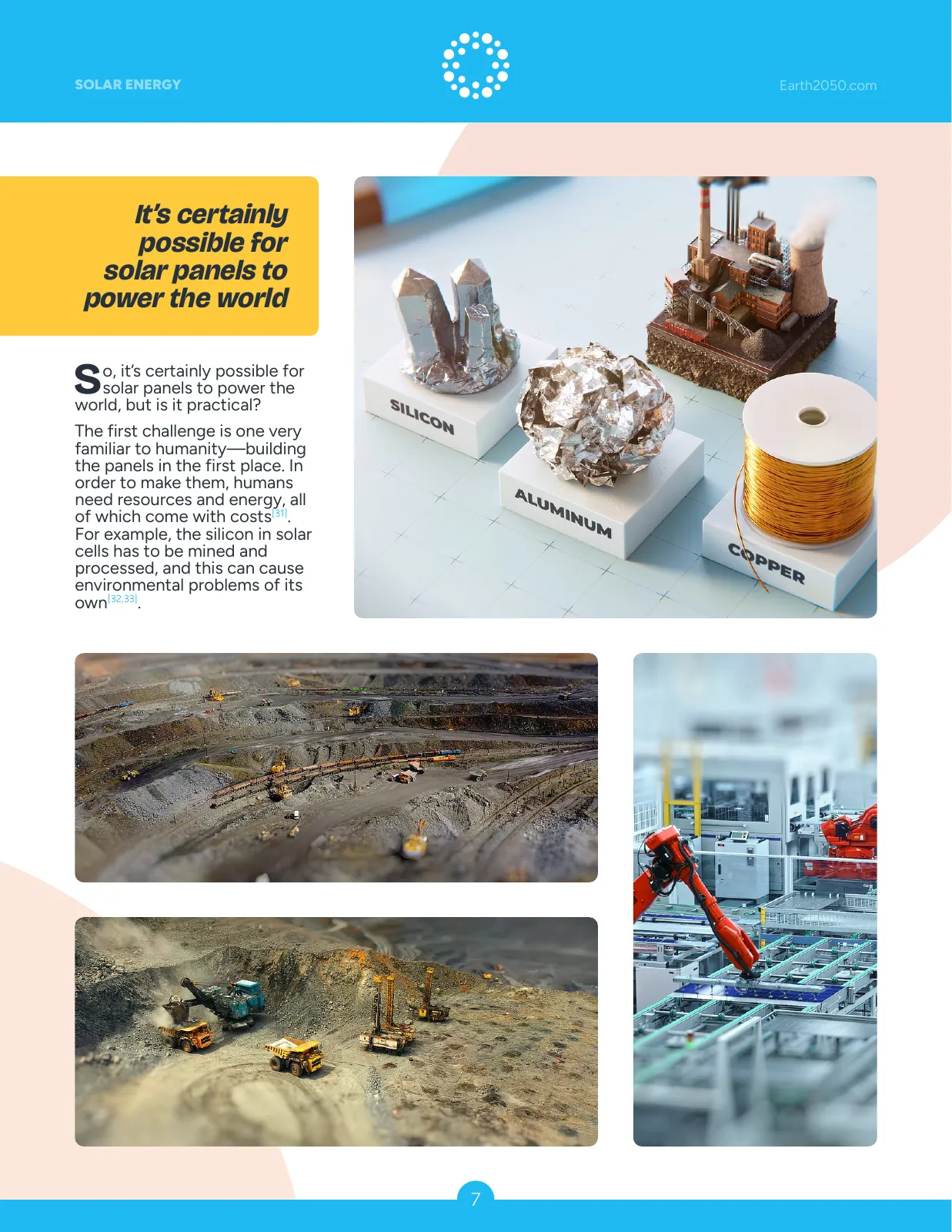
The first challenge is one very familiar to humanity: building the panels in the first place. In order to make them, humans need resources and energy all of which come with costs [31]. For example, the silicon in solar cells has to be mined and processed, and this can cause environmental problems of its own [32,33].
Perhaps the biggest obstacle to solar power can be summed up with one simple question… What happens when the sun isn’t shining?
If you’ve ever spent time on Earth, you’ll probably have noticed that around 12 out of every 24 hours is spent in darkness. And, depending on where you are, some areas are considerably darker than others [34,35].
Worse, even during daylight hours, pesky clouds can get in the way, which isn’t exactly ideal if you need that sunlight for electricity [36]. This means that solar power is what is known as an intermittent energy source.
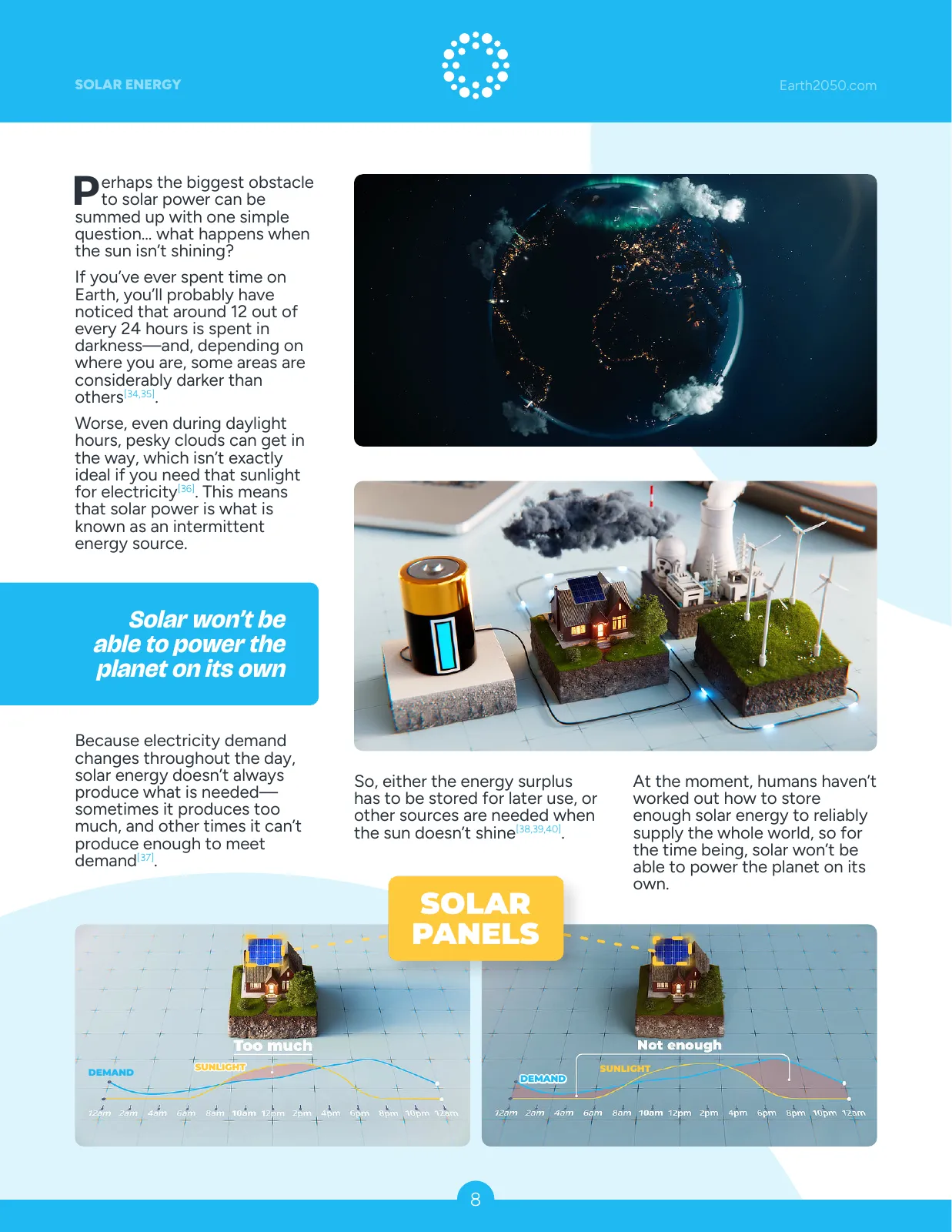
Because electricity demand changes throughout the day, solar energy doesn’t always produce what is needed: sometimes it produces too much, and other times it can’t produce enough to meet demand [37]. So, either the energy surplus has to be stored for later use, or other sources are needed when the sun doesn’t shine [38,39,40].
At the moment, humans haven’t worked out how to store enough solar energy to reliably supply the whole world, so for the time being, solar won’t be able to power the planet on its own.
But fear not! Like ancient Archimedes and brainy Becquerel, many modern humans are working on technological solutions, and their work is paying dividends.
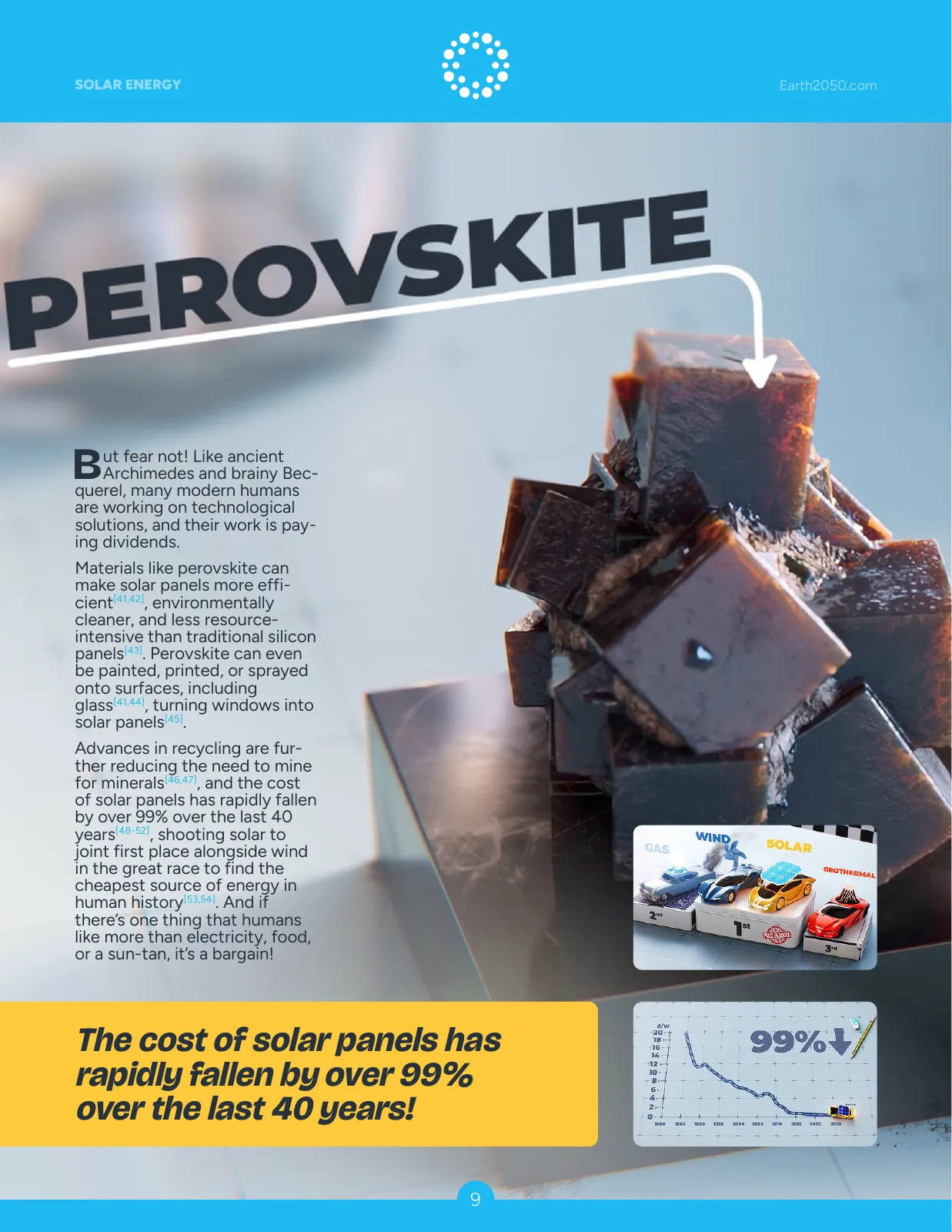
Materials like perovskite can make solar panels more efficient [41,42], environmentally cleaner, and less resource intensive than traditional silicon panels [43]. Perovskite can even be painted, printed or sprayed onto surfaces including glass [41,44], turning windows into solar panels [45].
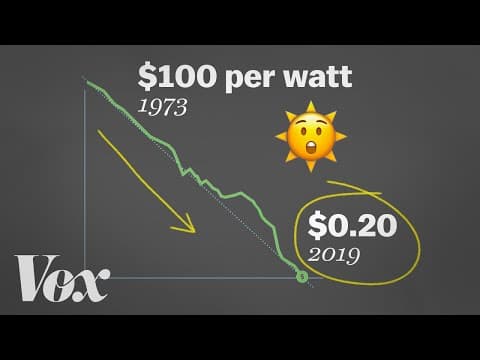
Advances in recycling are further reducing the need to mine for minerals [46,47], and the cost of solar panels has rapidly fallen by over 99% over the last 40 years [48-52], shooting solar to joint first place alongside wind in the great race to find the cheapest source of energy in human history [53,54]. And, if there’s one thing that humans like more than electricity, food, or a sun tan, it's a bargain!
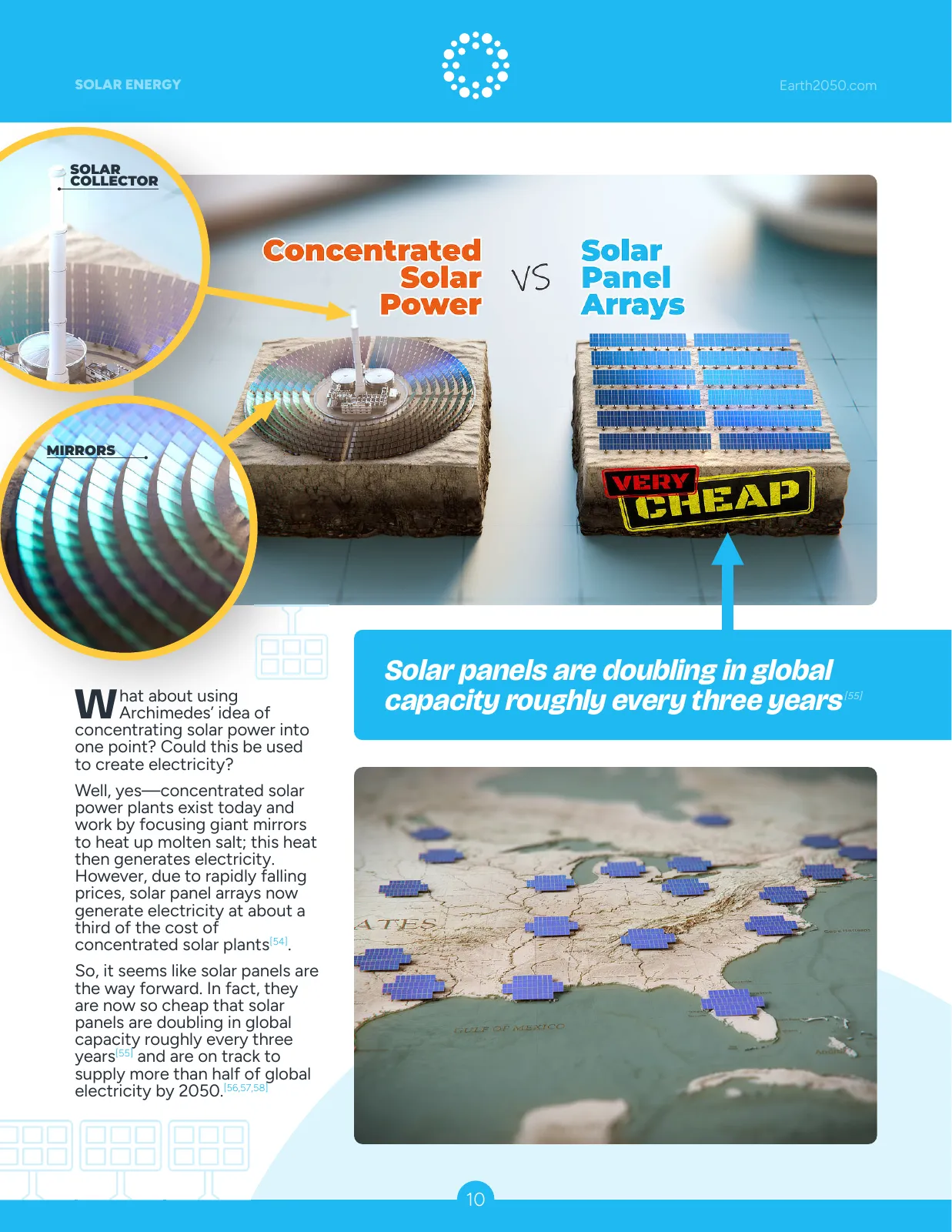
But what about using Archimedes’ idea of concentrating solar power into one point? Could this be used to create electricity? Well, yes. Concentrated solar power plants exist today and work by focusing giant mirrors to heat up molten salt; this heat then generates electricity. However, due to rapidly falling prices, solar panel arrays now generate electricity at about a third of the cost of concentrated solar plants [54].
So, it seems like solar panels are the way forward. In fact, they are now so cheap that solar panels are doubling in global capacity roughly every three years [55] and are on track to supply more than half of global electricity by 2050 [56,57,58].
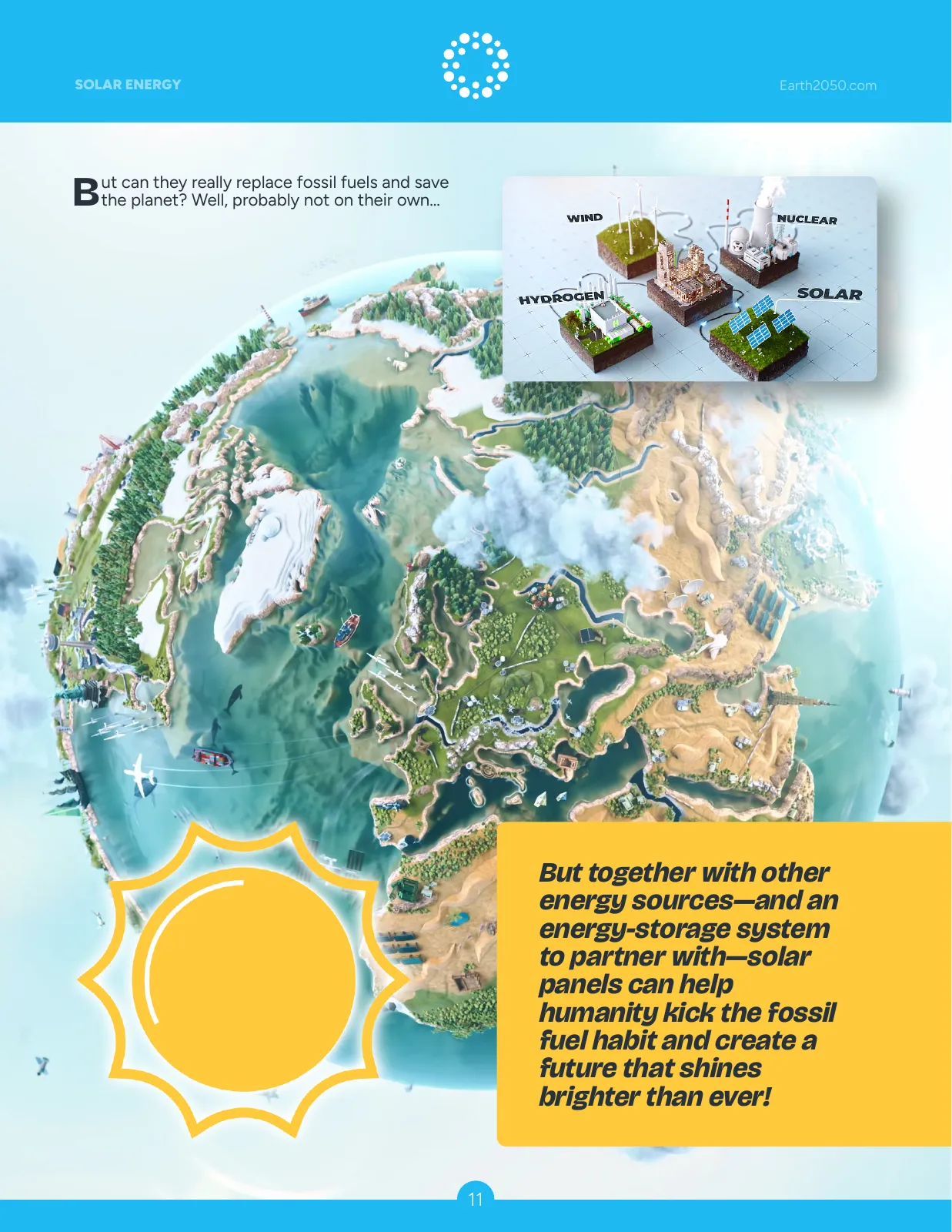
But can they really replace fossil fuels and save the planet? Well, probably not on their own... But together with other energy sources (and an energy storage system to partner with), solar panels can help humanity kick the fossil fuel habit and create a future that shines brighter than ever!
Expert Advisors
2
We would like to thank
Prof. Alastair Buckley
University of Sheffield
School of Mathematical and Physical Sciences
Dr. Dan Lamb
Swansea University
The Oxide and Chalcogenide MOCVD Centre, CISM
Further Videos
35 links
These resources are non-affiliated.
General Overview – How Solar Panels work
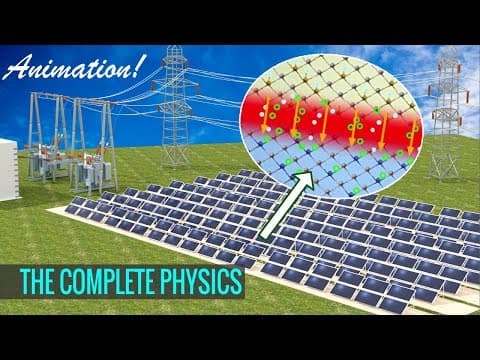
General Overview – How Solar Panels work — Inside the Semiconductor – PN Junctions & Physics
General Overview – How Solar Panels work — Solar Panel Systems - Solar Arrays, Farms & the Grid
General Overview – How Solar Panels work — Recycling & Impacts
Future of Solar Power – Perovskite Tandems & Efficiency — In-depth detail on the limits of silicon cells and the power of perovskite
Future of Solar Power – Perovskite Tandems & Efficiency — Recaps of Recent Industry Breakthroughs
Future of Solar Power – Costs, Scale and Global Penetration
Future of Solar Power – Costs, Scale and Global Penetration — Case Studies towards a 100% Renewable Future (combined with Wind & Batteries)
Future of Solar Power – Costs, Scale and Global Penetration — Think-Tank Predictions
Geographies & Applications — Solar in the Sahara Desert

Geographies & Applications — Floating Solar Farms
Geographies & Applications — Agrivoltaics
Geographies & Applications — Global Opportunities for Farms, Floating and Hybrid Systems
Geographies & Applications — Hybrid Heating & Home-Owner Guide

Further Reading
32 links
These resources are non-affiliated.
History
- First Practical Silicon Solar Cell - American Physical Society
- A Brief History of Solar Panels - Smithsonian
- The Invention Of The Solar Cell - Popular Science
How it works
- Photovoltaics and electricity - U.S. Energy Information Administration
- Why don’t solar panels work as well in heatwaves? - World Economic Forum
- Solar Energy - MIT Climate Portal
Sahara Solar Power
- Could a giant solar array in the Sahara resolve our energy needs? - CORDIS European Commission
- More than just clean energy: wind and solar in the Sahara could increase rainfall in the Sahel - UNEP
- In Scramble for Clean Energy, Europe Is Turning to North Africa - Yale E360
- Is Covering the Sahara Desert with Solar Panels Feasible for Electricity Generation? - Jingsun Power
Agrivoltaics
- Agrivoltaics: Combining solar panels and agriculture into a win-win result - Statkraft
- Agrivoltaics: Solar and Agriculture Co-Location - US Department of Energy
Floating PVs
- Floating PV: On the Rise in Europe - Intersolar Europe
- Where Sun Meets Water: Floating Solar Market Report - ESMAP
The Duck Curve
Recycling Solar Cells
- Innovations and Trends in Solar Panel Recycling - RecyclingInside
- Recycling: A Solar Panel's Life after Death - GreenMatch
- Beyond Recycling: Reducing Waste from Solar Modules Before They’re Even Made - Department of Energy
Energy Storage
- Energy storage important to creating affordable, reliable, deeply decarbonized electricity systems - MIT News
- Batteries Included—Hybrid Power Plants - Berkeley Lab
- Transitioning to renewable energy: Challenges and opportunities - Institute of Energy and the Environment
Future Solar Technology
- ‘Miracle material’ perovskite smashes solar panel efficiency threshold - The Independent
- Environmental impacts of perovskite PV - PV Magazine International
- Presentation — Solar PV Performance and New Technologies in Northern Latitude Regions - US Department of Energy
- Perovskite Solar Cells vs Silicon Solar Cells - Ossila
- Perovskite Solar Cells: An In-Depth Guide - Solar Magazine
Energy Transition
- Solar power expected to dominate electricity generation by 2050 – even without more ambitious climate policies - The Conversation
- Clean Electricity - Ember
- Solar is now ‘cheapest electricity in history’, confirms IEA - Carbon Brief
- Renewables Were The World’s Cheapest Energy Source in 2020 - World Economic Forum
- The Clean Energy Future Is Arriving Faster Than You Think - The New York Times
- The growth of solar power - Octopus Energy
References
65 links
- [1] Siege of Syracuse (214–212 BCE) | Significance, Description, & Archimedes | Britannica
- [2] Archimedes – What did he do besides cry Eureka? (Access at Archive.org)
- [3] Recreating an Ancient Death Ray | The New York Times
- [4] First Practical Silicon Solar Cell | American Physical Society
- [5] A Brief History of Solar Panels | Smithsonian Magazine
- [6] 1839 Memoir by Becquerel - Action of Radiation on Metal Blades | Academy of Sciences Weekly Reports
- [7] The Invention Of The Solar Cell | Popular Science (Extract from Let It Shine – The 6,000-Year Story of Solar Energy)
- [8] Document Deep Dive: The Patent for the First Practical Solar Cell | Smithsonian Magazine
- [9] Photovoltaics and electricity | U.S. Energy Information Administration
- [10] Handbook of Photovoltaic Science and Engineering | Wiley Online Library
- [11] We Could Power The Entire World By Harnessing Solar Energy From 1% Of The Sahara | Forbes (see Reference Notes*)
- [12] Influence of photovoltaic cell technologies and elevated temperature on photovoltaic system performance | Ain Shams Engineering Journal
- [13] Normal impact of sand particles with solar panel glass surfaces | Tribology International
- [14] Very hot weather can hamper solar panels, experts say | World Economic Forum
- [15] Could a giant solar array in the Sahara resolve our energy needs? | CORDIS European Commission
- [16] More than just clean energy: wind and solar in the Sahara could increase rainfall in the Sahel | UNEP
- [17] In Scramble for Clean Energy, Europe Is Turning to North Africa | Yale E360
- [18] (Why) did Desertec fail? An interim analysis of a large-scale renewable energy infrastructure project | Local Environment
- [19] Global spatiotemporal assessment of rooftop solar photovoltaics potential for renewable electricity generation | Nature Communications (see Reference Notes*)
- [20] Cropland and rooftops: the global undertapped potential for solar photovoltaics | Environmental Research Letters (see Reference Notes*)
- [21] Modelling the global photovoltaic potential on land and its sensitivity to climate change | Environmental Research Letters (see Reference Notes*)
- [22] Agrivoltaics: Combining solar panels and agriculture into a win-win result | Statkraft
- [23] Agrivoltaics: Solar and Agriculture Co-Location | US Department of Energy
- [24] Floating PV: On the Rise in Europe | Intersolar Europe
- [25] Where Sun Meets Water: Floating Solar Market Report | ESMAP
- [26] The Dawn of Floating Solar—Technology, Benefits, and Challenges | Proceedings of the World Conference on Floating Solutions 2019
- [27] Floating solar PV to reduce evaporation in water stressed regions and powering water pumping: Case study Jordan | Energy Conversion and Management
- [28] Energy production and water savings from floating solar photovoltaics on global reservoirs | Nature Sustainability (Cited in Floating solar panels on reservoirs could power a third of the world, study finds | The Independent) (see Reference Notes*)
- [29] Combining Floating Solar Photovoltaic Power Plants and Hydropower Reservoirs | Energy Procedia (see Reference Notes*)
- [30] Global floating PV status and potential | Progress in Energy (see Reference Notes*)
- [31] Environmental Impacts of PV Electricity Generation—A Critical Comparison of Energy Supply Options | 21st European Photovoltaic Solar Energy Conference | UN CTNC
- [32] Impact of Silica Mining on Environment | Journal of Geography and Regional Planning
- [33] Environmental impacts of solar photovoltaic systems: A critical review of recent progress and future outlook | Science of The Total Environment
- [34] Spatial assessment of solar energy potential at global scale. A geographical approach | Journal of Cleaner Production
- [35] Solar power generation intermittency and aggregation | Nature
- [36] Space-time variability of climate variables and intermittent renewable electricity production – A review | Renewable and Sustainable Energy Reviews
- [37] Ten Years of Analyzing the Duck Chart: How an NREL Discovery in 2008 Is Helping Enable More Solar on the Grid Today | NLR (NREL) (archived)
- [38] Energy storage important to creating affordable, reliable, deeply decarbonized electricity systems | MIT News
- [39] A review on the complementarity of renewable energy sources | Solar Energy
- [40] Pumped storage and hybrid wind-photovoltaic complementary power generation system | Applied Energy
- [41] Introduction: Why Perovskite and Perovskite Solar Cells? | Prevoskite Photovoltaics
- [42] Tandems have the power | Science (in ‘Miracle material’ perovskite smashes solar panel efficiency threshold | The Independent)
- [43] New insights into the environmental performance of perovskite-on-silicon tandem solar cells | Sustainable Energy & Fuels | RSC (in Environmental impacts of perovskite PV | PV magazine International)
- [44] Solar Perovskite Technologies | Encyclopedia of Sustainable Technologies (2nd Edition)
- [45] New smart windows darken in the sun—and generate electricity at the same time | Science | AAAS
- [46] Review on recycling of solar modules/panels | Solar Energy Materials and Solar Cells
- [47] Technological Advancement in Solar Photovoltaic Recycling: A Review | Minerals
- [48] Technological innovation enables low cost climate change mitigation | Energy Research & Social Science (in Fossil fuels ‘becoming obsolete’ as solar panel prices plummet | The Independent)
- [49] Solar panel prices have fallen by around 20% every time global capacity doubled | Our World in Data (see Reference Notes*)
- [50] Why did renewables become so cheap so fast? | Our World in Data (see Reference Notes*)
- [51] Solar (photovoltaic) panel prices | Our World in Data (see Reference Notes*)
- [52] 3Q 2024 Global PV Market Outlook | BloombergNEF (see Reference Notes*)
- [53] World Energy Outlook 2024 – Analysis | IEA
- [54] Renewable Power Generation Costs in 2023 | IRENA (see Reference Notes*)
- [55] Global Market Outlook For Solar Power 2022-2026 | Solar Power Europe (archived)
- [56] Low-cost renewable electricity as the key driver of the global energy transition towards sustainability | Energy
- [57] The momentum of the solar energy transition | Nature Communications (in UCL News | University College London)
- [58] Solar Energy May Generate Half of World's Power by 2050 | Bloomberg
Reference Notes
5
Estimated area of desert needed to power the world with a Sahara solar farm
The article in this reference originates from a discussion on the online knowledge-sharing platform Quora, and thus has not been formally reviewed or published in a scientific journal or report. However, it has been widely quoted, referenced and reprinted in both Forbes and the New York Times, and is noted by the author as the first instance in which a solar power solution for global energy needs has been suggested and the feasibility, practicality, and numbers around a ‘Sahara Solution’ considered. It has been rigorously critiqued and defended by the author, an academic and industry expert, and informally endorsed by fellow academic and industry professionals. Elements of the proposal and supporting calculations can be considered as hypothetical, ‘back-of-the-envelope’ workings or a basis for genuine real-world solution scenarios and are discussed in both of these contexts, but serve as an illustrative estimate for the purposes here.
Most notably, it bases its estimate on total energy consumption and assumes full electrification of all energy uses, including heat, transport and industrial processes. The possibility of direct electrification of these uses is variable and sometimes impractical or impossible (while some could be fueled by green hydrogen produced by solar-powered electrolysis). An (AI-produced) aggregated estimate of ~60-70% of global energy demand could feasibly be electrified with current and near-term technologies, based on sectoral insights from McKinsey, IRENA and the IEA’s global energy outlooks A,B,C, acknowledging that practical challenges exist. The Saharan solar farm area requirements to support global electricity demand as it stands would be much lower.
The estimated requirement of 1.2% of the Sahara desert has been adjusted to 1.5% to account for recent increases in global energy demand (approximately 19.6TW as of 2023 D,E).
Global potential of rooftop solar panels
Several papers have modelled the global potential of rooftop solar photovoltaics (PVs) but with different results. One paper [19] estimates that total rooftop PV-suitable area could generate 27 PWh per year, exceeding the contemporary global electricity demand in 2018. Due to geographical and seasonal variations in sunlight and thus PV potential, the contribution of regional rooftop area to this total potential is not uniform i.e. the capacity of one region may fall significantly short of regional demand, whereas the capacity of another region may exceed demand and contribute disproportionately to global supply. The authors estimate that a minimum of 50% of global rooftop area would be needed to meet the global yearly electricity demand aggregated across regions.
As of 2023, global electricity demand has now increased to just under 30 PWh F, exceeding previous global rooftop-PV potential reported in [19]. Total energy demands (including heating, transportation and industrial processes as well as electricity), meanwhile, amounted to approximately 172 PWh D,E. Another paper [20], highlights inconsistencies in [19]’s methodology and estimates that global rooftop-PV potential could account for about 30.5 TW of maximum installable capacity, which equates to over 267 PWh per year, vastly exceeding even our total energy demands. A third paper [21] estimates reaching a global rooftop-PV potential of 175 TWh per year by 2050, subject to change based on different ongoing emission scenarios. This forecast involves rooftop expansion to support significantly greater total PV area than currently reported by [19]. Considering these findings and their respective methodologies, we arrive at the conservative conclusion that just half of the world’s rooftops could be enough to meet humanity’s electricity needs.
Global potential of floating solar panels on reservoirs worldwide
In one paper [28], the potential energy output from a maximum 30% surface area coverage of floating photovoltaics (FPVs) across each of all global reservoirs (556,111km2 across 114,555 reservoirs) is estimated to be 9434TWh per year. This constitutes a conservative estimate based on limited FPV surface coverage (30%) due to technical and environmental constraints. Consistently, another paper [29] reports that 25% of global reservoir surface area could produce 8000TWh yr-1. Following IEA projections G, this amounts to at least a quarter of global electricity demand for the foreseeable future (almost a third of demand, as of end of 2023 F), and capacity may increase further as new reservoirs are built.
A more recent paper [30], however, highlights advancements in solar panel technology not considered in these previous studies, including sun-tracking systems and bifacial solar panels: “While trackers may increase the system’s float and anchoring requirements and raise the overall system costs, their significant energy gain over fixed tilt systems, evolving technologies, and decreasing cost will likely make them more common in the coming years”. To understand how these new technologies could perform globally, they “analysed the installation capacity and energy generation potential of different FPV configurations, including fixed-tilt installations with different tilt angles, different tracking approaches, as well as different panel types (monofacial vs. bifacial) on 249,717 inland reservoirs (both man-made and natural) worldwide with a total area of 222,623 km2 -about four times greater than those analysed in” [28]. With these updates, the authors find a total FPV capacity of up to 22 TWp (peak-power), which could fulfill the whole world’s electricity demand.
- A Global Energy Perspective 2023: Industrial electrification outlook | McKinsey
- B Global Energy Transformation: A Roadmap to 2050 | IRENA
- C Outlook for electric mobility – Global EV Outlook 2024 – Analysis | IEA
- D Primary energy consumption by world region | Our World in Data
- E World Energy Consumption Statistics | Enerdata
- F World Energy Outlook 2023 – Analysis | IEA
- G Executive summary – Electricity Mid-Year Update - July 2024 – Analysis | IEA
Current prices of solar PV
Our World in Data [51] compiles data from several sources, including IRENA 2024 H. As stated on the webpage, IRENA presents solar photovoltaic module prices for a number of different technologies. Data from Q4 2013 onwards is the average yearly price for ‘Thin film a-Si/u-Si’ technologies, or Global Price Index as a reference for all solar technologies, reaching a global price of $0.31/W in 2023. Other sources I,J,K present the mainstream or monofacial monocrystalline panel technology as their primary reference, for which prices have dropped even lower:
In January 2024, the price of thin film a-Si/u-Si modules sold in Europe fell to ~$0.16/W H. In April 2024, the global spot price of monofacial monocrystalline modules was reported as $0.11/W I. In November 2024, market-dominant monocrystalline PERC panels and next-gen c-Si TOPCon technologies reached $0.087/W, $0.1/W and $0.29/W in China, Europe and US respectively J,K †.
†Export prices are typically higher in global markets than in China due to logistics, tariffs and regional market factors, notably International Commercial Terms (FOB for Chinese exports vs DDP for US and Europe J).
Bloomberg [52] reports that the global average module price has dropped to $0.096/W. Compared to a global average module price of $19.48/W in 1984 [51], module prices have thus fallen by over 99% in 40 years.
For further comparison, the US average module price has fallen to $0.29/W by Q1 2024 I. This constitutes a 96% decrease in 35 years, since 1989 L,M. Higher prices in the US have been maintained by tariffs on Chinese modules and other import factors I.
- H Renewable power generation costs in 2023 | IRENA
- I Spring 2024 Solar Industry Update | NLR (NREL)
- J OPIS Solar Weekly | Solar Panel Materials Pricing | OPIS in Global solar module prices stable-to-soft as markets absorb news of U.S. election, policy changes | PV Magazine International
- K PERC solar vs TOPCon module prices | PV Magazine International
- L Annual Energy Review 2012 | U.S. Energy Information Administration
- M CPI Inflation Calculator
LCOE of Solar PV vs Concentrated Solar Power
IRENA Renewable Power Generation Costs 2023 states that the global weighted average Levelised Cost of Electricity (LCOE) of solar PV was $0.044 USD/kWh. Between 2010 and 2023, the global weighted average LCOE of CSP plants fell by 70%, from $0.393/kWh to $0.117/kWh. Therefore, as of 2023, the utility-scale LCOE of Solar PV constitutes just over a third of that for CSP. However, solar PV costs are continuing to decline. Between 2021 and 2023, each year only one CSP plant was commissioned, so these years are not necessarily representative. Given that CSP deployment has slowed and competition with solar PV is intense, it's plausible that these plants were advanced, highly optimized projects aiming to showcase competitiveness. Thus, the reported average LCOE could be lower than what might be observed in a year with more typical or diverse CSP project deployments.