
Manufacturing
Green Concrete
Is Green Concrete the Answer to Climate Change?
Green concrete could help cut one of the world's biggest sources of carbon emissions. Concrete is the most widely used solid material on Earth, but making its key ingredient, cement, creates around 8% of global CO2 emissions. So how can humanity keep building without driving climate change? From recycled concrete and carbon curing to cleaner fuels, SCMs and alkali-activated materials, we show how green concrete could become a foundation for a cleaner future.
Download the Guide3.2overall
How this solution scores
- Impact4 / 5Cement production alone causes around 8% of global emissions.
- Speed3 / 5New mixes can be adopted as production plants are upgraded.
- Cost3 / 5Expensive at first, but comparable to ordinary concrete once scaled.
- Readiness3 / 5Blended cements are common, cement-free binders are still early stage.
- Nature3 / 5Less quarrying and waste, though concrete remains resource-heavy.
Guide
This is the illustrated transcript of the film.


Quiz
Question 1 of 10
If concrete production were a country, where would it rank for CO2 emissions?
Score 0 / 10
Transcript
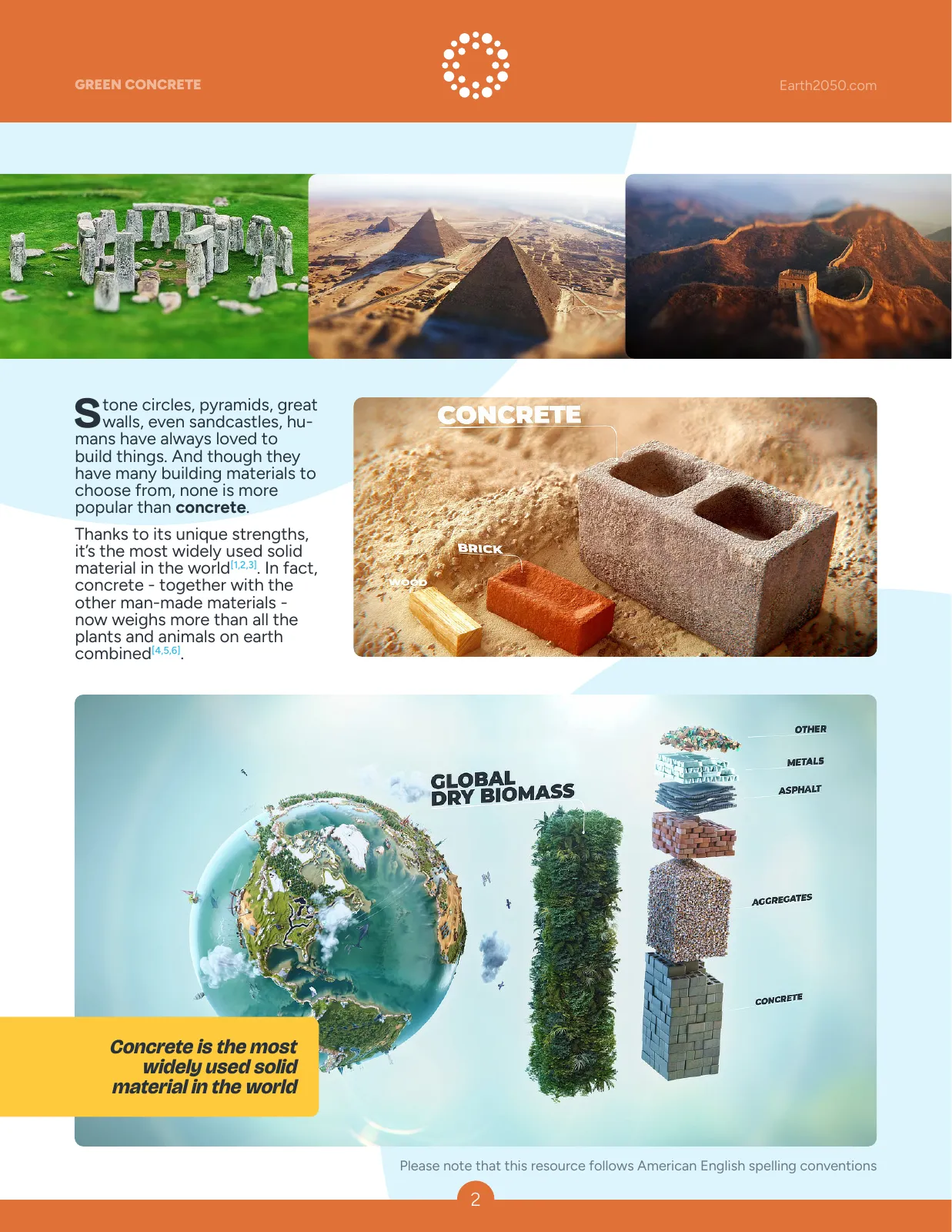
Stone circles, pyramids, great walls, even sandcastles, humans have always loved to build things. And though they have many building materials to choose from, none is more popular than concrete.
Thanks to its unique strengths, it’s the most widely used solid material in the world [1,2,3]. In fact, concrete - together with the other man-made materials - now weighs more than all the plants and animals on earth combined [4,5,6].
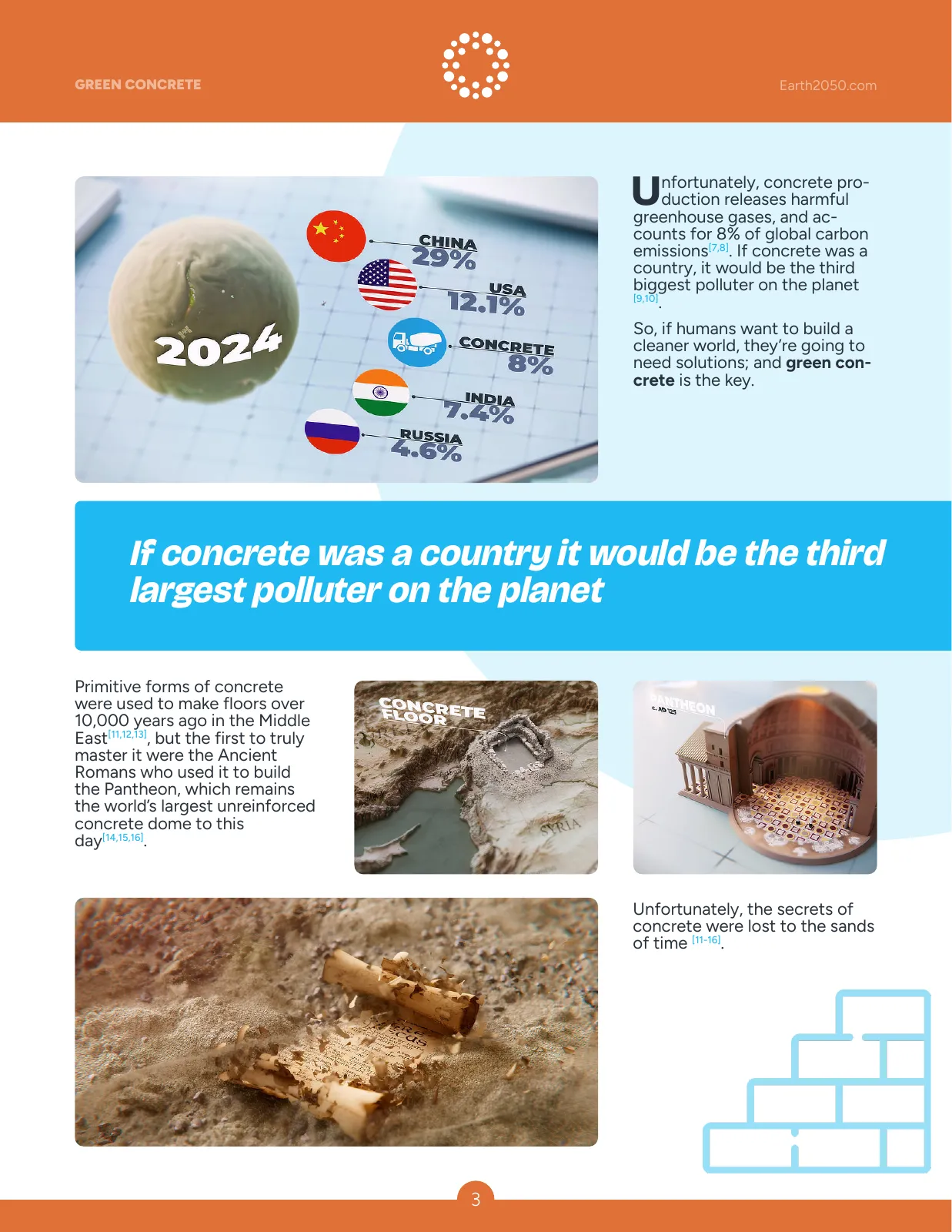
Unfortunately, concrete production releases harmful greenhouse gases, and accounts for 8% of global carbon emissions [7,8]. If concrete was a country, it would be the third biggest polluter on the planet [9,10].
So, if humans want to build a cleaner world, they’re going to need solutions; and green concrete is the key.
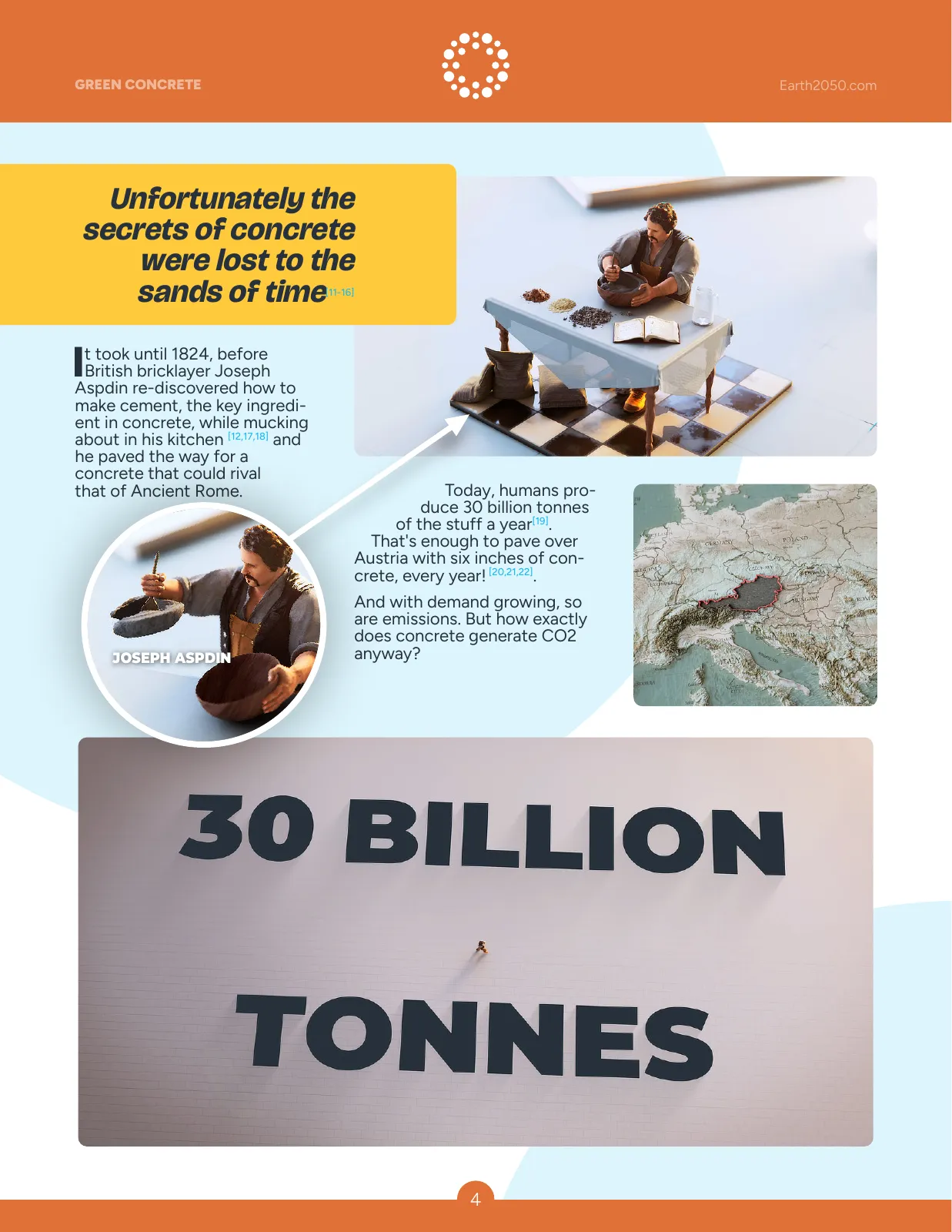
Primitive forms of concrete were used to make floors over 10,000 years ago in the Middle East [11,12,13], but the first to truly master it were the Ancient Romans who used it to build the Pantheon, which remains the world’s largest unreinforced concrete dome to this day [14,15,16].
Unfortunately, the secrets of concrete were lost to the sands of time [11-16]. It took until 1824 before British bricklayer Joseph Aspdin rediscovered how to make cement, the key ingredient in concrete, while mucking about in his kitchen [12,17,18] and he paved the way for a concrete that could rival that of Ancient Rome.
Today, humans produce 30 billion metric tons of the stuff a year [19]. That's enough to pave over Austria with six inches of concrete, every year! [20,21,22]. And with demand growing, so are emissions. But how exactly does concrete generate CO2 anyway?
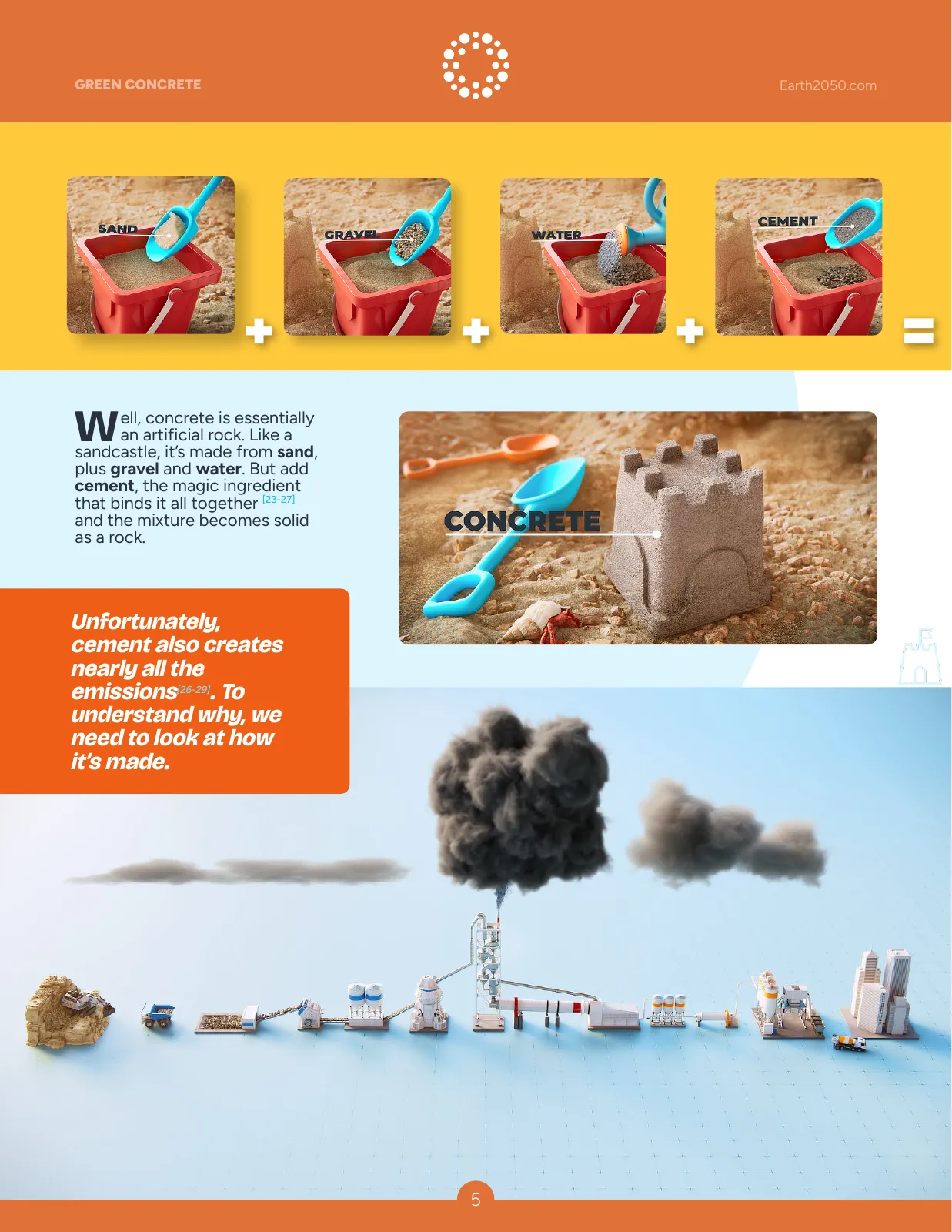
Well, concrete is essentially an artificial rock. Like a sandcastle, it’s made from sand, plus gravel and water. But add cement, the magic ingredient that binds it all together [23-27] and the mixture becomes solid as a rock.
Unfortunately, cement also creates nearly all the emissions [26-29]. To understand why, we need to look at how it’s made.
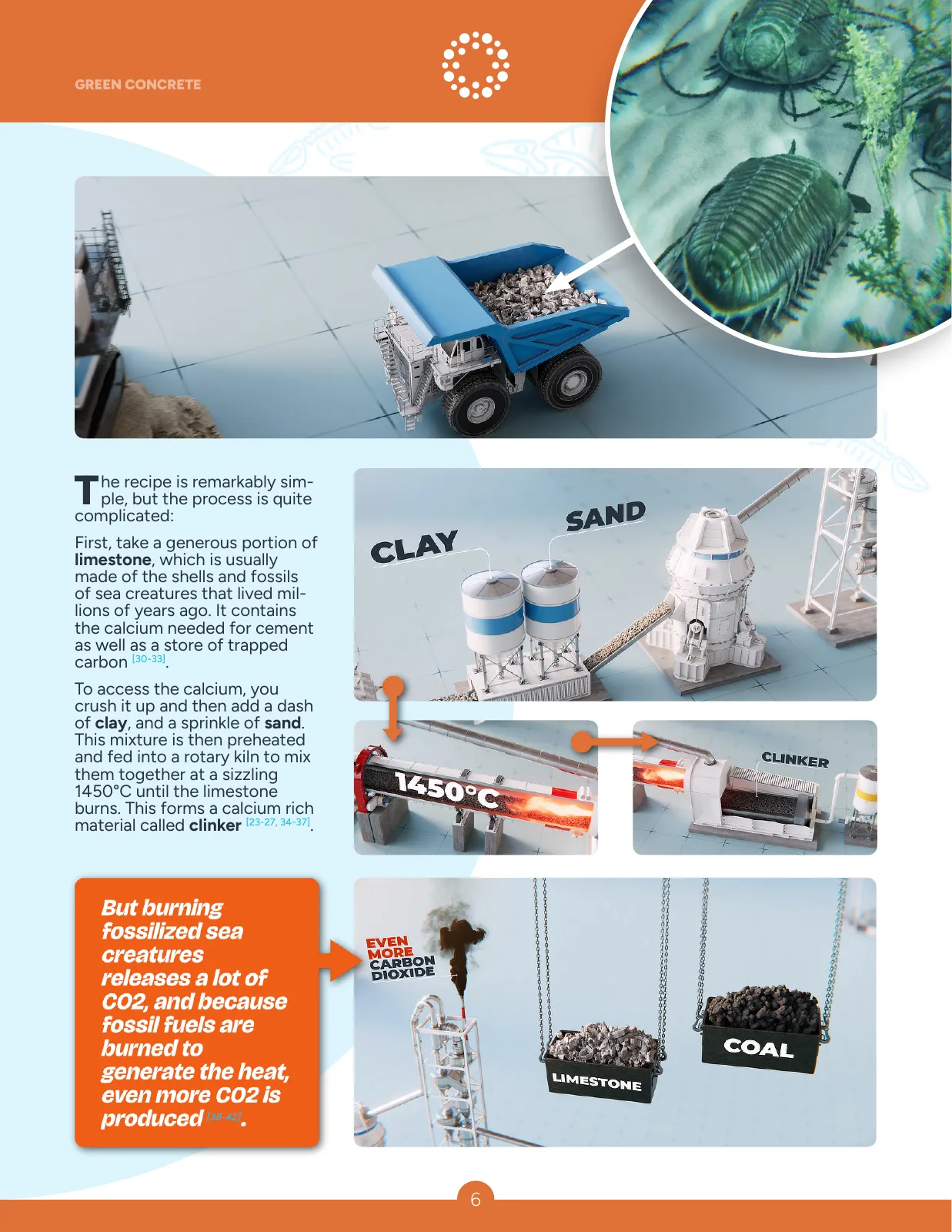
The recipe is remarkably simple, but the process is quite complicated:
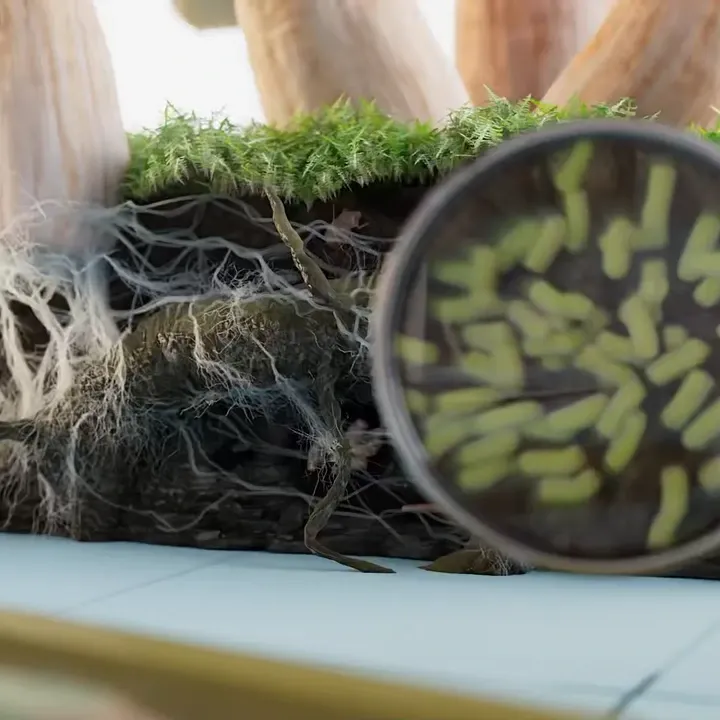
First, take a generous portion of limestone, which is usually made of the shells and fossils of sea creatures that lived millions of years ago. It contains the calcium needed for cement as well as a store of trapped carbon [30-33].
To access the calcium, you crush it up and then add a dash of clay, and a sprinkle of sand. This mixture is then preheated and fed into a rotary kiln to mix them together at a sizzling 1450°C until the limestone burns. This forms a calcium-rich material called clinker [23-27,34-37].
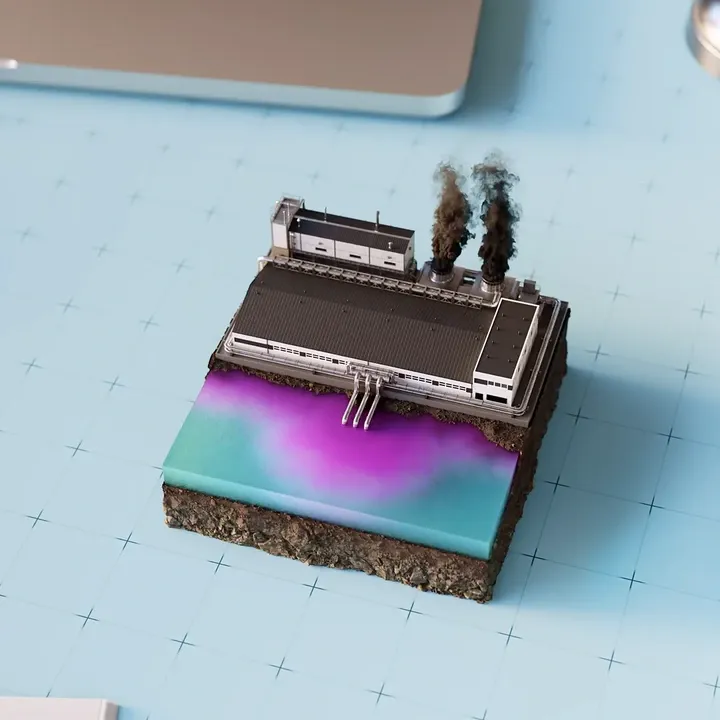
But burning fossilized sea creatures releases a lot of CO2, and because fossil fuels are burned to generate the heat, even more CO2 is produced [38-42].
Still following? We are here!
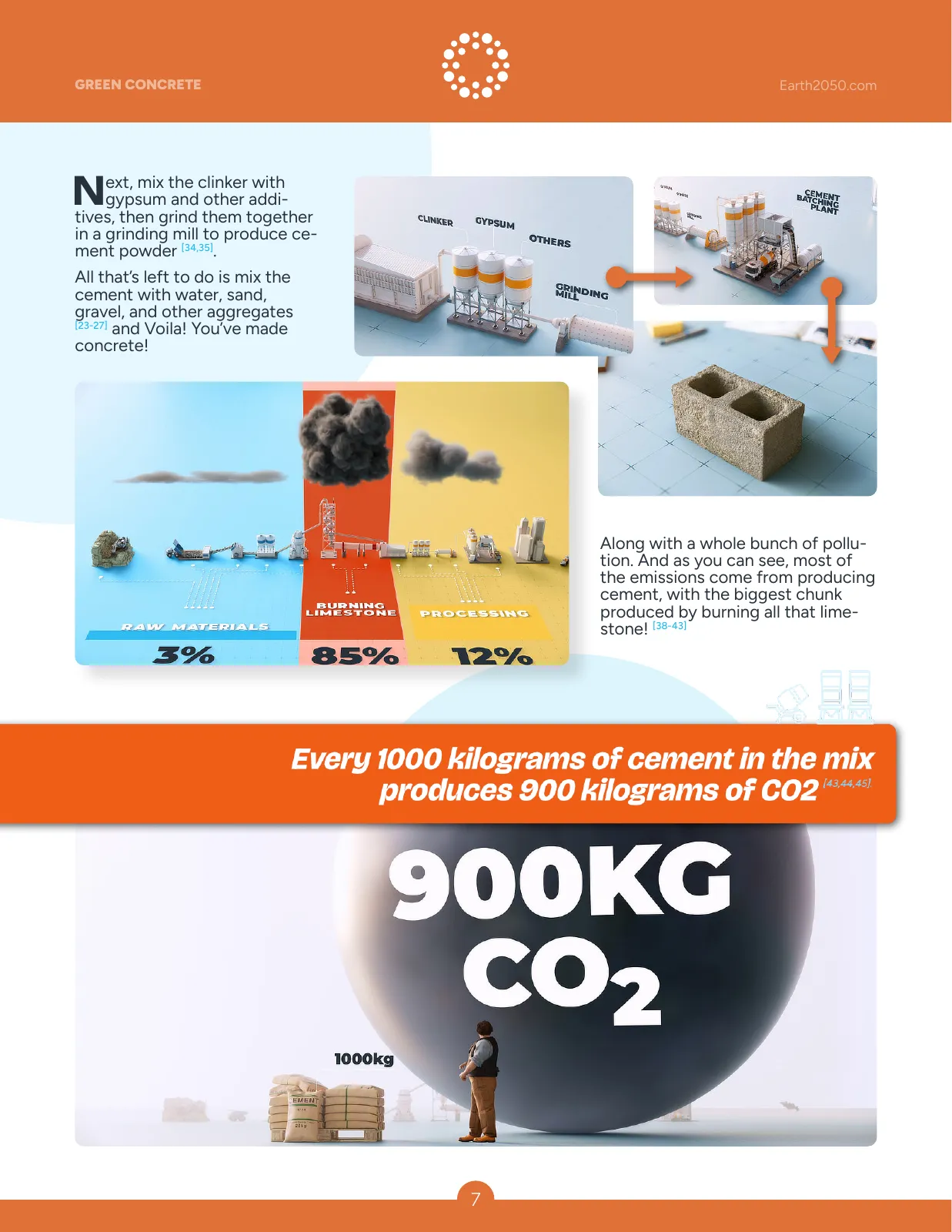
Next, mix the clinker with gypsum and other additives, then grind them together in a grinding mill to produce cement powder [34,35].
All that’s left to do is mix the cement with water, sand, gravel, and other aggregates [23-27] and Voila! You’ve made concrete!
Along with a whole bunch of pollution. And as you can see, most of the emissions come from producing cement, with the biggest chunk produced by burning all that limestone! [38-43]
In fact, every 1000 kilograms of cement in the mix produces 900 kilograms of CO2 [43,44,45].
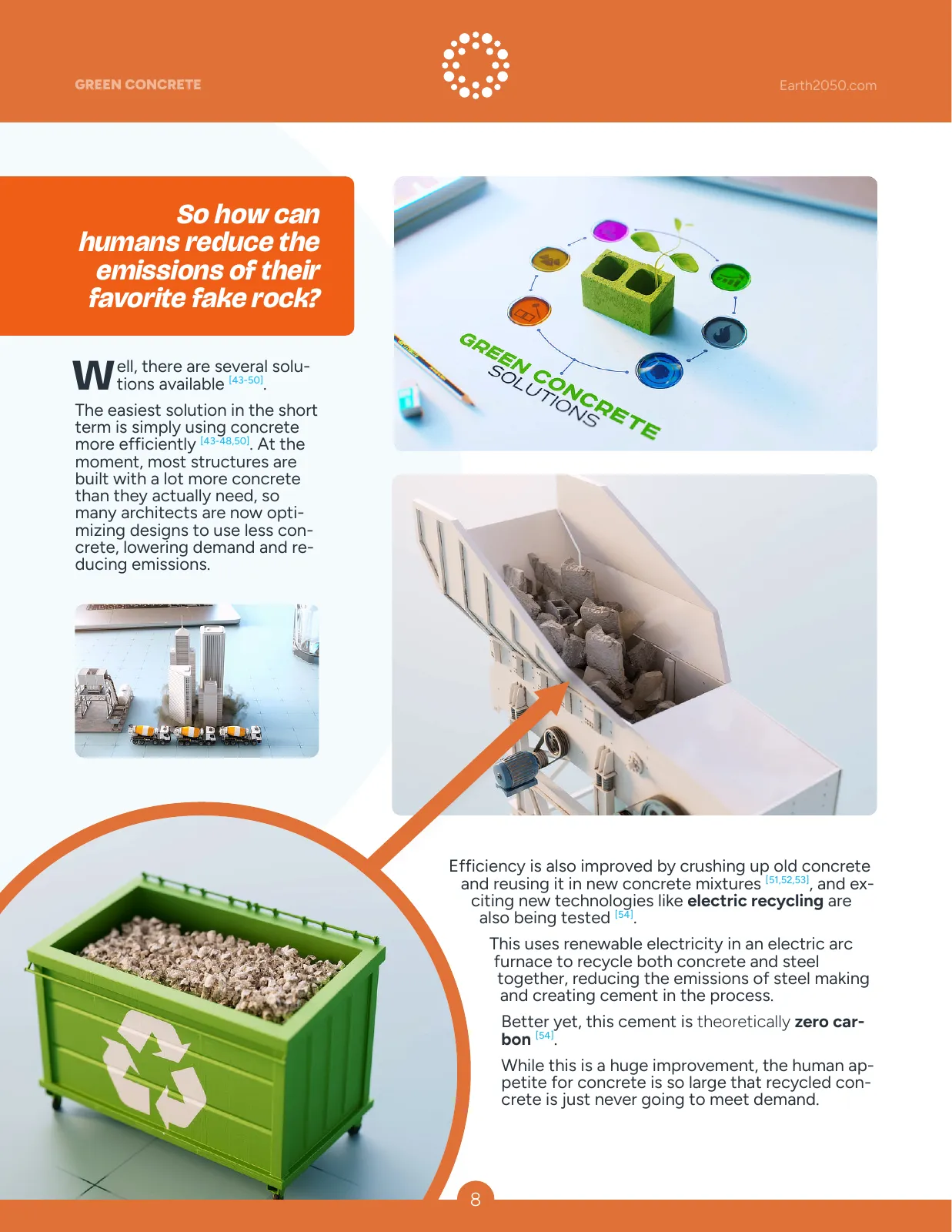
So how can humans reduce the emissions of their favorite fake rock? Well, there are several solutions available [43-50].
The easiest solution in the short term is simply using concrete more efficiently [43-48,50]. At the moment, most structures are built with a lot more concrete than they actually need, so many architects are now optimizing designs to use less concrete, lowering demand and reducing emissions.
Efficiency is also improved by crushing up old concrete and reusing it in new concrete mixtures [51,52,53], and exciting new technologies like electric recycling are also being tested [54]. This uses renewable electricity in an electric arc furnace to recycle both concrete and steel together, reducing the emissions of steelmaking and creating cement in the process. Better yet, this cement is theoretically zero carbon [54].
While this is a huge improvement, the human appetite for concrete is so large that recycled concrete is just never going to meet demand.
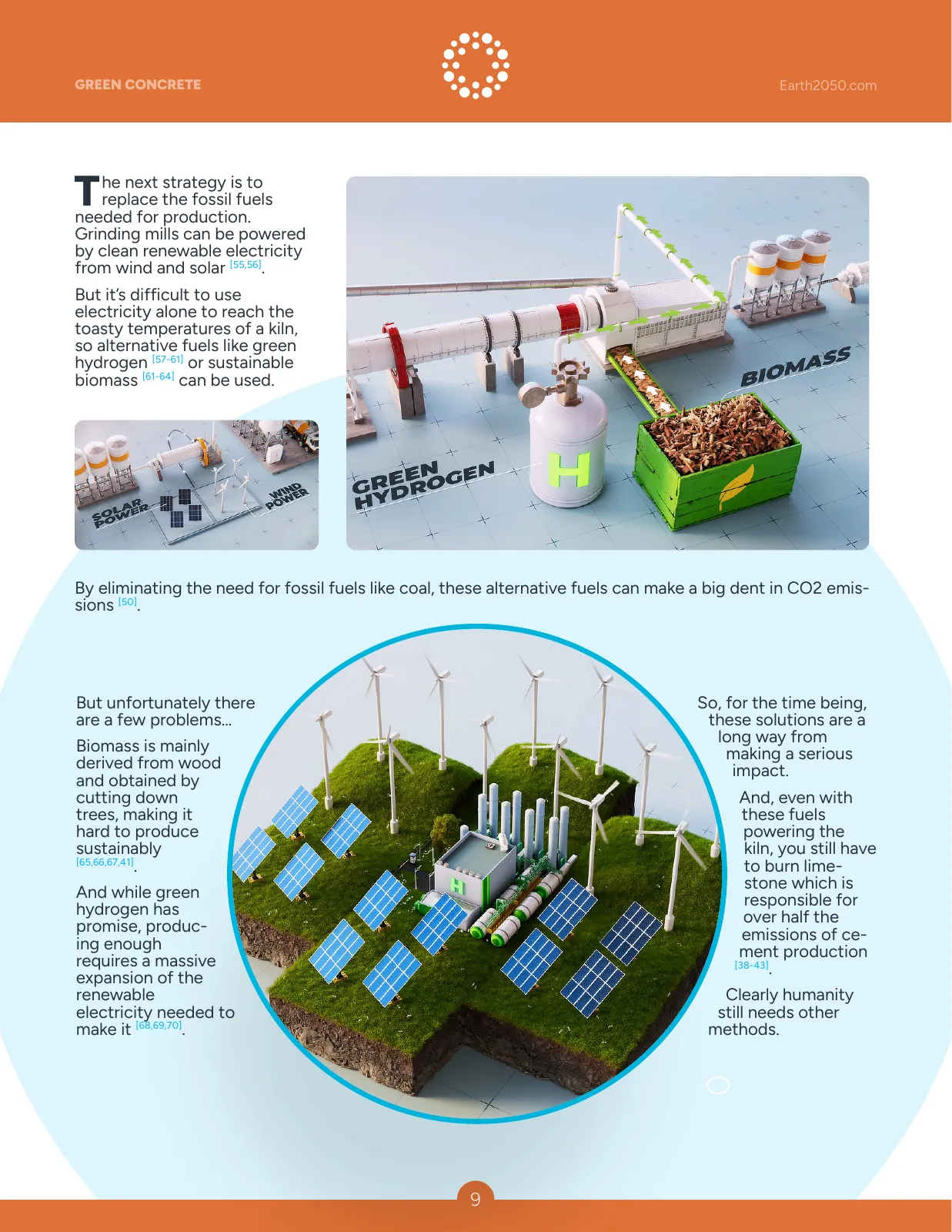
The next strategy is to replace the fossil fuels needed for production. Grinding mills can be powered by clean renewable electricity from wind and solar [55,56]. But it’s difficult to use electricity alone to reach the toasty temperatures of a kiln, so alternative fuels like green hydrogen [57-61] or sustainable biomass [61-64] can be used. By eliminating the need for fossil fuels like coal, these alternative fuels can make a big dent in CO2 emissions [50].
But unfortunately there are a few problems…
Biomass is mainly derived from wood and obtained by cutting down trees, making it hard to produce sustainably [65,66,67]. And while green hydrogen has promise, producing enough requires a massive expansion of the renewable electricity needed to make it [68,69,70].
So, for the time being, these solutions are a long way from making a serious impact. And, even with these fuels powering the kiln, you still have to burn limestone which is responsible for over half the emissions of cement production [38-43].
Clearly humanity still needs other methods.
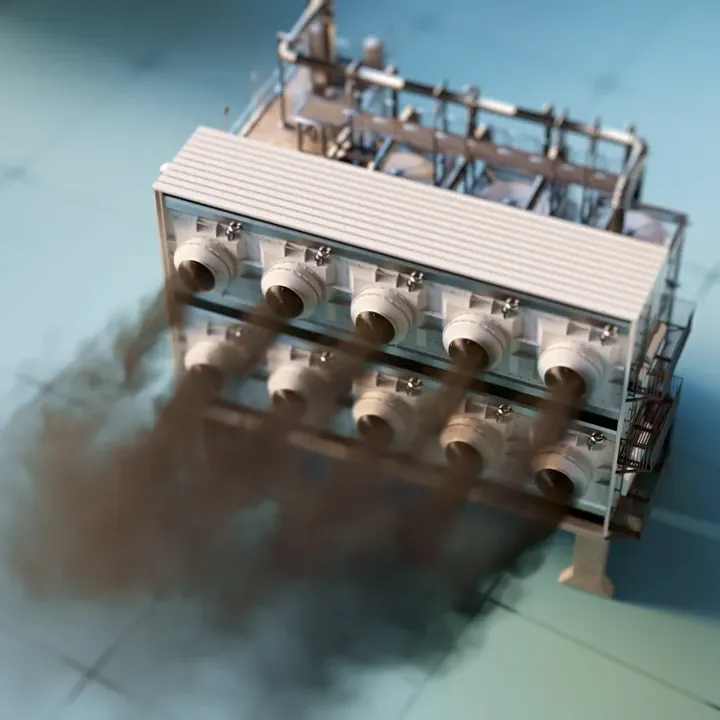
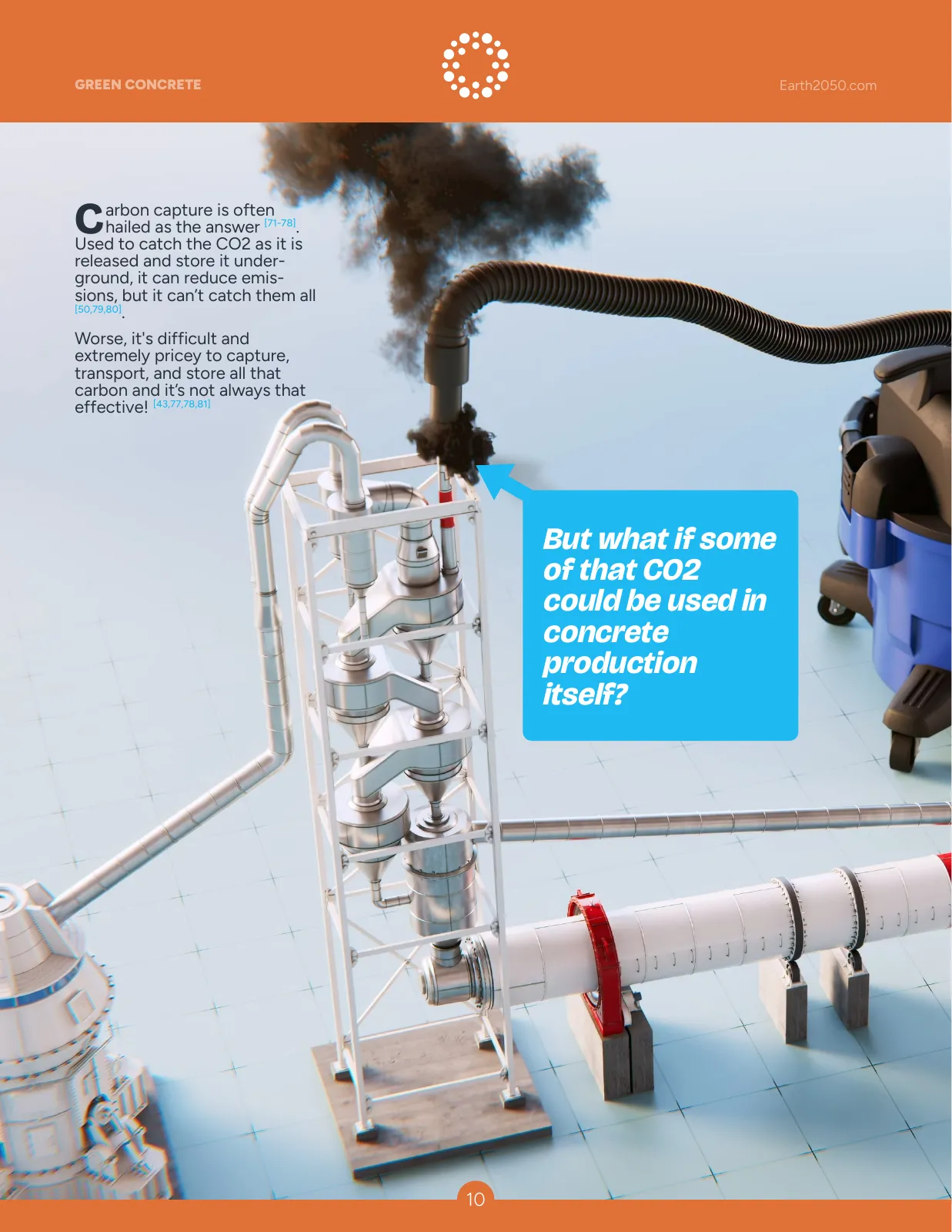
Carbon capture is often hailed as the answer [71-78]. Used to catch the CO2 as it is released and store it underground, it can reduce emissions, but it can’t catch them all [50,79,80]. Worse, it's difficult and extremely pricey to capture, transport, and store all that carbon and it’s not always that effective! [43,77,78,81]
But what if some of that CO2 could be used in concrete production itself?
Enter Carbon Curing:
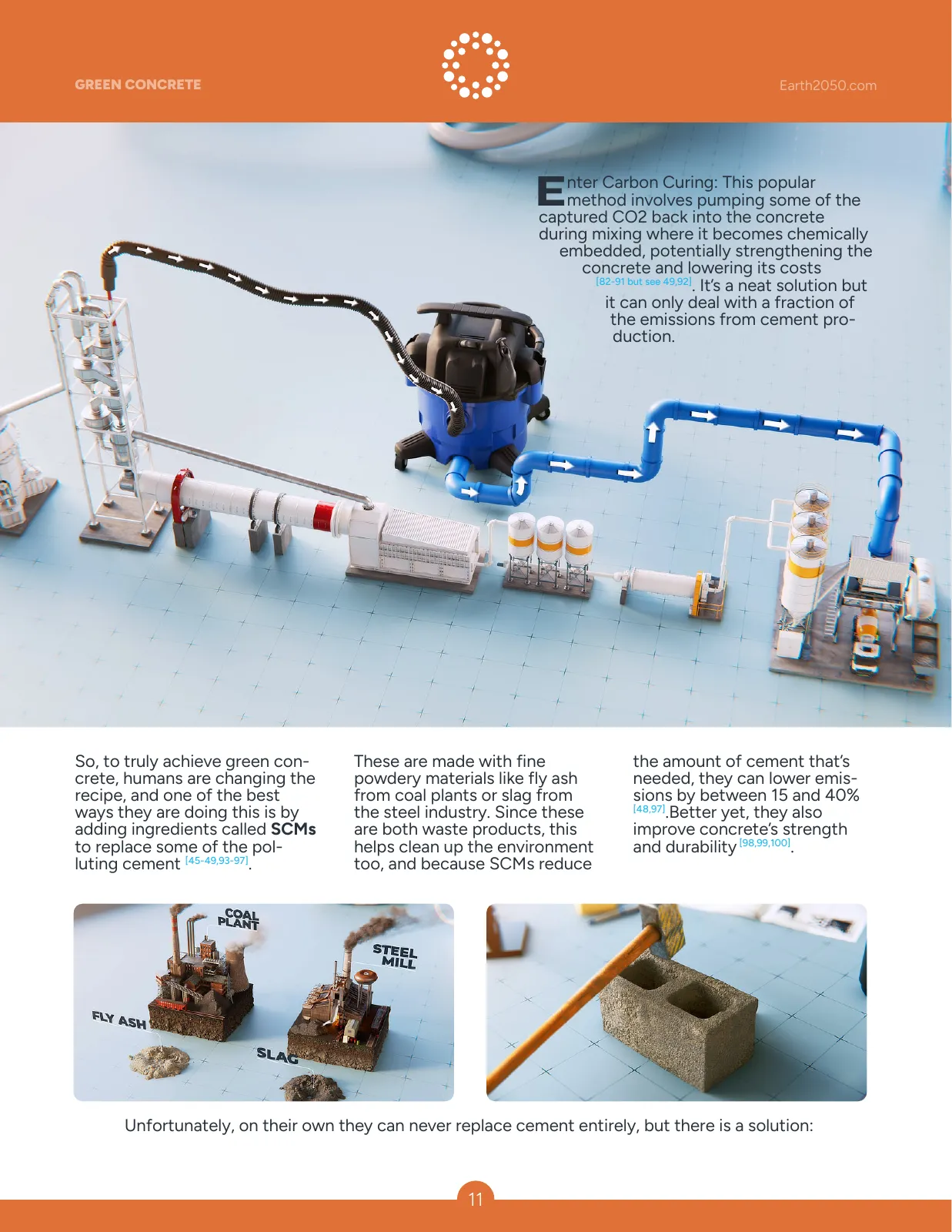
This popular method involves pumping some of the captured CO2 back into the concrete during mixing where it becomes chemically embedded, potentially strengthening the concrete and lowering its costs [82-91]. It’s a neat solution but it can only deal with a fraction of the emissions from cement production [92].
So, to truly achieve green concrete, humans are changing the recipe, and one of the best ways they are doing this is by adding ingredients called SCMs to replace some of the polluting cement [45-49,93-97].
These are made with fine powdery materials like fly ash from coal plants or slag from the steel industry. Since these are both waste products, this helps clean up the environment too, and because SCMs reduce the amount of cement that’s needed, they can lower emissions by between 15 and 40% [48,97]. Better yet, they also improve concrete’s strength and durability [98,99,100].
Unfortunately, on their own they can never replace cement entirely, but there is a solution… an alkaline solution!
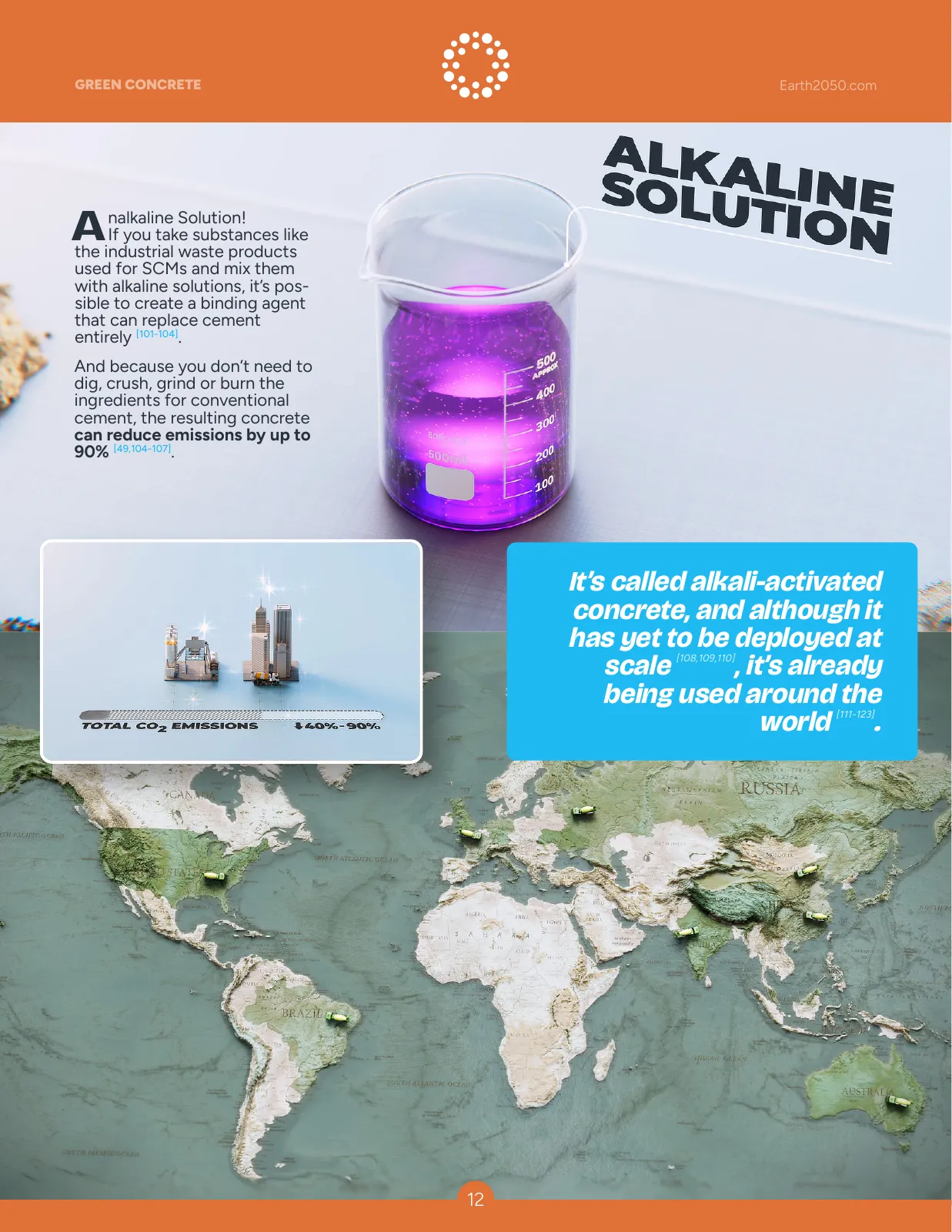
If you take substances like the industrial waste products used for SCMs and mix them with alkaline solutions, it’s possible to create a binding agent that can replace cement entirely [101-104]. And because you don’t need to dig, crush, grind or burn the ingredients for conventional cement, the resulting concrete can reduce emissions by up to 90% [49,104-107].
It’s called alkali-activated concrete, and although it has yet to be deployed at scale [108,109,110], it’s already being used around the world [111-123].
Humans love building things more than ever, building an area the size of Manhattan every 3 days, but can they do this without heating the planet? [124]
Well, yes!
By investing in research and development, deploying the full range of available solutions, and by expanding renewable electricity generation to support them, humanity can finally perfect the recipe for green concrete and build a zero-carbon future!
Expert Advisors
2
We would like to thank
Prof. Susan Bernal
University of Leeds
School of Civil Engineering
Caitlin Swalec
Global Energy Monitor
Program Director: Heavy Industry
Further Videos
11 links
These resources are non-affiliated.
General Overview & Climate Impact

Low-Carbon Cement & concrete
 The big problem with cement, and how to fix itVox
 How to fix the world's concrete problemDW Planet A
 This Green Cement Company Says It Can Cut Carbon Dioxide EmissionsCNBC
 How to make concrete green!Just Have a Think!
 Is Green Cement the Future of Sustainable Construction?Institute of Engineering and Technology
 A Concrete Plan for Sustainable Cement | Ryan GilliamTED
Alkali-activated & Geopolymer Concrete

Recycling & Circular Concrete
Further Reading
40 links
These resources are non-affiliated.
General/Overview
- The Concrete Conundrum - Chemistry World (In Print)
- Concrete’s carbon problem | Feature - Chemistry World
- Climate change: The massive CO2 emitter you may not know about - BBC News
- Concrete needs to lose its colossal carbon footprint - Nature
- Laying the foundation for a zero-carbon cement industry - McKinsey
- Concrete Future - Global Cement and Concrete Association
Scale of Concrete
- How much human-made mass exists on Earth? - World Economic Forum
- There Will Soon Be More Concrete Than Biomass on Earth - Heatmap News
- The Scale of Concrete
History
- Roman Concrete – Ancient Engineering Technologies - UW–Madison
- Riddle solved: Why was Roman concrete so durable? | MIT News - Massachusetts Institute of Technology (alternative press releases: The Past; Open Access Government)
- How seawater strengthens ancient Roman concrete - UNews
Manufacturing & Emissions
- How Cement is Made - Portland Cement Association
- CONCRETE - Carbon Smart Materials Palette
- Why cement emissions matter for climate change - Carbon Brief
- Cement Industry & Emissions - Cement
- The Cement Manufacturing Process - Thermo Fisher
Decarbonizing Concrete
- Low-Carbon Concrete Can Fight Global Warming - ASME
- Can different mixes and binders dent CO2 emissions enough to make a difference? - RIBAJ
- Top 10 Ways To Reduce Concrete’s Carbon Footprint - NRMCA
- A Complete Guide to Low Embodied Carbon Concrete - CarbonCure Technologies
- Five Insights on the Concrete and Cement Industry’s Transition to Net Zero - RMI
Recycling
- Cement recycling method could help solve one of the world’s biggest climate challenges - Department of Engineering (press release in BBC News)
- Can Concrete Be Recycled? - Sika
- Recycling Concrete Waste for a Circular Economy - Waste Managed
Renewable Fuels
- Fuel Cement Kilns With Green Hydrogen from Ammonia? - PACA
- UK Concrete Fuel-Switching – Carbon neutral and zero carbon kiln energy - MPA
- Electricity & Energy - Cement Europe
- Cut Carbon and Toxic Pollution, Make Cement Clean and Green - NRDC
- A wake-up call on green hydrogen: the amount of wind and solar needed is immense - Recharge
Carbon capture, utilization & storage
- Carbon Capture in the Cement Industry: Reducing Emissions - Verde AgriTech
- With Carbon Capture, Concrete Could One Day Be a Carbon Sink - NRDC
- New Low-Carbon Innovations in Cement and Concrete Production - CarbonCure Technologies
- Transforming concrete from a carbon problem to a carbon solution - Engineering Update
SCMs
- Supplementary Cementitious Materials - NAHB
- SCMs: Environmental and qualitative benefits - International Cement Review
- Achieving a path to net-zero carbon concrete - BRANZ
Alkali-activated (Geopolymer) Concrete
- Alkali-activated materials - Global Cement & Concrete Association
Extended Overviews
- Research: Rethinking Cement | Clean technology - Beyond Zero Emissions – Australia
- Three technologies to reduce climate change - Gigaton
References
136 links
- [1] The Concrete Conundrum | Chemistry World | Royal Society of Chemistry (In Print)
- [2] Cement and concrete as an engineering material: An historic appraisal and case study analysis | Engineering Failure Analysis
- [3] Concrete | Designing Buildings Magazine
- [4] Global human-made mass exceeds all living biomass | Nature (In: How much human-made mass exists on Earth? | World Economic Forum) (see Reference Notes*)
- [5] The biomass distribution on Earth | PNAS (see Reference Notes*)
- [6] Unexpectedly large impact of forest management and grazing on global vegetation biomass | Nature (see Reference Notes*)
- [7] Concrete needs to lose its colossal carbon footprint | Nature
- [8] Making Concrete Change: Innovation in Low-carbon Cement and Concrete | Chatham House
- [9] Global Carbon Atlas | Global Carbon Project (from Global Carbon Budget 2024 | ESSD)
- [10] EDGAR - The Emissions Database for Global Atmospheric Research | European Commission
- [11] Some Notes on Ancient Concrete | International Journal of Sciences
- [12] Unexpected Effects Of Historic Concrete Innovations | International Journal of Heritage Architecture
- [13] Mortar and Concrete: Precursors to Modern Materials | International Journal of Architectural Heritage
- [14] Roman Concrete – Ancient Engineering Technologies | UW–Madison
- [15] Hot mixing: Mechanistic insights into the durability of ancient Roman concrete | Science Advances (Press releases: Riddle solved: Why was Roman concrete so durable? | MIT News; New study uncovers the secrets of Roman concrete | The Past)
- [16] Phillipsite and Al-tobermorite mineral cements produced through low-temperature water-rock reactions in Roman marine concrete | American Mineralogist (Press release: How seawater strengthens ancient Roman concrete | UNews)
- [17] Joseph Aspdin | British mason | Britannica
- [18] Joseph Aspdin (1778-1855) | They Lived in Leeds | Thoresby Society
- [19] Towards sustainable concrete | Nature Materials
- [20] Wright Mix | Concrete Mixer Dimensions (see Reference Notes*)
- [21] There Will Soon Be More Concrete Than Biomass on Earth | Heatmap News (see Reference Notes*)
- [22] Area of Austria (km²) | European Health Information Gateway | WHO European Region (see Reference Notes*)
- [23] Concrete: Scientific Principles | Department of Materials Science and Engineering | University of Illinois Urbana-Champaign
- [24] How Is Cement Made? Concrete vs Cement: What's The Difference? | Chart Industries
- [25] What Is Concrete Made Of? | Everything About Concrete
- [26] CONCRETE | Carbon Smart Materials Palette | Architecture 2030
- [27] Why cement emissions matter for climate change | Carbon Brief
- [28] Concrete Embodied Carbon Footprint Calculator | Circular Ecology
- [29] Cut Carbon and Toxic Pollution, Make Cement Clean and Green | NRDC
- [30] Limestone | Characteristics, Formation, Texture, Uses, & Facts | Britannica
- [31] Limestone: The Calcium Carbonate Chemical Sedimentary Rock | Geology.com
- [32] The rock called limestone | Nordkalk
- [33] Unveiling the Geological Significance and Industrial Application of Limestone: A Comprehensive Review | IEM Journal
- [34] How Cement is Made | Portland Cement Association
- [35] The Cement Manufacturing Process | ThermoFisher Scientific
- [36] Clinker Production - an overview | ScienceDirect Topics
- [37] Clinker Production Process | Japan Ministry of the Environment
- [38] CO2 Emissions From Cement Production | IPCC
- [39] Cement Industry & Emissions | Cement Industry Federation
- [40] Calculating CO2 process emissions from Cement Production | GHG Protocol
- [41] Cement, waste and carbon market | European Commission
- [42] Emissions from the Cement Industry – State of the Planet | Columbia Climate School
- [43] Research: Rethinking Cement | Clean technology | Beyond Zero Emissions – Australia
- [44] Perspectives on environmental CO2 emission and energy factor in Cement Industry | IOPscience
- [45] Low-Carbon Concrete Can Fight Global Warming | ASME
- [46] Can different mixes and binders dent CO2 emissions enough to make a difference? | RIBAJ
- [47] Five Insights on the Concrete and Cement Industry’s Transition to Net Zero | RMI
- [48] Top 10 Ways To Reduce Concrete’s Carbon Footprint | NRMCA
- [49] Three technologies to reduce climate change | Gigaton
- [50] Concrete Future | Global Cement and Concrete Association (see page Getting to Net Zero | Global CCA for emissions reductions breakdown)
- [51] Can Concrete Be Recycled? | Sika Group
- [52] How to Recycle Your Old Concrete | Concrete Drilling Services
- [53] Recycling Concrete Waste for a Circular Economy | Waste Managed
- [54] Electric recycling of Portland cement at scale | Nature (Press releases: University of Cambridge, BBC News, ScienceDaily)
- [55] Decarbonization of cement production by electrification | Journal of Cleaner Production
- [56] Cement Grinding Units running on 100% renewable electricity | CMA India
- [57] HeidelbergCement produces cement with climate-neutral fuel mix using hydrogen technology | Heidelberg Materials
- [58] Cement Kilns in a Green Hydrogen Economy | PACA
- [59] Carbon-neutral cement: The role of green hydrogen | International Journal of Hydrogen Energy
- [60] Use of alternative fuels in cement industry | Proceedings of the 12th International Conference on Protection and Restoration of the Environment
- [61] Options for switching UK cement production sites to near zero CO2 emission fuel: Technical and financial feasibility | UK Gov
- [62] Fuel Switching – Carbon neutral and zero carbon kiln energy | MPA UK Concrete
- [63] Deployment of bio-CCS in the cement sector | IEA Bioenergy
- [64] Sustainable transition towards biomass-based cement industry: A review | Renewable and Sustainable Energy Reviews
- [65] A global analysis of deforestation due to biofuel development | CIFOR-ICRAF
- [66] Biofuels policies massively increase deforestation by 2030 – Study | EU Transport & Environment
- [67] Biomass to biofuel: Impacts and mitigation of environmental, health, and socioeconomic challenges | Energy Conversion & Management X
- [68] Renewables 2022 | IEA (In: Global green hydrogen production set to require 50GW of renewable energy by 2027: IEA | Hydrogen Insight)
- [69] A wake-up call on green hydrogen: the amount of wind and solar needed is immense | Recharge
- [70] Making the breakthrough: Green hydrogen policies and technology costs | IRENA
- [71] A review on CO2 capture and sequestration in the construction industry: Emerging approaches and commercialised technologies | Journal of CO2 Utilization
- [72] Carbon capture, utilisation and storage | Global Cement & Concrete Association
- [73] Carbon capture and storage (CCS): the way forward | Energy & Environmental Science | Royal Society of Chemistry
- [74] Industry Guide to Carbon Capture and Storage at Cement Plants | US Department of Energy
- [75] With Carbon Capture, Concrete Could One Day Be a Carbon Sink | NRDC
- [76] Brevik CCS – World's first CO₂-capture facility in the cement industry | Brevik CCS | Heidelberg Materials
- [77] Carbon Capture for CO2 Emission Reduction in the Cement Industry in Germany | Energies
- [78] Carbon Capture in the Cement Industry: Reducing Emissions | Verde AgriTech
- [79] Leakage risk assessment of a CO2 storage site: A review | Earth-Science Reviews
- [80] Unabated: the Carbon Capture and Storage 86 billion tonne carbon bomb aimed at derailing a fossil phase-out | Climate Analytics
- [81] Is carbon capture too expensive? – Analysis | IEA
- [82] Carbon capture in ultra-high performance concrete using pressurized CO2 curing | Construction and Building Materials (see Reference Notes*)
- [83] Curing of Concrete by Carbon Dioxide | International Research Journal of Engineering and Technology (see Reference Notes*)
- [84] Integration of carbon sequestration into curing process of precast concrete | Canadian Journal of Civil Engineering (see Reference Notes*)
- [85] Carbon Storage through Concrete Block Carbonation | Journal of Clean Energy Technologies (see Reference Notes*)
- [86] Transforming concrete from a carbon problem to a carbon solution | Engineering Update (see Reference Notes*)
- [87] The Performance of Carbonation-Cured Concrete | Materials (see Reference Notes*)
- [88] Carbon Utilization with CarbonCure Concrete: A Measurable and Verifiable Solution | CarbonCure Technologies (see also CarbonCure Ready Mix Technology - Optimized Concrete Mixture | CarbonCure Technologies) (see Reference Notes*)
- [89] Cement and Concrete Companies Leading the Net-Zero Transition | Center for American Progress (see Reference Notes*)
- [90] Calcium Carbonate Cement: A Carbon Capture, Utilization, and Storage (CCUS) Technique | Materials (see Reference Notes*)
- [91] Mechanical Properties of Concrete when cured with Carbon dioxide | IJEAT (see Reference Notes*)
- [92] Carbon dioxide utilization in concrete curing or mixing might not produce a net climate benefit | Nature Communications (see Reference Notes*)
- [93] Supplementary Cementitious Materials | NAHB
- [94] Supplementary Cementitious Material - an overview | ScienceDirect Topics
- [95] SCM basics | EcoSmart Concrete
- [96] Conversion of waste into sustainable construction materials: A review of recent developments and prospects | Materials Today Sustainability
- [97] SCMs: environmental and qualitative benefits | International Cement Review
- [98] Long-term strength and durability performance of eco-friendly concrete with SCMs | Innovative Infrastructure Solutions
- [99] Mechanical and durability performance of sustainable concretes containing conventional and emerging SCMs | Developments in the Built Environment
- [100] Effects of different SCMs on durability and mechanical properties of cement composite | Heliyon
- [101] Alkali-activated materials | Global Cement & Concrete Association
- [102] Geopolymers: The Green Alternative to Traditional Materials for Engineering Applications | Infrastructures
- [103] Geopolymers as an alternative to Portland cement: An overview | Construction and Building Materials
- [104] Geopolymer concrete for clean and sustainable construction – A state-of-the-art review on the mix design approaches | Structures
- [105] Comparison and assessment of carbon dioxide emissions between alkali-activated materials and OPC cement concrete | Journal of Traffic and Transportation Engineering
- [106] Environmentally Driven Geopolymer Cement Applications | Geopolymer Institute
- [107] Geopolymer cement - Review | Geopolymer Institute
- [108] Port of Rotterdam Authority trials the use of cement-free concrete in the maritime environment | Port of Rotterdam
- [109] Geopolymer concrete trial showcases collaborative innovation | Transport for NSW
- [110] Suvo Strategic Minerals Completes Successful Geopolymer Concrete Trial Pours | The Assay
- [111] Commercialisation of geopolymer concrete in Australia | IBCC (see Reference Notes*)
- [112] US-based Geopolymer Solutions For Extreme Environments - Alchemy Geopolymer Solutions | AGS (see Reference Notes*)
- [113] Development of green self-compacting geopolymer concrete using recycled waste and implementing circular economy principle | Indian Institute of Technology Madras (see Reference Notes*)
- [114] Zero cement concrete | UK GBC (see Reference Notes*)
- [115] Geopolymer from kaolin in China: An overview | Applied Clay Science (see Reference Notes*)
- [116] Geopolymer concrete systems for production of environmentally friendly building materials | TUDelft (see Reference Notes*)
- [117] Wagners' cement-free concrete gains traction | Financial Review (see Reference Notes*)
- [118] Malaysia Fly Ash Based Geopolymer Cement and Concrete: Processing and Application | AbeBooks (see Reference Notes*)
- [119] Geopolymers Studies in Brazil: A Meta-Analysis and Perspectives | IJEAT (see Reference Notes*)
- [120] Soluble silicates | GeoMITS (see Reference Notes*)
- [121] Recent Development and Application of Concrete-Polymer Composites in Korea | De Gruyter (see Reference Notes*)
- [122] Geopolymer concrete printing | Singapore Centre for 3D Printing | NTU Singapore (see Reference Notes*)
- [123] GEOPOLYMER_101 | Renca Geopolymer (see Reference Notes*)
- [124] High-spatiotemporal-resolution mapping of global urban change from 1985 to 2015 | Nature Sustainability (see Reference Notes*)
Reference Notes
7
Global man-made materials exceeds all living biomass
The comparison reported in Nature [4] is based on dry mass, not wet weight. Biomass estimates exclude water content, which is significant in living organisms.
Man-made materials refers to the cumulative dry mass of inanimate anthropogenic materials (e.g., concrete, aggregates, metals, plastics etc). The finding indicates that total dry human-made mass surpassed total dry global biomass around 2020.
The annual production of concrete and the calculations for its comparison to the area of Austria
One cubic meter of concrete weighs an average of 2.4 metric tons [20]. Therefore 30 billion metric tons = 12.5 billion cubic meters. This value is supported by [21].
Converting to cubic kilometers, 12.5 billion cubic meters is equivalent to 12.5 km3.
The area of Austria is 83,879 km² [22].
To find thickness of concrete, divide volume by surface area: 12.5 km3 / 83,879 km2 = 0.0001490242 km.
0.0001490242 km = 14.90242 cm = 5.8671 in
Limestone Calcination during Cement Production
In the script, “burning limestone” is used as an informal shorthand. Strictly speaking, the limestone itself is not burned through combustion. As it is heated, calcium carbonate undergoes calcination: a heat-driven chemical reaction known as thermal decomposition, which separates it into calcium oxide, or lime, and carbon dioxide:
CaCO₃ + heat → CaO + CO₂
Calcination largely occurs before the material reaches the kiln’s peak temperature of approximately 1,450°C. At higher temperatures, the resulting lime reacts with silica and other materials to form clinker.
The CO₂ released through calcination comes from the limestone itself and is therefore distinct from the CO₂ produced by burning fossil fuels to heat the kiln. Replacing those fuels with low-carbon heat can reduce the kiln’s combustion emissions, but it does not by itself eliminate the process emissions released through calcination [23,27,38,40,42].
Carbon Curing, Carbonation, Mineralization and Carbon Embedding – Clarification
‘Carbon curing’ refers specifically to a method in which captured CO₂ is injected into fresh concrete during mixing or curing, where it reacts with calcium compounds in the cement to form stable carbonates. This can modestly improve strength while permanently storing small quantities of CO₂ within the material matrix. However, carbon curing is only one form of carbon utilization in concrete.
Alternatively, ‘carbonation’ refers to the reaction of CO₂ with hardened, hydrated cement-based compounds, such as concrete, over time. Natural carbonation occurs slowly during a concrete structure’s life, allowing it to gradually absorb CO2 from its surroundings. Accelerated carbonation processes (sometimes called mineralization curing) expose concrete or recycled aggregates to concentrated CO₂ streams to deliberately increase CO₂ uptake. These processes are chemically related but operationally distinct from in-mix carbon curing technologies.
Beyond curing-based approaches, carbon embedding can also be achieved through materially different strategies. One route involves incorporating bio-based carbon-containing materials (such as biochar) into concrete mixtures A,B. Biochar-concrete composites can physically store natural, biogenic carbon while potentially improving durability and moisture regulation properties. These approaches differ from carbonation because they embed carbon in solid form rather than infusing or mineralizing gaseous CO₂.
A further extension involves developing bio-based cement composites or partially replacing mineral aggregates with renewable fibres or plant-derived materials C-I. At the far end of this spectrum, some construction systems substitute conventional concrete entirely with bio-based or hybrid composites designed for structural or semi-structural applications E-I. These approaches are distinct from carbon curing, as they reduce or replace mineral cement inputs rather than treating emitted CO₂.
In sum, carbon curing is one specific carbon utilization pathway within a wider landscape of strategies. Carbonation/mineralization technologies, biochar incorporation, biobased composites, and alternative bio-based construction systems represent technically distinct approaches that either store carbon, reduce cement demand, or substitute mineral binders altogether.
- A Biochar-concrete: A comprehensive review of properties, production and sustainability | Case Studies in Construction Materials
- B Novel biochar-concrete composites: Manufacturing, characterization and evaluation of the mechanical properties | Science of The Total Environment
- C Structural and mechanical properties of bamboo fiber bundle and fiber/bundle reinforced composites: a review | Journal of Materials Research and Technology
- D Hemp as a potential raw material toward a sustainable world: A review | Heliyon
- E Biobased building materials for sustainable future: An overview | Materials Today: Proceedings
- F Building with renewable materials | De Gruyter Brill
- G Improving the utility, performance, and durability of wood- and bio-based composites | Annals of Forest Science
- H Biobased Structural Composite Materials for Housing and Infrastructure Applications: Opportunities and Challenges | Proceedings of the NSF housing research agenda workshop
- I Reducing the Environmental Impact of Construction by Using Renewable Materials | Journal of Renewable Materials
Strength of Carbon Cured Concrete
Studies report mixed results. Depending on the concrete mix and process used, CO₂ curing or mixing can increase concrete strength, have little effect, or reduce it [82-92]. Its climate benefit is also not automatic. It depends on factors including the energy required for CO₂ capture, transport and curing, how much CO₂ remains stored, whether the process increases or reduces concrete strength, and whether additional cement is consequently required. [92] found lower compressive strength in 31 of the 99 experimental datasets assessed. Where additional cement is then required to achieve equivalent strength, the resulting emissions can offset or exceed the benefit of the CO₂ stored. Overall, the study found that net emissions increased in many of the published experimental cases it assessed.
Global alkali-activated concrete usage
The following are some examples of where alkali-activated concrete (AAC) has been used around the world:
- [111] Australia
- [112] USA
- [113] India
- [114] UK
- [115] China
- [116] The Netherlands
- [117] Germany
- [118] Malaysia
- [119] Brazil
- [120] Italy
- [121] South Korea
- [122] Singapore
- [123] Japan, Ukraine, Finland, Russia, and Ireland are a few examples from this source
The references refer to both alkali-activated concrete as well as geopolymer concrete. In materials science literature, alkali-activated materials (AAMs) are generally treated as the broader category, while geopolymers are defined as a specific subset within that family. Under this prevailing framework, AAMs refer to binders produced by activating ‘aluminosilicate’ precursors (e.g., fly ash, slag, and other SCMs) with alkaline solutions. This umbrella includes a range of systems with varying chemistries and reaction products.
Within that broad classification, geopolymers are typically described as low-calcium, aluminosilicate binders that form a three-dimensional structure. In this view, all geopolymers may be considered alkali-activated materials, but not all alkali-activated materials are geopolymers. This interpretation is widely adopted in peer-reviewed journals and by leading researchers, whereby AAM serves as the inclusive technical term, while ‘geopolymer’ denotes a particular compositional and structural subgroup.
However, an alternative school of thought argues that geopolymers constitute a distinct class of materials defined by specific polymerization chemistry. In this interpretation, not all alkali-activated systems qualify as geopolymers, particularly calcium-rich systems whose reaction products differ structurally. This perspective resists using AAM as the primary umbrella term and instead treats ‘geopolymer’ as the more chemically precise category.
As a result, terminology can vary depending on author affiliation, research tradition, or institutional context. In most contemporary academic and engineering literature, the AAM-as-umbrella classification is dominant, especially in comparative studies assessing environmental performance against ordinary Portland cement. Nonetheless, emerging publications maintain a clearer separation between the terms.
Area of Manhattan being built every 3 days
[124] indicates that global urban extent expanded by 9,687 km2 per year between 1985 and 2015. This is equivalent to (9687/365 =) 26.539 km2 per day.
The area of Manhattan is 59.1km2 J.
59.1/26.539 = 2.2 days.