
Agriculture
Vertical Farming
Is Vertical Farming the Future of Food?
Growing food upward, not outward, saving space and water, and keeping food local. We show how crops grow without soil using hydroponics and aeroponics. They're lit by LEDs and guided by automation. We look at where urban sites could shine. Then we outline today's limits: energy, crop choice, skills and high costs, and the pathways that could help, like using renewables and waste heat. Big harvest, small footprint, great choice for space exploration!
Download the Guide2.4overall
How this solution scores
- Impact1 / 5Grows a narrow range of crops, and the lighting demands a lot of electricity.
- Speed3 / 5Farms can be built quickly, but high costs limit wider adoption.
- Cost1 / 5Among the most expensive ways to grow food.
- Readiness3 / 5Commercially operating, but mainly for salads and herbs.
- Nature4 / 5Saves land and water, but only as clean as its power supply.
Guide
This is the illustrated transcript of the film.
Quiz
Question 1 of 10
Roughly what share of global greenhouse gas emissions comes from farming?
Score 0 / 10
Transcript
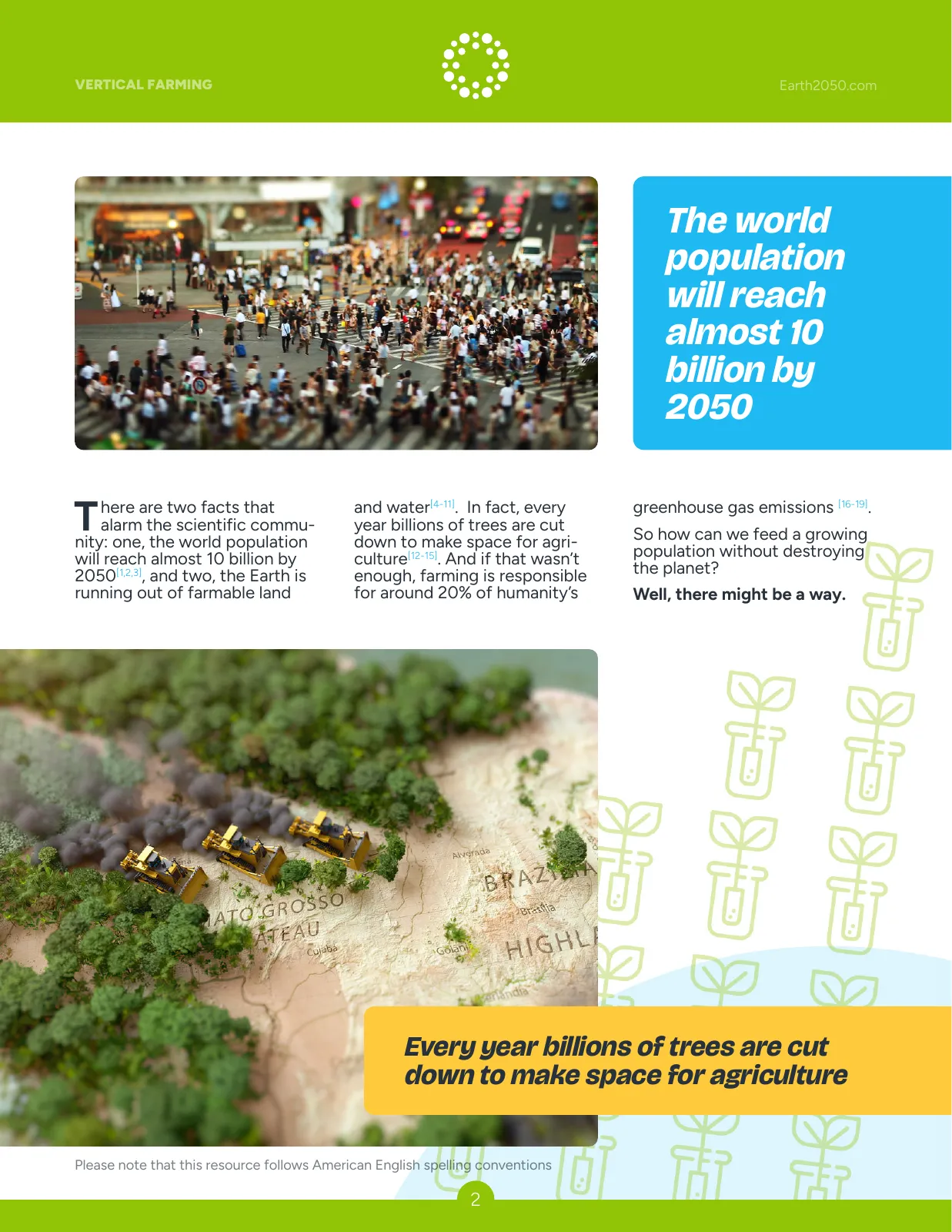
There are two facts that alarm the scientific community: One, the world population will reach almost 10 billion by 2050 [1,2,3], and two, the Earth is running out of farmable land and water [4-11].
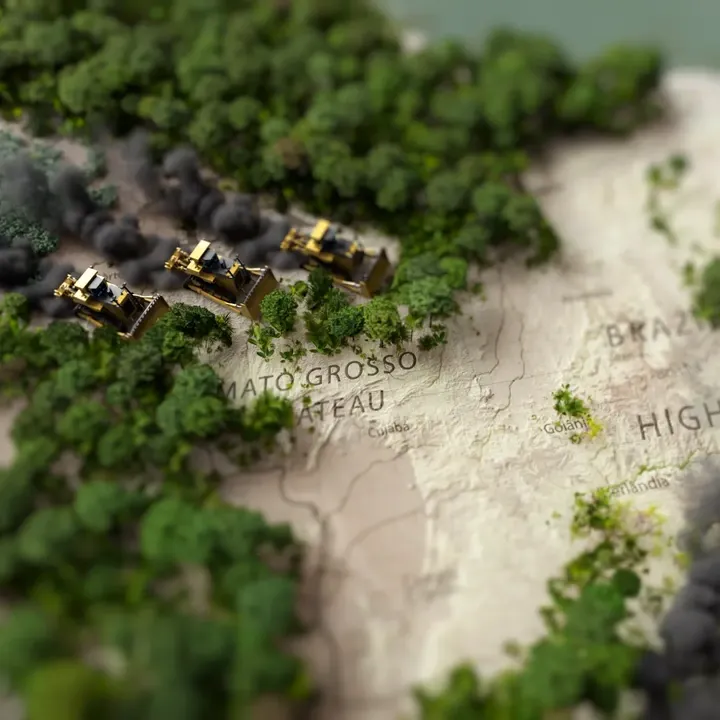
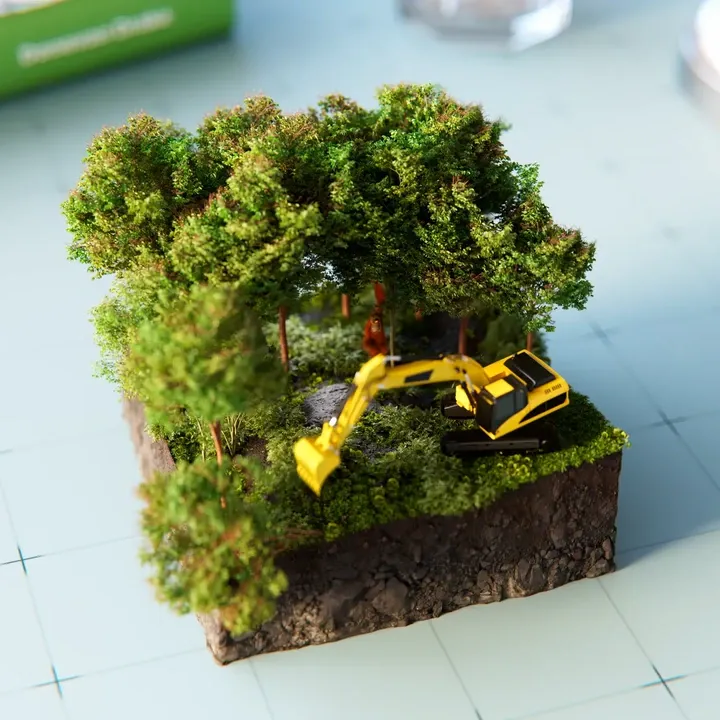
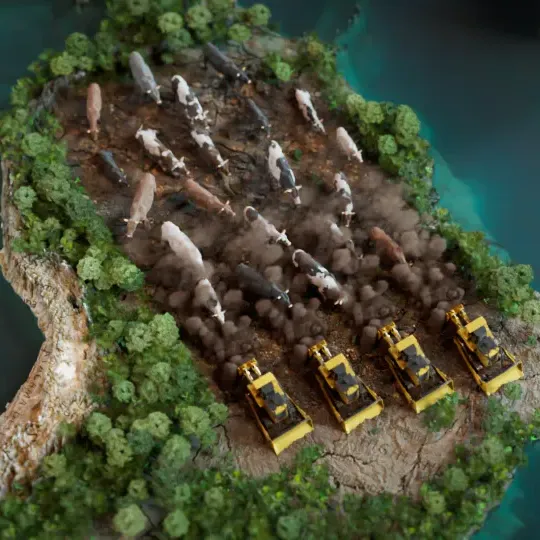
In fact, every year billions of trees are cut down to make space for agriculture [12-15]. And if that wasn’t enough, farming is responsible for around 20% of humanity’s greenhouse gas emissions [16-19]. So how can we feed a growing population without destroying the planet? Well, there might be a way.
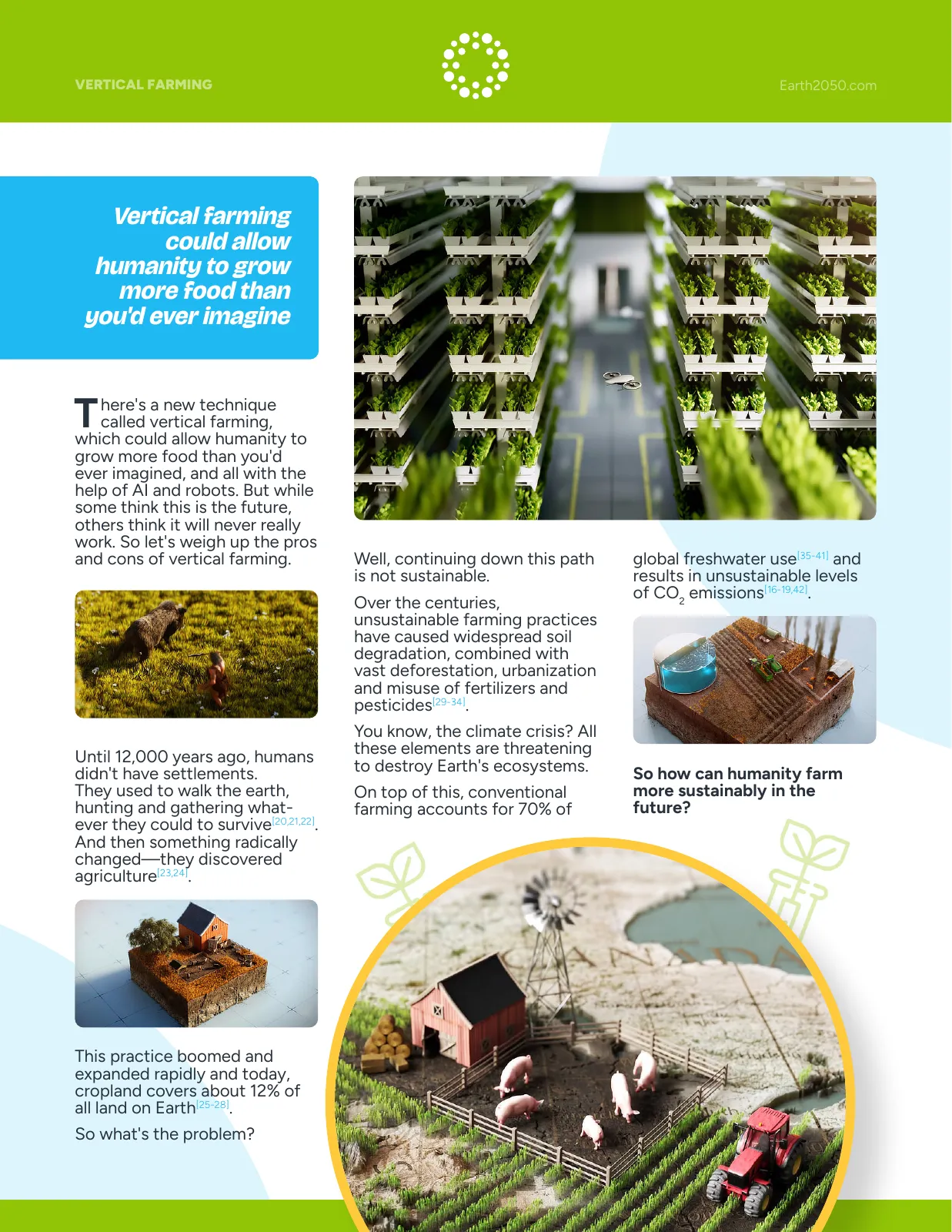
There's a new technique called vertical farming, which could allow humanity to grow more food than you'd ever imagine, and all with the help of AI and robots. But while some think this is the future, others think it will never really work. So let's weigh up the pros and cons of vertical farming.
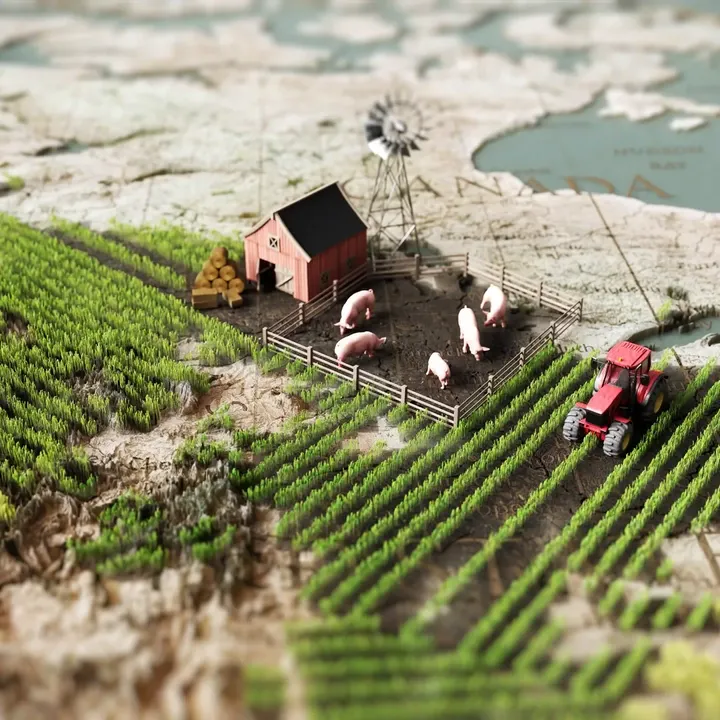
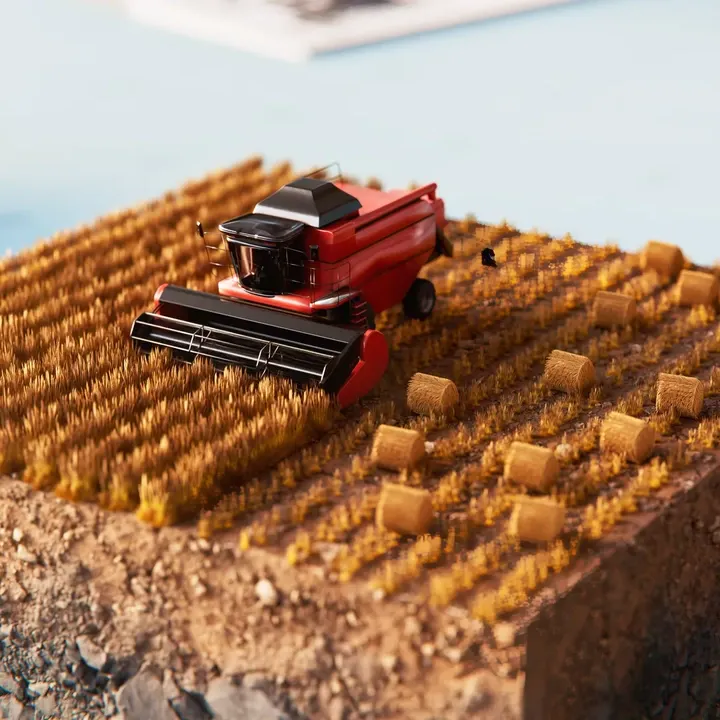
Until 12,000 years ago, humans didn't have settlements. They used to walk the earth, hunting, and gathering whatever they could to survive [20,21,22]. And then something radically changed: they discovered agriculture [23,24]. This practice boomed and expanded rapidly and today, cropland covers about 12% of all land on Earth [25-28].
So what's the problem?
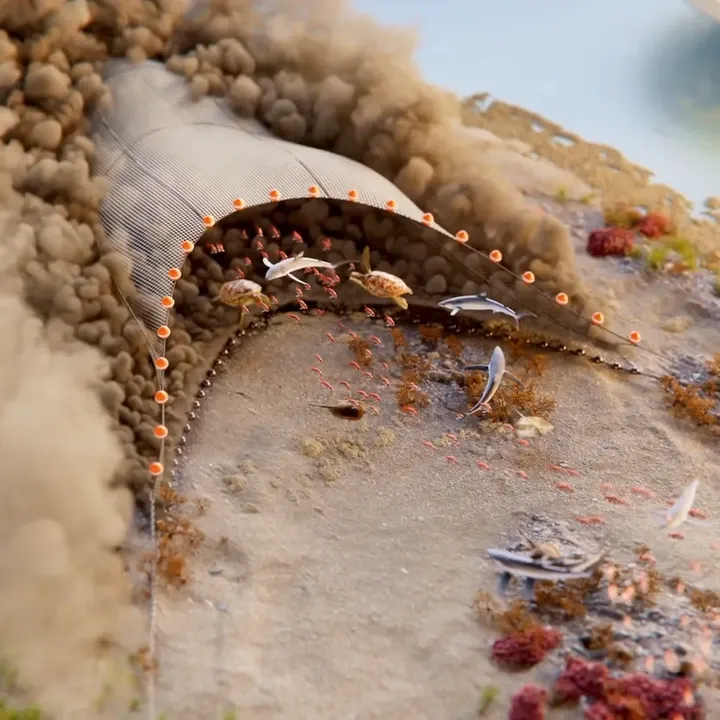
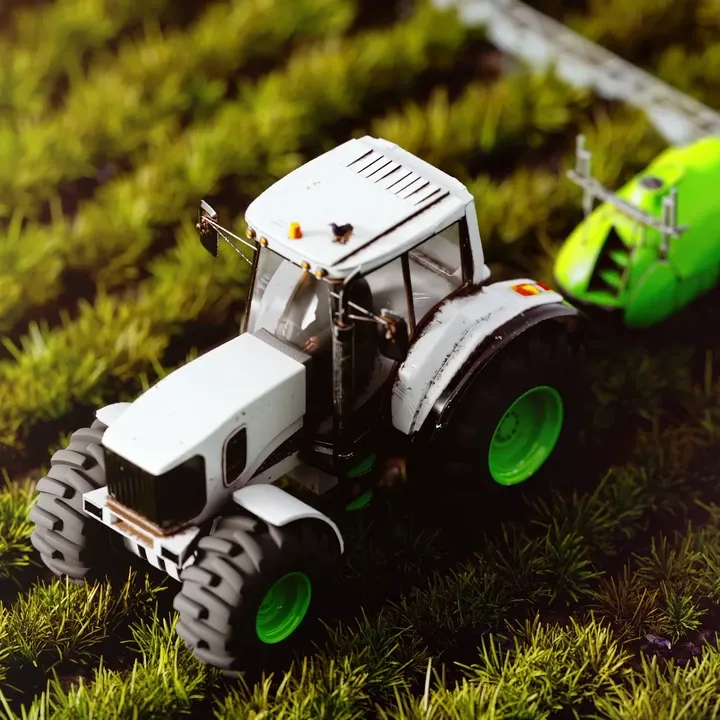
Well, continuing down this path is not sustainable. Over the centuries, unsustainable farming practices have caused widespread soil degradation, combined with vast deforestation, urbanization and misuse of fertilizers and pesticides [29-34]… you know, the climate crisis? All these elements are threatening to destroy Earth's ecosystems.
On top of this, conventional farming accounts for 70% of global freshwater use [35-41] and results in unsustainable levels of CO2 emissions [16-19,42].
So how can humanity farm more sustainably in the future?
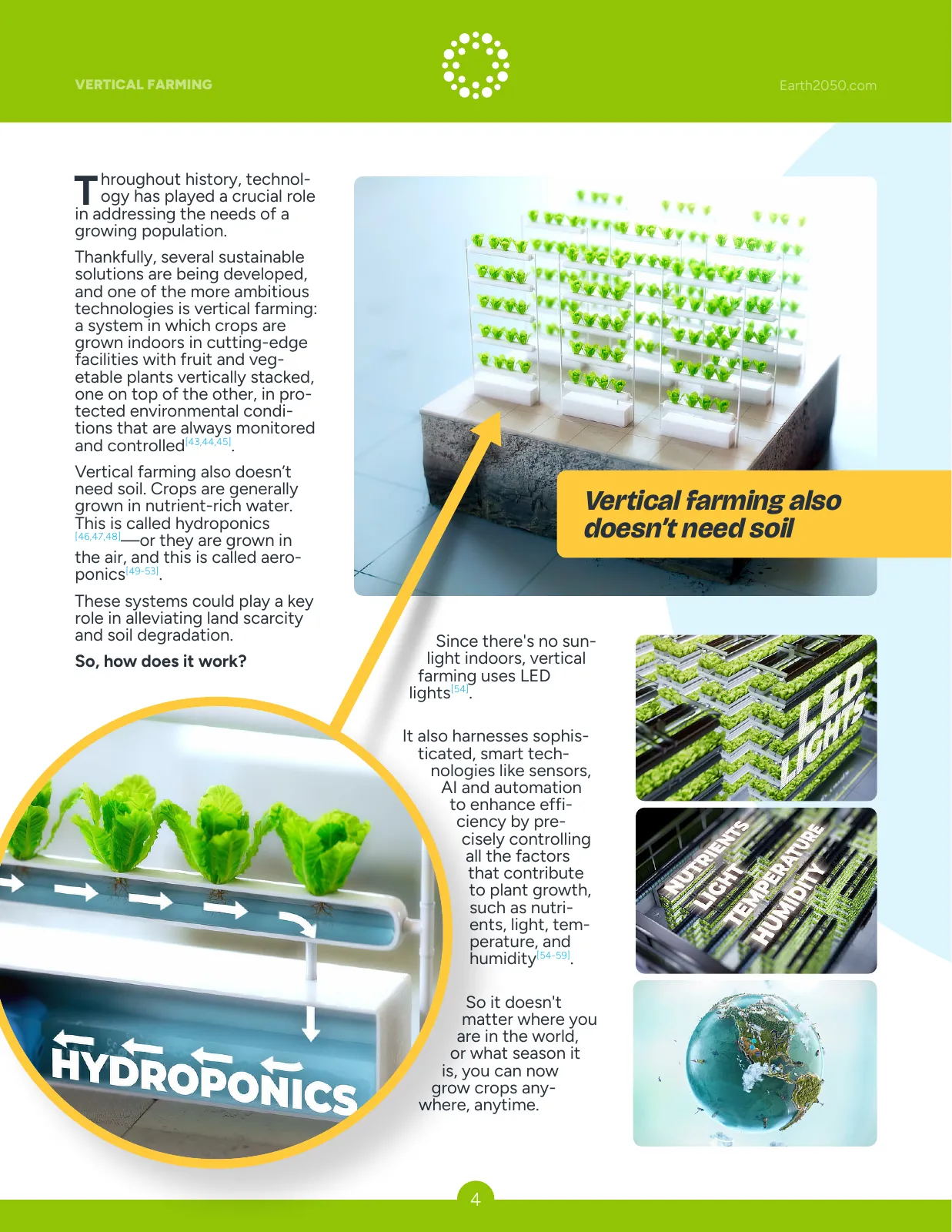
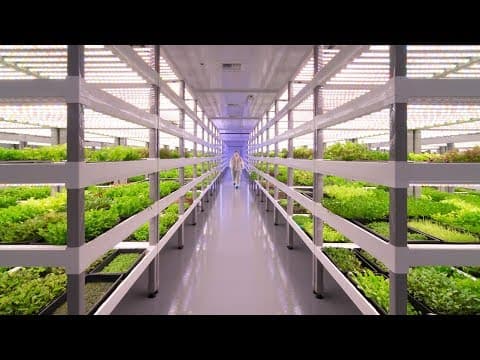
Throughout history, technology has played a crucial role in addressing the needs of a growing population. Thankfully, several sustainable solutions are being developed, and one of the more ambitious technologies is vertical farming: a system in which crops are grown indoors in cutting-edge facilities with fruit and vegetable plants vertically stacked, one on top of the other, in protected environmental conditions that are always monitored and controlled [43,44,45].
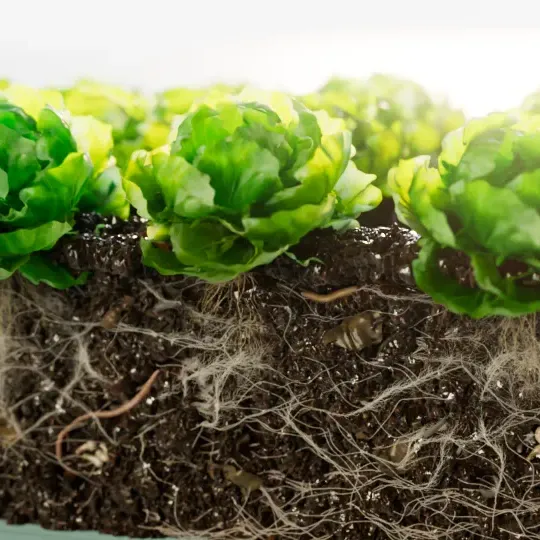
Vertical farming also doesn’t need soil. Crops are generally grown in nutrient-rich water. This is called hydroponics [46,47,48]. Or they are grown in the air, and this is called aeroponics [49-53]. These systems could play a key role in alleviating land scarcity and soil degradation.
So, how does it work?
Since there's no sunlight indoors, vertical farming uses LED lights [54].
It also harnesses sophisticated, smart technologies like sensors, AI and automation to enhance efficiency by precisely controlling all the factors that contribute to plant growth, such as nutrients, light, temperature, and humidity [54-59].
So it doesn't matter where you are in the world, or what season it is, you can now grow crops anywhere, anytime.
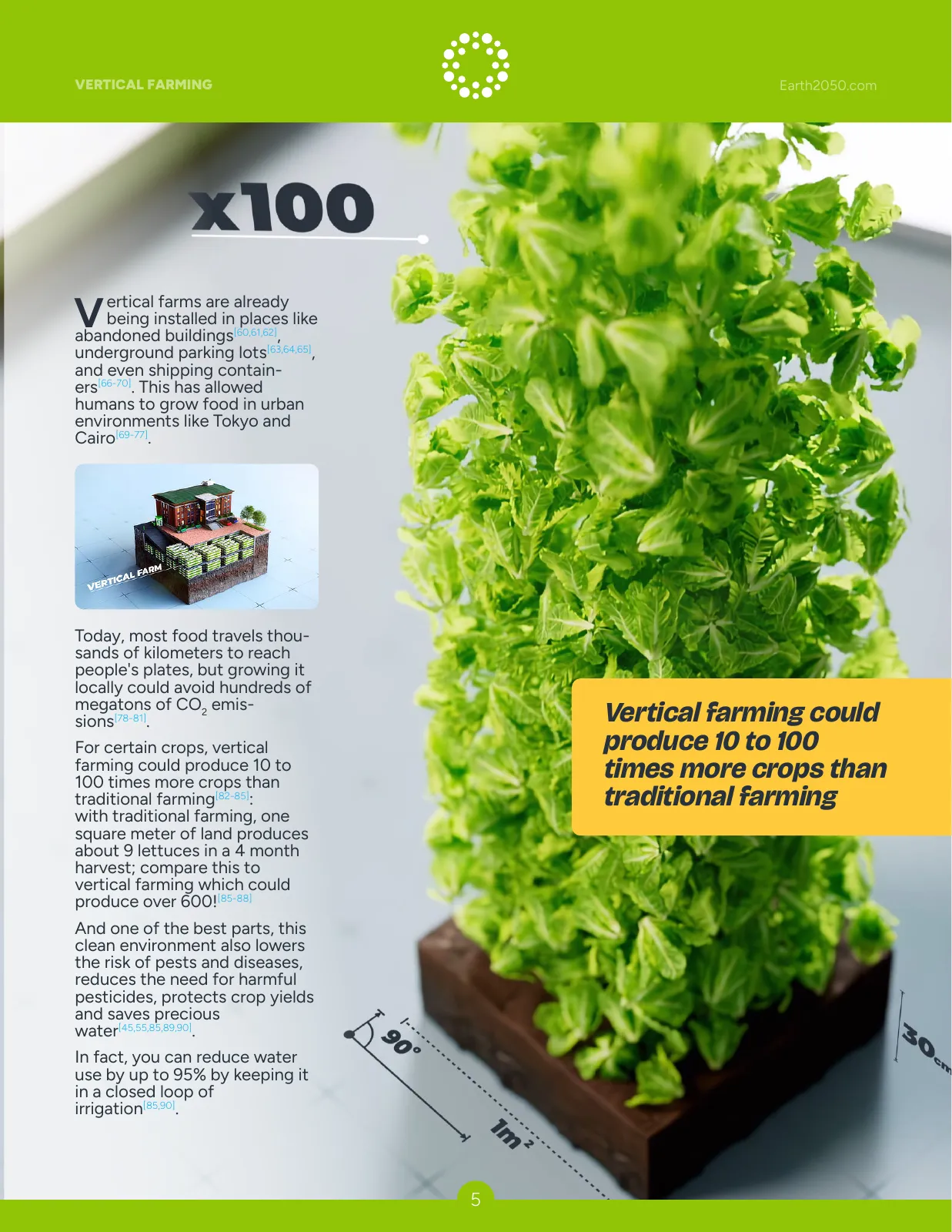
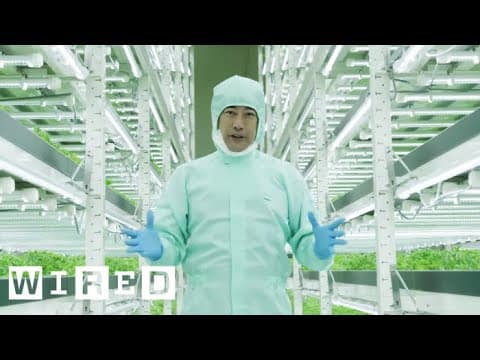
Vertical farms are already being installed in places like abandoned buildings [60,61,62], underground parking lots [63,64,65], and even shipping containers [66-70]. This has allowed humans to grow food in urban environments like Tokyo and Cairo [69-77].
Today, most food travels thousands of kilometers to reach people's plates, but growing it locally could avoid hundreds of megatons of CO2 emissions [78-81].
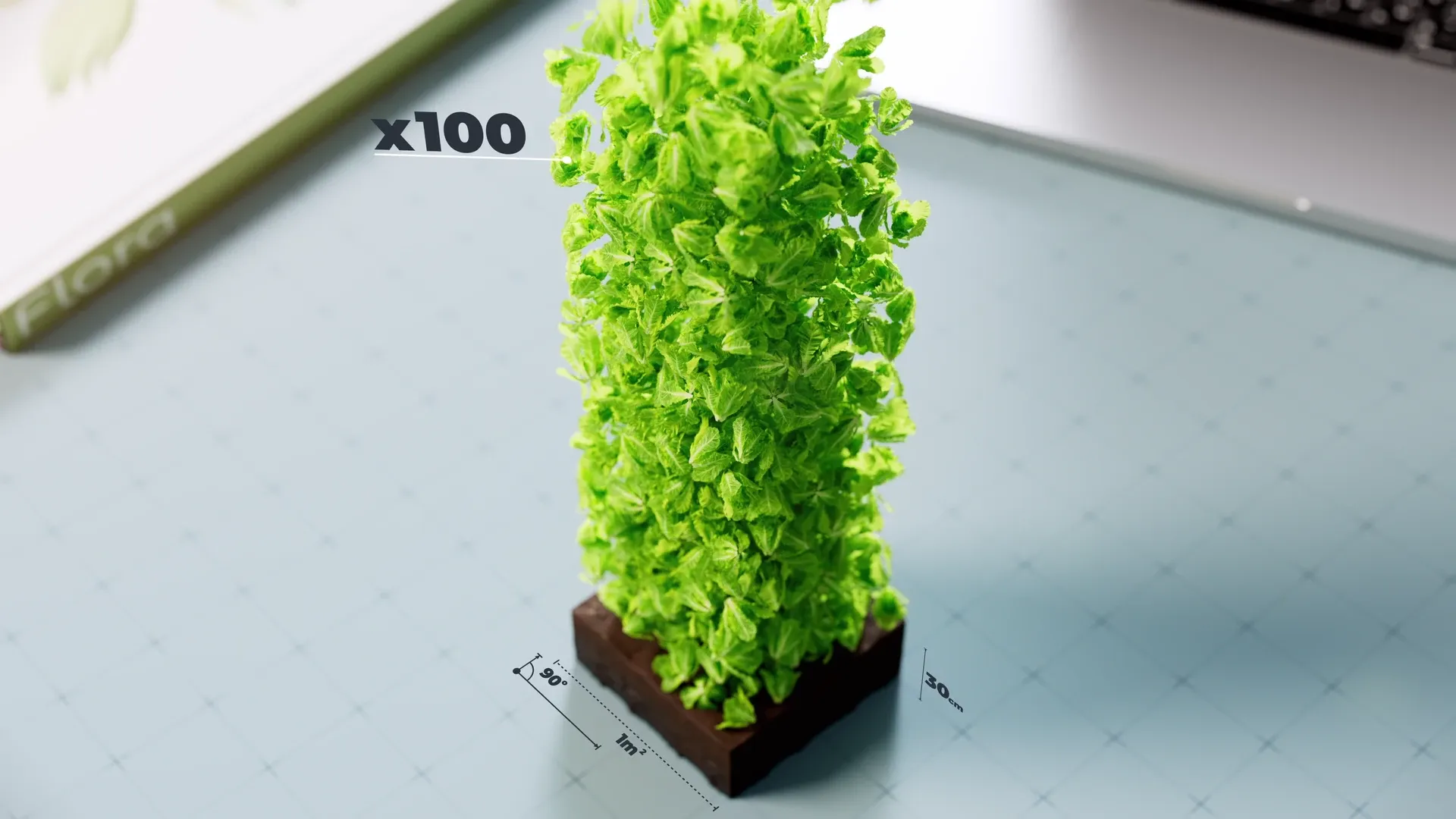
For certain crops, vertical farming could produce 10 to 100 times more crops than traditional farming [82-85]: with traditional farming, one square meter of land produces about 9 lettuces in a 4-month harvest; compare this to vertical farming which could produce over 600! [85-88]
And one of the best parts, this clean environment also lowers the risk of pests and diseases, reduces the need for harmful pesticides, protects crop yields and saves precious water [45,55,85,89,90]. In fact, you can reduce water use by up to 95% by keeping it in a closed loop of irrigation [85,90].
But, vertical farming does have its drawbacks.
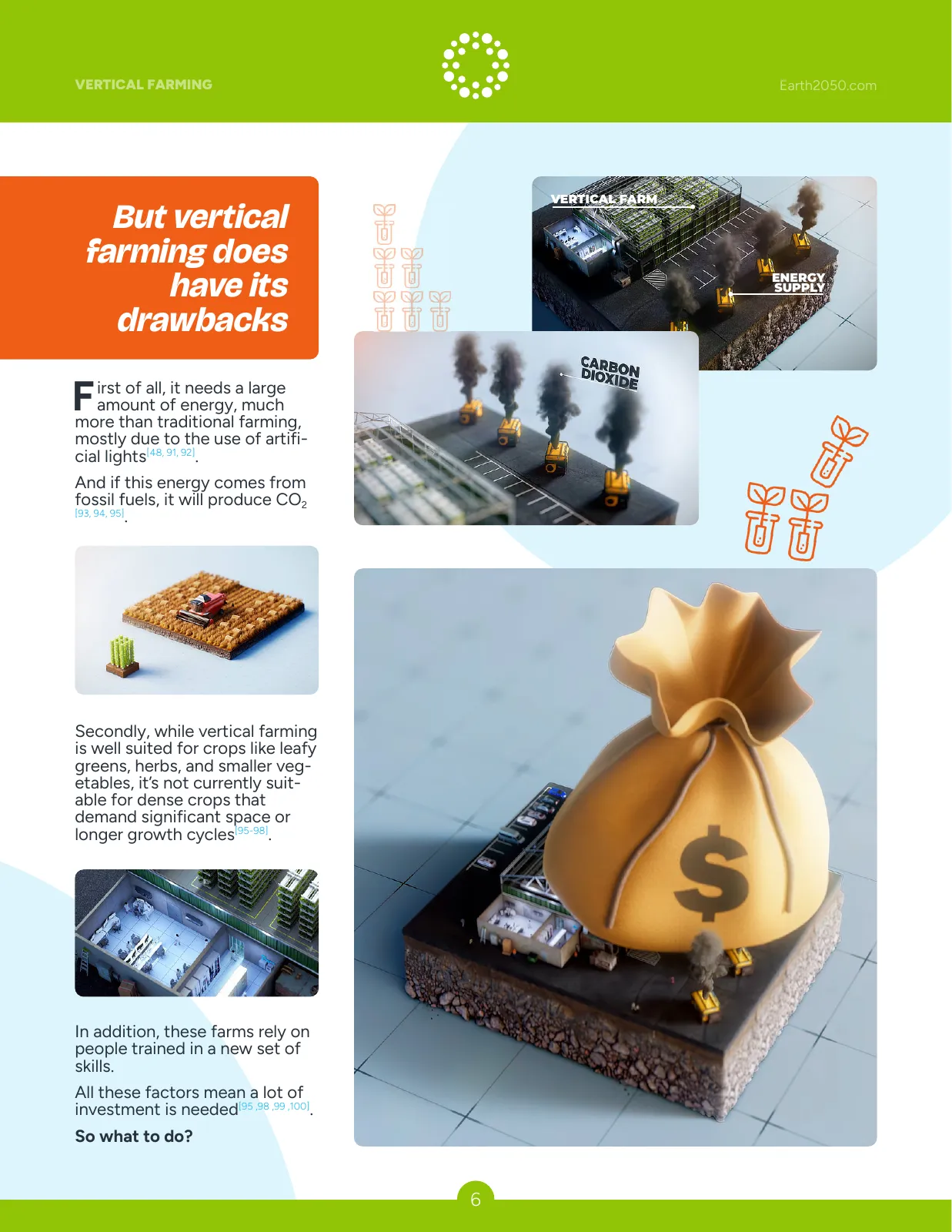
First of all, it needs a large amount of energy, much more than traditional farming, mostly due to the use of artificial lights [48,91,92]. And if this energy comes from fossil fuels, it will produce CO2 [93,94,95].
Secondly, while vertical farming is well suited for crops like leafy greens, herbs and smaller vegetables, it’s not currently suitable for dense crops that demand significant space or longer growth cycles [95-98].
In addition, these farms rely on people trained in a new set of skills. All these factors mean a lot of investment is needed [95,98,99,100].
So what to do?
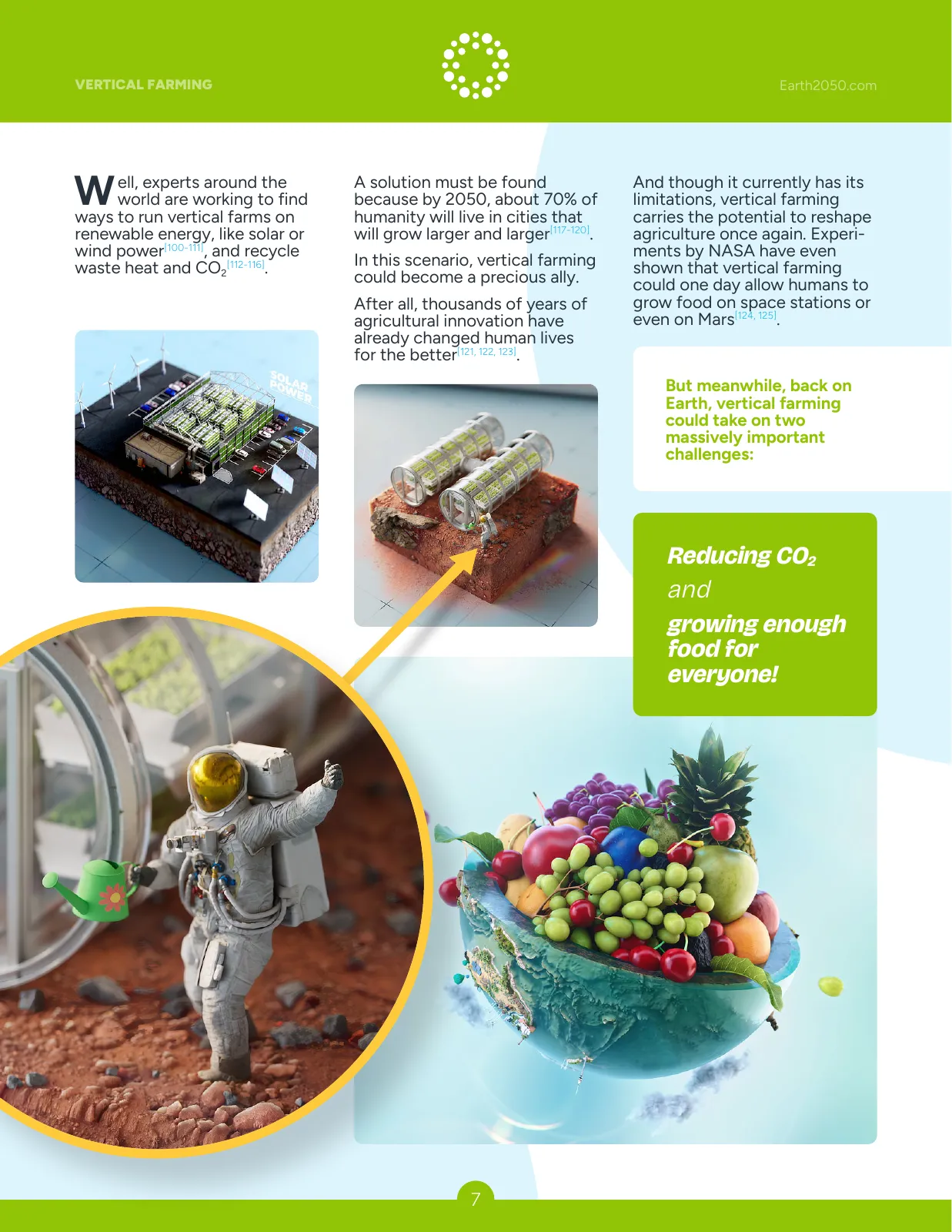
Well, experts around the world are working to find ways to run vertical farms on renewable energy, like solar or wind power, [100-111] and recycle waste heat and CO2 [112-116].
A solution must be found, because by 2050, about 70% of humanity will live in cities that will grow larger and larger [117-120]. In this scenario, vertical farming could become a precious ally.
After all, thousands of years of agricultural innovation have already changed human lives for the better [121,122,123].
And though it currently has its limitations, vertical farming carries the potential to reshape agriculture once again. Experiments by NASA have even shown that vertical farming could one day allow humans to grow food on space stations or even on Mars [124,125].
But meanwhile, back on Earth, vertical farming could take on two massively important challenges: Reducing CO2, and growing enough food for everyone!
Expert Advisors
3
We would like to thank
Prof. Emeritus Dickson Despommier
Columbia University
Department of Environmental Health Sciences
Prof. Leo Marcelis
Wageningen University & Research
Chairholder Horticulture and Product Physiology Group
Prof. Chungui Lu
Anglia Ruskin University
School of Agriculture, Animal and Environmental Sciences
Further Videos
15 links
These resources are non-affiliated.
Overview – The Future of Vertical Farming
Vertical farming Around The World
 How Singapore is using tech to grow food without farmlandCNBC
 Are Vertical Farms the Future of Agriculture?Great Big Story
 Could vertical farming be the future of our food?SkyNews
 Vertical farms: A new form of agricultureCBS
 Tokyo’s Vertical Farms - The Future of FarmingWIRED
 James Dyson reveals the future of farmingDyson
 Dyson Might Just Have Solved Vertical FarmingThe UpShift
 Why This Vertical Farm is 500x More Efficient Than FarmingUndecided with Matt Ferrell
Lessons to be Learned
Further Reading
24 links
These resources are non-affiliated.
Overview – Advantages and Disadvantages
- Vertical farming | Description, History, Aquaponics, Hydroponics, Crops, Pros & Cons - Britannica
- Vertical Farming: Everything You Need to Know in 2025 - GreenVerti.com
- 11 Vertical Farming Advantages: Complete Breakdown - Eden Green
- These are the 7 biggest DISADVANTAGES of vertical farming - Arctic Farming
- How far can vertical farming go? - BBC Future
- Four myths about vertical farming debunked by an expert - The Conversation
- Six Hard Truths about Vertical Farming - GROW magazine
- Analysis: Five reasons why vertical farming is still the future, despite recent business failures - UCL News - UCL – University College London
The Impact of Agriculture
- How much of global greenhouse gas emissions come from food? - Our World in Data
- Drivers of Deforestation - Our World in Data
- Climate change: Land degradation and desertification - WHO
- Sizing Up How Agriculture Connects to Deforestation | Earth Observatory - NASA
- Water - UN FAO
- Statistics - UN World Water Development Report
History of Agriculture
- Hunter-gatherer | Definition, Societies, & Facts - Britannica
- The Development of Agriculture - National Geographic
Urban Vertical Farming
- Vertical Farming and the Revival of Abandoned Urban Spaces - Green.org
- Empty Office Buildings Are Being Turned Into Vertical Farms - Smithsonian
- Old MacDonald had a carpark? The urban farms growing in unlikely places | Cities - The Guardian
- Could container farms revolutionise the farming industry? - Vertical Farming Today (archived)
Further Innovation
- How to reduce vertical farming energy consumption? - Avisomo
- Vertical Farming Technology: Everything You Need to Know - SmartTek Solutions
- Emerging Technologies in Vertical Farming - Green.org
- The Technologies in Vertical Farming - Viemose DGS
References
137 links
- [1] Population | United Nations (Summary of data: World Population Prospects 2024: Summary of Results)
- [2] WDI - World’s population will reach nearly 10 billion by 2050 | The World Bank
- [3] How to Sustainably Feed 10 Billion People by 2050, in 21 Charts | World Resources Institute
- [4] Turning the Tide | Global Commission on the Economics of Water
- [5] Quantifying renewable groundwater stress with GRACE | Water Resources Research (In: Is the world running out of fresh water? | BBC Future)
- [6] Climate Change 2022: Impacts Adaptation and Vulnerability – Chapter 4: Water | IPCC (In: The health effects of climate change, explained | News | Wellcome)
- [7] NASA Satellites Reveal Abrupt Drop in Global Freshwater Levels | NASA Science
- [8] Recent global decline in endorheic basin water storages | Nature Geoscience (In: Are We Running Out of Water? | Earth.Org)
- [9] The State of the World’s Land and Water Resources for Food and Agriculture – Systems at breaking point | Synthesis Report 2021 | FAO
- [10] Soil loss: A sustainable model for intensive agriculture | Grantham Centre Briefing Note | University of Sheffield (archived)
- [11] Loss of World’s Arable Land Threat to ‘Everything We Eat, Drink, Breathe’, Speaker Says, as Second Committee Takes Up Sustainable Development | Meetings Coverage and Press Releases | United Nations
- [12] Mapping tree density at a global scale | Nature (In: Deforestation and Forest Loss | Our World in Data) (see Reference Notes*)
- [13] Global Deforestation Rates & Statistics by Country | GFW (In: Forest Pulse: The Latest on the World’s Forests | World Resources Institute Research) (see Reference Notes*)
- [14] Global Forest Resource Assessment 2020 | FAO (In: Deforestation and Forest Loss | Our World in Data) (see Reference Notes*)
- [15] Drivers of Deforestation | Our World in Data (see Reference Notes*)
- [16] Reducing food’s environmental impacts through producers and consumers | Science (In: Food production is responsible for one-quarter of the world’s greenhouse gas emissions | Our World in Data) (see Reference Notes*)
- [17] Food systems are responsible for a third of global anthropogenic GHG emissions | Nature Food (In: How much of global greenhouse gas emissions come from food? | Our World in Data) (see Reference Notes*)
- [18] The share of agriculture in total greenhouse gas emissions | Global, regional and country trends 1990-2017 | FAO (see Reference Notes*)
- [19] Greenhouse gas emissions from agrifood systems | Global, regional and country trends, 2000–2022 | FAO (see Reference Notes*)
- [20] The Development of Agriculture | Nat Geo
- [21] Hunter-Gatherer Culture | National Geographic Education
- [22] Hunter-gatherer | Definition, Societies, & Facts | Britannica
- [23] The Slow Birth of Agriculture | Science
- [24] Unearthing the origins of agriculture | PNAS
- [25] Extent of Global Agriculture | World Atlas of Desertification | European Commission Joint Research Centre (see Reference Notes*)
- [26] Land use statistics and indicators | FAO (see Reference Notes*)
- [27] Geographic distribution of global agricultural lands in the year 2000 | Global Biogeochemical Cycles (see Reference Notes*)
- [28] Global inequalities in food consumption, cropland demand and land-use efficiency: A decomposition analysis | Global Environmental Change (see Reference Notes*)
- [29] Global Land Outlook – First Edition | UN Convention to Combat Desertification
- [30] Climate change: Land degradation and desertification | WHO
- [31] Soil Degradation: Causes, Effects, Solutions & Prevention | EOS Data Analytics
- [32] Sizing Up How Agriculture Connects to Deforestation | Earth Observatory | NASA
- [33] FAO Remote Sensing Survey reveals tropical rainforests under pressure as agricultural expansion drives global deforestation | FAO (Press release: COP26: Agricultural expansion drives almost 90 percent of global deforestation)
- [34] Impact of pesticides use in agriculture: their benefits and hazards | Interdisciplinary Toxicology
- [35] Water for agricultural development: Opportunities and constraints: International Journal of Water Resources Development
- [36] Global irrigation water demand: Variability and uncertainties arising from agricultural and climate data sets | Geophysical Research Letters
- [37] Groundwater use for irrigation - a global inventory | Hydrology and Earthy System Sciences
- [38] Water for Prosperity and Peace | UN World Water Development Report
- [39] Annual freshwater withdrawals, agriculture (% of total freshwater withdrawal) | FAO AQUASTAT Data | World Bank Group
- [40] Statistics | UN World Water Development Report
- [41] Water | FAO
- [42] Greenhouse gases emission from agricultural soil: A review | Journal of Agriculture and Food Research
- [43] Vertical farming | Description, History, Aquaponics, Hydroponics, Crops, Pros & Cons | Britannica
- [44] Vertical farming: Why stacking crops high could be the future of agriculture | BBC Science Focus Magazine
- [45] Plant factories in the water-food-energy Nexus era: a systematic bibliographical review | Food Security (cited in [85])
- [46] Hydroponic Technologies | Aquaponics Food Production Systems
- [47] Hydroponics – A Review | International Journal of Current Microbiology and Applied Sciences
- [48] Vertical Farming – No Longer A Futuristic Concept | US Department of Agriculture
- [49] Aeroponics: A Polytropic Research Tool in the New Era of Agriculture | International Journal of Environment & Climate Change
- [50] Aeroponics for the culture of organisms, tissues and cells | Biotechnology Advances
- [51] Modern plant cultivation technologies in agriculture under controlled environment: a review on aeroponics | Journal of Plant Interactions
- [52] Aeroponics- A step towards sustainable farming | International Journal of Advance Research, Ideas and Innovations in Technology
- [53] Aeroponics: A Review-on Modern Agriculture Technology | Indian Farmer
- [54] LEDs for photons, physiology and food | Nature
- [55] Vertical Farming: Moving from Genetic to Environmental Modification | Trends in Plant Science
- [56] Agricultural Intelligence in Sustainable Vertical Farming | arXiv (Cornell University)
- [57] Vertical Farming Perspectives in Support of Precision Agriculture Using Artificial Intelligence: A Review | Computers
- [58] IoT Edge Based Vertical Farming | IEEE Conference Publication - WCONF
- [59] Smart Sprouts: Fuzzy Logic-Driven IoT-Based Smart Water Management System for Vertical Farming | IEEE Conference Publication - ICOSEC
- [60] Vertical Farming and the Revival of Abandoned Urban Spaces | Green.org (see Reference Notes*)
- [61] Transforming Abandoned Buildings into Vertical Farms | Green.org (see Reference Notes*)
- [62] Empty Office Buildings Are Being Turned Into Vertical Farms | Smithsonian Magazine (see Reference Notes*)
- [63] La Caverne, Paris' first underground urban farm | Sortiraparis.com (see Reference Notes*)
- [64] Urban Farming in Inner-city Multi-storey Car-parking Structures- Adaptive Reuse Potential | Future Cities and Environment (see Reference Notes*)
- [65] Old MacDonald had a carpark? The urban farms growing in unlikely places | Cities | The Guardian (see Reference Notes*)
- [66] Could container farms revolutionise the farming industry? | Vertical Farming Today (archived) (see Reference Notes*)
- [67] Vertical Farming | ATTRA Sustainable Agriculture | NTAC (see Reference Notes*)
- [68] Vertical Farming Using Information and Communication Technologies | INFOSYS (see Reference Notes*)
- [69] Wageningen start-up produces fresh vegetables in a shipping container in Ukraine | Wageningen University & Research (see Reference Notes*)
- [70] CITYFARMS | Tulima Farms (In: Farming Anywhere, Anytime: How Tulima Farms Plans to Revolutionize Egypt’s Agriculture | Egyptian Streets) (see Reference Notes*)
- [71] A new hydroponic growing system, growing directly in the supermarket | Domus (cites A new hydroponic growing system, growing directly in the supermarket | Schaduf)
- [72] Future Farms (@futurefarms.eg) | Instagram
- [73] Tokyo store farms vertically on the 12th floor | VerticalFarm Daily
- [74] Square Roots announces new company in Japan | VerticalFarm Daily
- [75] Tech powers vertical farming growth in Japan | Article | Fruitnet
- [76] 江戸前 ハーブ (@edomaeherb) | Instagram
- [77] Urban Agricultural Revolution in Japan with Verticulture Technology | Techno Agriculturae Stadium of Research (Download via YPIDATHU)
- [78] The Globalization of Agricultural Biotechnology: Implications for Regulatory Compliance, Stewardship and Stakeholder Engagement | Regulation of Agricultural Biotechnology: The United States and Canada (see Reference Notes*)
- [79] Global food-miles account for nearly 20% of total food-systems emissions | Nature Food (see Reference Notes*)
- [80] Local food crop production can fulfil demand for less than one-third of the population | Nature Food (see Reference Notes*)
- [81] Eating As An Environmentalist | C&EN Global Enterprise (see Reference Notes*)
- [82] Wheat yield potential in controlled-environment vertical farms | Proceedings of the National Academy of Sciences of the United States of America
- [83] Up, Up and Away! The Economics of Vertical Farming | Journal of Agricultural Studies
- [84] Vertical farming: productivity, environmental impact, and resource use. A review | Agronomy for Sustainable Development
- [85] How energy innovation in indoor vertical farming can improve food security, sustainability, and food safety? | Advances in Food Security & Sustainability (see Reference Notes*)
- [86] Leaf Lettuce Production in California | University of California Vegetable Research & Information Centre (see Reference Notes*)
- [87] Iceberg Lettuce Production in California | University of California Vegetable Research & Information Centre (see Reference Notes*)
- [88] Lettuce (Home Gardening Series) | Division of Agriculture Research & Extension | University of Arkansas System | FSA Agriculture and Natural Resources (see Reference Notes*)
- [89] Water Harvesting Based Integrated Vertical Farming | Journal of Agricultural Engineering
- [90] Plant factories versus greenhouses: Comparison of resource use efficiency | Agricultural Systems
- [91] Realising the Environmental Potential of Vertical Farming Systems through Advances in Plant Photobiology | Biology
- [92] What You May Not Realize about Vertical Farming | Horticulturae
- [93] Vertical farming - is this the future of agriculture? | Climate Champions | UNFCCC (archived)
- [94] The embodied carbon emissions of lettuce production in vertical farming, greenhouse horticulture, and open-field farming in the Netherlands | Journal of Cleaner Production
- [95] How far can vertical farming go? | BBC Future
- [96] Seeing the lights for leafy greens in indoor vertical farming | Trends in Food Science & Technology
- [97] Vertical Farming promising cultivation for horticultural crops | International Journal of Current Microbiology and Applied Sciences
- [98] Vertical farming: a local solution for greens, but not feeding the world any time soon | Sustainability in Numbers (cites [54])
- [99] How much does vertical farming cost? | CambridgeHOK
- [100] Building a Case For Vertical Farming | Intelligent Growth Solutions
- [101] Vertical Farms With Integrated Solar Photovoltaics | Journal of Solar Energy Engineering
- [102] Using Renewable Energy in Vertical Farming | Blog | Hydropolis
- [103] Techno-economic-environmental analysis of solar/hybrid/storage for vertical farming system: A case study, Malaysia | Renewable Energy Focus
- [104] Reducing emissions for vertical farming | Octopus Energy
- [105] Europe Vertical Farming Market Size & Growth Report to 2033 | Market Data Forecast
- [106] Singapore can decarbonise urban farming by looking to renewable energy, innovation: Experts (Video) | CNA
- [107] New vertical perspective on farming increases efficiency | Vattenfall
- [108] China reveals 'first modular-reactor-powered' vertical farm | VerticalFarm Daily
- [109] ‘World's largest vertical farm’ installs solar system | Solar Power Portal
- [110] Solar-Powered Vertical Farming in Singapore | Planetary Care Grant Agency
- [111] Vertical Farms: Are They Sustainable? | RSIS
- [112] Resource sharing between vertical farms and the built environment | TUDelft
- [113] Vertical Farming: A new future for food production? | Farming Connect | Business Wales (archived)
- [114] How vertical farming reduces environmental impact | Avisomo
- [115] Harnessing Direct Air Capture (DAC) Technology for Indoor Farming | Agritecture
- [116] The effects of vertical farming on indoor carbon dioxide concentration and fresh air energy consumption in office buildings | Building and Environment
- [117] 68% of the world population projected to live in urban areas by 2050 | UN Department of Economic and Social Affairs
- [118] Urban Development Overview | World Bank Group
- [119] The World Urban Population - Infographics | Urbanet | GIZ
- [120] World Cities Report 2022 | UN Habitat
- [121] The economics of agricultural innovation | Handbook of Agricultural Economics (see Reference Notes*)
- [122] History of Agriculture | Food System Primer | Center for a Livable Future | John Hopkins University (see Reference Notes*)
- [123] A history of innovation and its uses in agriculture | Innovation and development in agricultural and food systems | AGRIS | FAO (archived) (see Reference Notes*)
- [124] NASA's Contributions to Vertical Farming | NASA Exploration & Research Technology | NASA Technical Reports
- [125] NASA’s Interests in Bioregenerative Life Support and the Path to Mars | NASA Exploration Research and Technology Directorate | NASA Technical Reports
Reference Notes
16
Number of trees cut down to make space for agriculture
[12] “Fifteen billion trees are cut down every year” - (2015) Mapping tree density at a
global scale | Nature (as quoted in Deforestation and Forest Loss | OurWorldinData)
“The UN FAO estimates that 10 million hectares of forest are cut down each year” - (2020) Global Forest Resources Assessment (as quoted in Deforestation and Forest Loss | OurWorldinData):
- Rates of net forest loss are often cited at around 5 million hectares per year: “Between 2010 and 2020, the net loss in forests globally was 4.7 million hectares per year. However, deforestation rates were much higher.”
“At least three-quarters of this is driven by agriculture - clearing forests to grow crops, raise livestock, and produce products such as paper” - Drivers of Deforestation | OurWorldinData:
- Several estimates can be found in the literature on what share of deforestation is driven by agriculture. Differences in these estimates are often explained by differing considerations of deforestation versus forest degradation. Agriculture accounts for 70-80% of tropical deforestation - the permanent conversion of forested land to another land use. This share is slightly lower when degradation is included i.e. temporary loss of forest or permanent loss of forest quality. Noriko Hosonuma et al. (2012) estimate that 73% of tropical deforestation is driven by agriculture.
Percentage of global greenhouse gas emissions attributable to farming
(Here farming is meant as terrestrial agriculture for food production, thus excluding fisheries, aquaculture and non-food products)
states food production and consumption accounts for 26% of global GHG emissions, detailed further in the following breakdown: 24% land use (8% for human food, 16% for livestock); 27% crop production; 30% livestock & fish farms (+1% wild fisheries); 18% supply chain. This equates to around 20% of global GHG emissions when excluding post-farming supply chain and fisheries-related emissions.
From the original abstract: “In 2015, food-system emissions amounted to 18 Gt CO2 equivalent per year globally, representing 34% of total GHG emissions. The largest contribution came from agriculture and land use/land-use change activities (71%), with the remaining from supply chain activities: retail, transport, consumption, fuel production, waste management, industrial processes and packaging”.
OurWorldinData offers explanation of differences between estimates from [16] & [17]: [17] allocates all global deforestation (and attributed CO2) to agriculture, while acknowledging only 80% of deforestation is actually agriculturally driven (the rest being urban expansion). This brings their estimate down closer to 23.5% of GHG emissions before supply chain, when excluding urban expansion but including fisheries-related emissions and some non-food related products. [16] provides a separate estimate for non-food agricultural products, which together would bring their total up from 26 to 33%.
In 2017, the percentage contribution of agriculture to world CO2eq emissions from all human activities was 20%, equating to 11.1 Gt CO2eq yr-1. This included 6.1 Gt CO2eq yr-1 (11%) from crop and livestock activities from farming and 5.0 Gt CO2eq yr-1 (9%) from agricultural land use, largely due to deforestation and peatland degradation.
Agri-food systems accounted for 29.7% of the 53.5 Gt CO2eq released in 2022. Farming and related land use change accounted for 48% and 19% of this faction respectively, amounting to 19.9% of global GHG emissions.
Total global cropland area (as percentage of all land on Earth)
2% of all land on Earth - specifically cropland, out of all agricultural land (37%) (2021).
presents 14% of all ice-free land on Earth (2014), while [27] presents 12% of all ice-free land on Earth (2008) - possibly out of date.
cites from 2007, 12% of all lands excluding Greenland and Antarctica.
Vertical farming businesses – currently operational (2025) versus recent bankruptcies
It is worth acknowledging that several vertical farm enterprises and business ventures have collapsed in recent years, and how those referenced here will fare in the coming years is unknown. Commentary has pinpointed prevailing reasons for these failures, highlighting attempts to scale too rapidly or to adopt and showcase advanced, high-cost technologies before establishing core operational stability and economic viability, prioritizing innovation over basic agricultural and financial fundamentals.
Common challenges included high energy demands, narrow crop selection, overestimated yields, and underdeveloped business strategies. Many of these farms focused on technological sophistication at the expense of simplicity, efficiency, and market fit.
However, it is stressed that these failures should not be interpreted as evidence against the viability of vertical farming as a whole. Rather, they represent early-stage setbacks in an emerging field. Vertical farming remains a promising tool for enhancing climate resilience and food security, particularly in urban environments and regions facing land or water constraints. The lessons from early missteps provide an opportunity to learn and valuable insights to guide more pragmatic and sustainable approaches in future development.
See Further Videos ‘Lessons to be learned’ for example commentaries.
Emissions reduction from avoided food-miles
Recent global studies estimate that food-miles account for about 19% of total food-system emissions, or roughly 3 Gt CO₂eq annually [79]. Transport emissions are especially high for perishable, often-imported goods like fruits and vegetables, where freight emissions can even exceed production emissions.
While earlier U.S.-focused studies [81] found that transportation contributes only 11% of food-related emissions (with most emissions from production), newer global assessments indicate that international trade plays a larger role than previously believed, especially in affluent, import-heavy nations.
However, a complete shift to fully local food systems isn't feasible everywhere: only 11-28% of the global population can fulfill demand for specific crops by sourcing within a 100 km radius, while over a quarter rely on food that must be transported more than 1,000 km [80]. Still, this equates to a substantial volume of avoidable emissions. While global trade remains essential for food security, particularly in less self-sufficient regions, increasing the share of locally produced food - growing closer to where it's consumed, especially in wealthy countries - could avoid hundreds of megatons of CO₂ and make food systems more resilient.
Comparison between tradition and vertical farming of lettuces
Estimated density and frequency of lettuce harvest under traditional field cultivation is based on agronomic guidelines (average field spacing recommendations) for common lettuce types (leaf, butterhead and romaine):
Row spacing typically ranges from 40-80 inches per bed, with 2-6 seedlines, yielding average row spacings of approximately 37-50 cm.
In-row spacing varies by variety, ranging from 23-30cm for full-sized heads to 13-15cm for romaine hearts. These configurations yield densities of approximately 6.9-9.7 plants/m² for standard lettuce types and 14-19.6 plants/m² for romaine hearts.
Lettuce is typically harvested once every 3.5-4 months, depending on climate and variety, and does not allow for stacking or frequent replanting. However, harvests aren't consistent throughout the year - sometimes they only take ~2-2.5 months growing time in warm conditions (65-80 days when planted in summer, up to 130 days when planted in winter/early spring).
We opted for ~9 plants per square meter per 4 months as a conservative, mid-range benchmark for traditional farming systems. By contrast, vertical farming systems can achieve substantially higher productivity through vertical stacking (e.g. 10 or more tiers) and faster crop turnover (e.g. 18-30-day cycles), enabling yields of 600+ plants/m² over a comparable 4-month period.
This scale of yield is generally supported by other figures quoted across scientific literature [82-85] (additional industry claims may be found online). Jin et al. (2022)A reported that each layer of vertically farmed lettuce could produce annual yields of 700kg per m2 under optimal light regimes (several hundred heads per m2 over a few months, depending on crop cycle and head size). Meanwhile, a new approach described by Ptak, Wasieńko & Makula (2024)B achieved a reported yield equivalent to 597 heads per m3 in a rotating vertical farm system. Beyond efficient use of space, these examples highlight opportunities of vertical farms for further improvements in yield through greater light use efficiency. Continuous light was shown to drive near-constant photosynthesis, balanced against increased energy demand and risks of photoinhibition, heat stress and disruption of circadian processes in plantsA. In contrast, multi-chamber light/dark regimes allow each crop layer to receive sufficient daily light while conserving resources and reducing operational costs and stress on plants and equipment. Such approaches show promise in reducing energy demand while retaining the yield advantages of vertical farming.
Agricultural benefits to humanity
While ‘agricultural development has improved human lives for the better’ - enabling population growth, food surpluses, and technological advancement - it’s worth acknowledging the broader health and social consequences of sedentary civilization that followed. These include reduced dietary diversity compared to forager diets, increased transmission of infectious diseases due to higher population density and proximity to domesticated animals, social stratification, and heightened risk of organized conflict. These outcomes are not inherent to agriculture itself, but rather to the societal structures that emerged alongside permanent settlement.