
Electricity
Bioenergy
Bioenergy - Can clean power really grow on trees?
Bioenergy can turn plants, algae, food waste, used cooking oil and wastewater into power and fuel. From biogas and biodiesel to sustainable aviation fuel and carbon-negative BECCS, it could help decarbonize shipping, aviation, heavy transport and backup power. But burning forests instead of fossil fuels isn't the answer. Bioenergy only helps when it is sustainable, carefully measured and genuinely carbon neutral, or even carbon negative.
(Illustrated guide coming soon)
2.6overall
How this solution scores
- Impact2 / 5Useful where few alternatives exist, but real carbon savings are often overstated.
- Speed3 / 5Industry can switch to biofuels fairly quickly, but regrowing biomass absorbs carbon relatively slowly.
- Cost2 / 5Biowaste is cheap, but biofuels usually need subsidies.
- Readiness4 / 5Burning biomass is old technology, but cleaner versions like microbial fuel cells are still early stage.
- Nature2 / 5Biofuel crops can drive deforestation and compete with food for land, plus burning harms air quality.
Quiz
Question 1 of 10
What could Rudolf Diesel's early 1900s engine run on?
Score 0 / 10
Transcript
To humans, energy is everything, and at the moment, they get most of it by burning coal, oil, and gas [1,2,3]. Unfortunately these fossil fuels also pollute the atmosphere, poison the oceans, and threaten to cook the planet [3,4].
But what if there was an environmentally friendly alternative? And what if that alternative could literally grow on trees?
Welcome to the world of bioenergy!
Ever since the first humans discovered how to harness fire, they have burned biomass like wood to generate bioenergy [5,6,7]. They cooked their food with it, heated their homes with it, and generally used it to indulge in mischief.
But then, with the Industrial Revolution, they discovered fossil fuels [8,9,10]. Compared to wood, coal, oil, and gas contain far more energy per kilogram [11,12,13], and so were far more suitable to power modern machines.
Until, in the early 1900s, German engineer Rudolf Diesel invented an engine that could run on peanut oil and proved that bioenergy could power modern technology [14-18]. And while peanut power never caught on, bioenergy still has the potential to play a key role in the energy transition and solve the climate crisis [19-23].
But given bioenergy and fossil fuels both produce carbon dioxide pollution, what exactly makes bioenergy better for the environment?
Fossil fuels are the remains of ancient life like sea creatures and forests that were buried and compressed for millions of years [24,25].
If humans dig them up and burn them they release huge amounts of ancient carbon. The Earth cannot absorb all this additional carbon so it builds up in the atmosphere and the carbon cycle becomes unbalanced [26,27,28], making fossil fuels carbon positive - which is not a good thing.
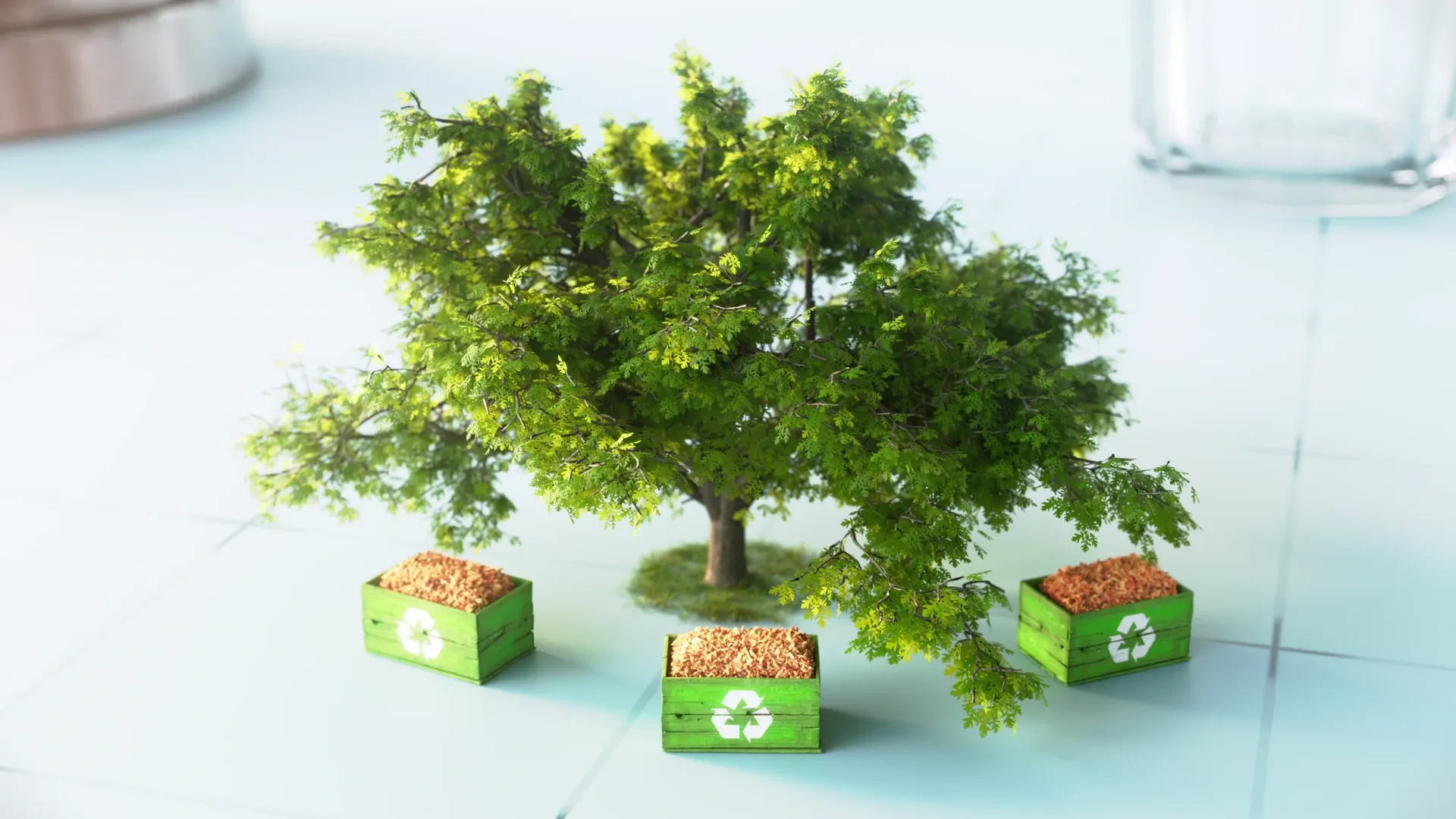
In contrast, biomass comes from modern plants that have recently absorbed carbon from the air. When burned, the carbon they release can be re-absorbed by trees planted to replace them, returning that carbon as part of the natural carbon cycle [29,30,31].
This makes bioenergy theoretically carbon neutral, and much better for the planet.
Just like fossil fuels, bioenergy comes in three forms: solid, gas, and liquid. Coal can be replaced by wood chips or pellets in power plants [32,33,34], fossil gas can be replaced by biogas to cook and heat homes [35-39], while gasoline and diesel can be replaced by bioethanol and biodiesel in vehicles [40-43].
Although batteries are a better option for cars and light trucks [44,45,46], many long-distance vehicles are difficult to electrify. To power a container ship to travel to a distant port would take up a large percentage of its cargo storage capacity with batteries [47,48,49]. And the batteries needed for a long-distance flight would make a plane too heavy to get off the ground! [50-57]
This is where green fuels such as biofuels can really help. Another advantage of biofuels and solid biomass is that they can be stored for long periods of time [58-65], providing countries with energy security, ensuring year-round electricity [66,67,68]. Wind and solar already provide cheap renewable electricity to the grid [69,70,71] but these are intermittent, so when they're not available, biomass can be burned to meet demand instead [23].
On paper, it looks like the winning ticket. So why don’t humans use more of it?
Well, obtaining biomass often involves cutting down trees to make wood chips, and because wood burns much faster than it can grow, even if you plant new trees to replace them, it can take decades to absorb carbon that took just hours to burn [72-76].
Biofuels may not be much better, as forests are often cleared so that crops like oil palm, soybean, sugarcane, and corn can be grown to make them [77,78,79]. In fact, thousands of square kilometers of rainforest have already been cleared in Brazil to grow soybean and sugarcane needed for biofuels [80-85]. Meanwhile, in Indonesia and Malaysia, trees have been cleared to grow oil palm for biodiesel, causing mass habitat loss and threat of extinction to indigenous species [86-89].
And even if existing farmland is used instead, it can raise prices and threaten food security, often harming the poorest in society [90-93].
Worse, vast volumes of freshwater are consumed to grow these crops [94,95,96]. And the processing, transportation, and land use changes involved can produce so much carbon that bioenergy ceases to be carbon neutral [40,97,98,99].
In fact, when you account for all the hidden emissions, biofuels can sometimes be worse for the environment than fossil fuels [23,100-102], as well as being much more expensive to produce [103-106].
Suddenly, Diesel’s dream of a peanut-powered planet seems, well, nuts!
But don’t throw bioenergy in the trash just yet, because there are several solutions that could give it a new lease of life. And funnily enough, the first involves using trash, or more specifically biowaste.
You see, waste products like crop residues [107,108,109], the by-products of saw and paper mills [110,111,112], and even food waste or used cooking oils [40,113-115] are already being used to get biomass without growing it on dedicated farmland or razing the world’s forests.
In fact, European airlines are already turning to new sustainable aviation fuels made from recycled fats and cooking oils. Together, these make up around 55% of their planned supply of sustainable fuels [116,117].
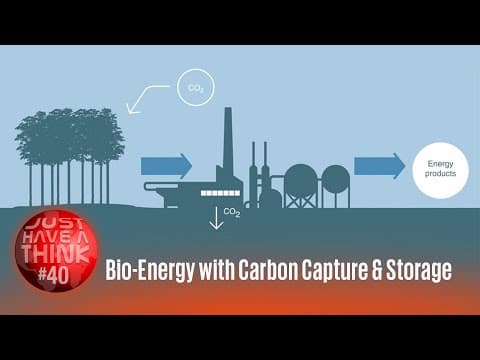
Another solution being trialed is known as Bioenergy with Carbon Capture and Storage or BECCS [118-121]. This involves using carbon capture technology to suck up the carbon dioxide released by burning biomass and storing it in underground caverns or disused mine shafts.
And because the carbon in biomass was recently taken out of the atmosphere, storing it like this upgrades bioenergy from carbon neutral to carbon negative, which is even better. But to be truly viable, the biomass still needs to come from sustainable sources like well-managed forests [119,121].
At the moment, however, carbon capture is expensive [122,123,124] and has been known to leak greenhouse gases [125-128]. So there are still challenges to overcome if humans are to make BECCS a successful part of the energy transition.
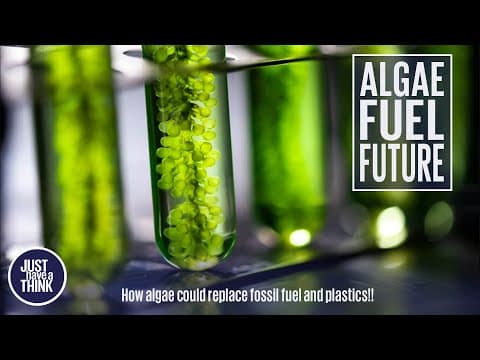
Another approach being tested involves producing biofuels from microscopic algae. It doesn't need farmland. Any old land will do. And it creates more biofuel per hectare than conventional crops like corn, sugarcane or oil palm [129,130,131]. Better yet, industrial CO2 emissions can be fed to the algae to help reduce the climate impact of other sectors as well [132,133,134].
A similar option is to use seaweed [135,136,137], which can be grown in the ocean without the use of precious land or freshwater reserves, and research has shown that growing seaweed can also help support the biodiversity of marine ecosystems [138,139,140].
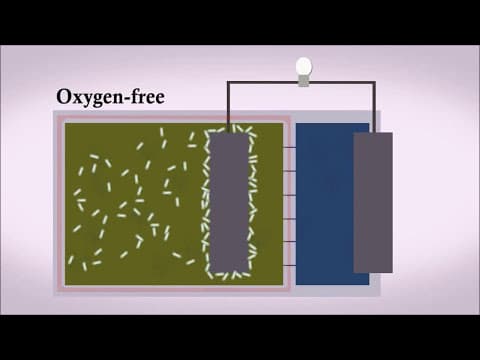
Experimental technologies like Microbial Fuel Cells (MFCs) also show promise [141-144]. Similar to Hydrogen Fuel Cells, these bypass the need to burn anything at all. They convert chemical energy from the organic matter in wastewater into electrical energy through the metabolic activity of bacteria. They even clean the wastewater at the same time, making water treatment cheaper [142,143]. Once perfected, they could revolutionize how humans get their energy.
So can bioenergy really help solve the climate crisis? Well, powering the world with biomass alone would be expensive, and unsustainable.
Bioenergy can also be greenwashed to cover up environmentally damaging practices that contribute to both deforestation and climate change.
But provided it is obtained in an environmentally friendly way, and is independently measured to be genuinely carbon neutral or better yet, carbon negative, and as long as it is mainly used in situations where there are no better green alternatives (like in shipping and aviation), then it can be deployed alongside other green solutions to become a useful part of the energy transition and help create a truly sustainable, green future.
Expert Advisors
2
We would like to thank
Dr. Ausilio Bauen
Imperial College London
Centre for Environmental Policy
Dr. Robert Holland
University of Southampton
Supergen Bioenergy Hub
Further Videos
16 links
These resources are non-affiliated.
Overview
Biofuels & Transport

Forest & Climate Impacts

Further Reading
52 links
These resources are non-affiliated.
Overview, History & Future
- Bioenergy, a sustainable solution - IEA Bioenergy
- Biomass and the environment - U.S. Energy Information Administration (EIA)
- Biomass Energy - National Geographic
- The History of Biomass: The Big Picture - Impactful Ninja
Carbon Cycle & Carbon Neutrality
- The Carbon Cycle - NASA Science
- Carbon Neutrality - IEA Bioenergy
- Carbon Cycle - National Oceanic and Atmospheric Administration
Forms of Bioenergy — Biomass & Wood Pellets
- Pellets - A Fast-Growing Energy Carrier | Factsheet - World Bioenergy Association
- Wood and wood waste - U.S. Energy Information Administration (EIA)
- What is the potential of wood as a replacement for coal? - Minerals West Coast (New Zealand)
Forms of Bioenergy — Biogas
- An introduction to biogas and biomethane – Outlook for biogas and biomethane: Prospects for organic growth – Analysis - IEA
- Biogas for domestic cooking: Technology brief - IRENA
- Biogas production for heat, electricity, renewable gas, and transport - IEA Bioenergy Review
- Biogas-Renewable natural gas - U.S. Energy Information Administration (EIA)
Forms of Bioenergy — Biofuels
- Bioethanol explained - U.S. Energy Information Administration (EIA)
- Biofuel - MIT Climate Portal
- What Is Bioethanol - University of Strathclyde, Glasgow
- What is Biodiesel? How it’s Made, Benefits & Uses | Renewable Energy Group - Chevron
- Alternative Fuels Data Center: Biodiesel Fuel Basics - US Department of Energy
Problems with Bioenergy — Emissions & Deforestation
- Is Bioenergy Carbon Neutral? - Supergen Bioenergy
- Trees For Burning: The Biomass Controversy - Institute of Economic Affairs
- The Impact of Biofuels on Land Use and Deforestation - Green.org
- Is Burning Wood For Energy Worse For The Climate Than Coal? - Carbon Brief
- Indonesia’s Biofuel Bid Threatens More Deforestation For Oil Palm Plantations - Mongabay
- Connecting exports of Brazilian soy to deforestation - Insights - Trase
Problems with Bioenergy — Cost
Problems with Bioenergy — Biofuels in Transport
- Biofuels: Energy for Transportation - US Department of Energy
- Here’s why it’s so hard to electrify shipping and aviation | Environment - The Guardian
- Which is more likely: electric airplanes or hydrogen-powered airplanes? - MIT Climate Portal
- What is sustainable aviation fuel (SAF) and why is it important? | News and views - Air bp
- Sustainable aviation fuels (SAF) around the world - T&E
- HVO Fuel FAQ - Learn about Diesel alternative HVO Fuel - Nationwide Fuels
- Hydrotreated Vegetable Oil (HVO) Explained - Cummins Inc.
Bioenergy Solutions — Biowaste & Waste-to-Fuel
- How sustainable are advanced and waste biofuels? - European Federation for Transport & Environment
- Waste products, not crops, key to boosting UK biofuels - BBC News
- Garbage in, energy out: creating biofuel from plastic waste | Guardian sustainable business - The Guardian
Bioenergy Solutions — BECCS
- Bioenergy with Carbon Capture and Storage | Cross-Cutting Technologies & Infrastructure - IEA
- BECCS 101: Turning Biomass and Waste into Clean Energy - CCS Knowledge Centre
- Timeline: How BECCS became climate change's 'saviour' technology - Carbon Brief
- Is carbon capture too expensive? – Analysis - IEA
- BECCS deployment: a reality check - Imperial College London
Bioenergy Solutions — Algae & Seaweed
- Factsheet - Pros And Cons of Seaweed For Biofuel - Bellona Europa
Bioenergy Solutions — Microbial Fuel Cells
Additional In-Depth Resources
- Role of Biofuels in Energy Transition, Green Economy and Carbon Neutrality - Sustainability
- The Future of Bioenergy | Global Change Biology - Environmental Change Journal
- Boosting Biofuels: Sustainable Paths to Greater Energy Security
- Bioethanol Production: An Overview | Bioethanol Technologies - IntechOpen
- Biomass Energy Industry - Renewable Energy Industries: A Research Guide - Research Guides at Library of Congress
- Bioenergy and Bioeconomy - NLR
References
147 links
- [1] Statistical Review of World Energy | Energy Institute (see PDF)
- [2] World Energy Outlook 2025 – Analysis | IEA
- [3] Greenhouse Gas Emissions from Energy Data Explorer | IEA
- [4] AR6 Synthesis Report: Climate Change 2023 | IPCC
- [5] Biomass through the ages | Biomass
- [6] Bioenergy and biofuels: History, status, and perspective | Renewable and Sustainable Energy Reviews
- [7] Biomass Energy Industry | Renewable Energy Industries: A Research Guide | Research Guides at Library of Congress
- [8] A Synoptic View of the Industrial Revolution in Theoretical Perspective | Why Developing Countries Fail to Develop
- [9] Steam and Power: Andreas Malm, *Fossil Capital* | Technology and Culture | Project Muse | Johns Hopkins University
- [10] Beyond Fossil Fuels: Assessing Energy Alternatives | State of the World 2013 | SpringerLink
- [11] Comparison of Energy Values (Appendix IV) | Energy conservation in the mechanical forest industries | UN FAO Forestry Paper
- [12] Fuel energy density: What is it and why is it important? | Institute for Global Sustainability: Visualizing Energy
- [13] Calorific values and density of fuels | GOV.UK
- [14] Rudolf Diesel | Inventor of Internal Combustion Engine, Automotive Pioneer | Britannica (see Reference Notes*)
- [15] Catalog Record: Diesel engines for land and marine work | HathiTrust Digital Library (see Reference Notes*)
- [16] Biodiesel as an alternative motor fuel: Production and policies in the European Union | Renewable and Sustainable Energy Reviews (see Reference Notes*)
- [17] Bio-diesel as a fuel in I.C. engines - A review | International Journal of Computer Science and Applications
- [18] Experimental Investigation on Engine Performance of Diesel Engine Operating on Peanut Seed Oil Biodiesel Blends | International Journal of Current Engineering and Technology
- [19] Role of Biofuels in Energy Transition, Green Economy and Carbon Neutrality | Sustainability
- [20] The role of bioenergy for global deep decarbonization: CO2 removal or low‐carbon energy? | Global Change Biology - Bioenergy
- [21] The role of bioenergy in a climate-changing world | Environmental Development
- [22] Bioenergy and climate change mitigation: an assessment | Global Change Biology - Bioenergy
- [23] The Future of Bioenergy | Global Change Biology | Environmental Change Journal
- [24] Fossil Fuels | National Geographic
- [25] What Are Fossil Fuels? | Smithsonian Ocean
- [26] DOE Explains...the Carbon Cycle | US Department of Energy
- [27] The Carbon Cycle | NASA Earth Observatory
- [28] Carbon cycle | National Oceanic and Atmospheric Administration
- [29] Biomass and the environment | U.S. Energy Information Administration (EIA) (see Reference Notes*)
- [30] Bioenergy and Bioeconomy | NLR (see Reference Notes*)
- [31] Carbon neutrality | IEA Bioenergy (see Reference Notes*)
- [32] Pellets - A Fast-Growing Energy Carrier | Factsheet | World Bioenergy Association
- [33] Wood and wood waste | U.S. Energy Information Administration (EIA)
- [34] Wood pellets continue to compete with coal | Argus Media
- [35] An introduction to biogas and biomethane | IEA
- [36] Biogas for domestic cooking: Technology brief | IRENA
- [37] Biogas for Cooking | Project Drawdown
- [38] Biogas production for heat, electricity, renewable gas, and transport | IEA Bioenergy Review 2023
- [39] Biogas, a Climate and Clean Air Solution with Many Benefits. | Climate & Clean Air Coalition
- [40] Biofuel | MIT Climate Portal
- [41] Bioethanol Production: An Overview | Bioethanol Technologies | IntechOpen
- [42] Progress in bioethanol processing | Progress in Energy and Combustion Science
- [43] Biofuels securing the planet’s future energy needs | Energy Conversion and Management
- [44] Electric Vehicles Batteries: Requirements and Challenges | Joule: A Cell Press Journal
- [45] Trends in electric vehicle batteries – Global EV Outlook 2024 | IEA
- [46] A Review on Electric Vehicles: Technologies and Challenges | Smart Cities
- [47] Rapid battery cost declines accelerate the prospects of all-electric interregional container shipping | Nature Energy
- [48] Batteries on board ocean-going vessels | MAN Energy Solutions
- [49] Potentials and limitations of battery-electric container ship propulsion systems | Energy Conversion and Management: X
- [50] Electric aviation: A review of concepts and enabling technologies | Transportation Engineering
- [51] Powering the Skies: The Rise of Electric and Low-Carbon Aircraft | The Faraday Institution
- [52] Performance Metrics Required of Next-Generation Batteries to Electrify Commercial Aircraft | ACS Energy Letters
- [53] Performance analysis of regional electric aircraft | International Council on Clean Transportation
- [54] When will commercial electric aircraft become a reality? | Aviation: Benefits Beyond Borders
- [55] Which is more likely: electric airplanes or hydrogen-powered airplanes? | MIT Climate Portal
- [56] Here’s why it’s so hard to electrify shipping and aviation | Environment | The Guardian
- [57] Technological, economic and environmental prospects of all-electric aircraft | Nature Energy
- [58] Long-term storage stability of biodiesel and biodiesel blends | Fuel Processing Technology (see Reference Notes*)
- [59] Long-term storage and quality stability of biodiesel fuels | International Journal of Low-Carbon Technologies (see Reference Notes*)
- [60] Guideline: Storage and Handling of Wood Pellets | Danish Technological Institute (see Reference Notes*)
- [61] Effect of storage conditions on lignocellulose biofuels properties | Scientific Reports (see Reference Notes*)
- [62] The Impact of Various Factors on Long-Term Storage of Biodiesel and Its Prevention: A Review | Energies (see Reference Notes*)
- [63] Analysis of Aging Products from Biofuels in Long-Term Storage | ACS Omega (see Reference Notes*)
- [64] Long-term storage stability of incorporated hydrotreated vegetable oil (HVO) in biodiesel-diesel blends at highland and coastal areas | Fuel Communications (see Reference Notes*)
- [65] Biodiesel Handling and Use Guide: Sixth Edition | NREL (see Reference Notes*)
- [66] Boosting Biofuels: Sustainable Paths to Greater Energy Security | IRENA
- [67] Biofuels: A Renewable Solution for Energy Security and Climate Change Mitigation by Engr Talha Akhtar | SSRN
- [68] Focus on bioenergy industry development and energy security in China | Renewable and Sustainable Energy Reviews
- [69] Global Electricity Review 2025 | Ember
- [70] Electricity 2025 – Analysis | IEA
- [71] Renewable power generation costs in 2024 | IRENA
- [72] Carbon neutrality of forest biomass for bioenergy: a scoping review | iForest - Biogeosciences and Forestry (see Reference Notes*)
- [73] Back to the future: dynamic full carbon accounting applied to prospective bioenergy scenarios | The International Journal of Life Cycle Assessment (see Reference Notes*)
- [74] The time aspect of bioenergy – climate impacts of solid biofuels due to carbon dynamics - Zetterberg | GCB Bioenergy (see Reference Notes*)
- [75] Biomass from trees for bioenergy and biofuels – A briefing paper | Materials Today: Proceedings
- [76] Trees for burning: the biomass controversy | Institute of Economic Affairs
- [77] Global land use changes are four times greater than previously estimated | Nature Communications
- [78] A global analysis of deforestation due to biofuel development | CIFOR
- [79] Assessing deforestation from biofuels: Methodological challenges | Applied Geography
- [80] Land use change: the barrier for sugarcane sustainability | Biofuels, Bioproducts, and Biorefining (see Reference Notes*)
- [81] Sugarcane: Brazilian public policies threaten the Amazon and Pantanal biomes | Perspectives in Ecology and Conservation (see Reference Notes*)
- [82] Massive soybean expansion in South America since 2000 and implications for conservation | Nature Sustainability (see Reference Notes*)
- [83] Demystifying sustainable soy in Brazil | Land Use Policy (see Reference Notes*)
- [84] Connecting exports of Brazilian soy to deforestation - Insights | Trase (see Reference Notes*)
- [85] Indirect land-use changes can overcome carbon savings from biofuels in Brazil | PNAS (see Reference Notes*)
- [86] Slowing deforestation in Indonesia follows declining oil palm expansion and lower oil prices | PLOS ONE
- [87] Indonesia’s biofuel bid threatens more deforestation for oil palm plantations | Mongabay
- [88] Palm oil-based bioenergy sustainability and policy in Indonesia and Malaysia: A systematic review and future agendas | Heliyon
- [89] Case Study: The Palm Oil Example | The Nexus of Biofuels, Climate Change, and Human Health | NCBI | National Library of Medicine
- [90] Is biofuel expansion in developing countries reasonable? A review of empirical evidence of food and land use impacts | Journal of Cleaner Production
- [91] Food security under high bioenergy demand toward long-term climate goals | Climatic Change
- [92] Biofuels and food security | Renewable and Sustainable Energy Reviews
- [93] The impact of biofuels on food security | International Economics
- [94] Biofuels and Water | Biofuels: Environmental Consequences & Implications of Changing Land Use
- [95] The Water Footprint of Biofuels: A Drink or Drive Issue? | Environmental Science & Technology
- [96] Biofuels and implications for agricultural water use: blue impacts of green energy | Water Policy
- [97] Why Biomass Fuels Are Principally Not Carbon Neutral | Energies (see Reference Notes*)
- [98] Not carbon neutral: Assessing the net emissions impact of residues burned for bioenergy | Environmental Research Letters (see Reference Notes*)
- [99] Goodbye to carbon neutral: Getting biomass footprints right | Environmental Impact Assessment Review (see Reference Notes*)
- [100] Europe’s renewable energy directive poised to harm global forests | Nature Communications
- [101] Is burning wood for energy worse for the climate than coal? | Carbon Brief
- [102] Is bioenergy carbon neutral? | Supergen Bioenergy
- [103] Transport biofuels – Renewables 2023 – Analysis | IEA
- [104] Biofuels, an alternative that is still too expensive | Polytechnique Insights
- [105] Biofuels twice as expensive as petrol and diesel in most cases | European Federation for Transport & Environment
- [106] Comparison of “Advanced” biofuel cost estimates: Trends during rollout of low carbon fuel policies | Transportation Research Part D: Transport and Environment
- [107] The use of crop residues for biofuel production | Biomass, Biopolymer-Based Materials, and Bioenergy
- [108] World crop residues production and implications of its use as a biofuel | Environment International
- [109] Redefining Agricultural Residues as Bioenergy Feedstocks | Materials
- [110] Diversity of properties of sawmill residues used as feedstock for energy generation | Renewable Energy
- [111] Optimization of sawmill residues collection for bioenergy production | Applied Energy
- [112] Characterization of paper mill sludge as a renewable feedstock for sustainable hydrogen and biofuels production | International Journal of Hydrogen Energy
- [113] Utilization of food waste for biofuel production: A biorefining perspective | Materials Today: Proceedings
- [114] Review on technology of making biofuel from food waste | International Journal of Energy Research
- [115] Biodiesel production from waste cooking oil: A comprehensive review on the application of heterogenous catalysts | Energy Nexus
- [116] SAF around the world | European Federation for Transport & Environment (see Reference Notes*)
- [117] What is sustainable aviation fuel (SAF) and why is it important? | Air bp
- [118] Bioenergy with Carbon Capture and Storage | Cross-Cutting Technologies & Infrastructure | IEA (see Reference Notes*)
- [119] BECCS 101: Turning Biomass and Waste into Clean Energy | CCS Knowledge Centre (see Reference Notes*)
- [120] Timeline: How BECCS became climate change's 'saviour' technology | Carbon Brief (cites Managing Climate Risk | Science) (see Reference Notes*)
- [121] BECCS deployment: a reality check | Imperial College London (see Reference Notes*)
- [122] Is carbon capture too expensive? – Analysis | IEA
- [123] The Bottom Line: Why the cost of carbon capture and storage remains persistently high | International Institute for Sustainable Development
- [124] High cost, low profitability and storage challenges: Is carbon capture a realistic climate solution? | Euronews
- [125] Bearing the Cost of Stored Carbon Leakage | Frontiers in Energy Research (see Reference Notes*)
- [126] What have we learnt about CO2 leakage from CO2 release field experiments, and what are the gaps for the future? | Earth-Science Reviews (see Reference Notes*)
- [127] The Safety and Permanence of CO2 Geological Storage | Global CCS Institute (see Reference Notes*)
- [128] Leakage risk assessment of a CO2 storage site: A review | Earth-Science Reviews (see Reference Notes*)
- [129] The Perspective of Large-Scale Production of Algae Biodiesel | Applied Sciences (see Reference Notes*)
- [130] Biodiesel from microalgae | Biotechnology Advances (see Reference Notes*)
- [131] Algae-based biofuel production as part of an industrial cluster | Biomass and Bioenergy (see Reference Notes*)
- [132] Industrial CO2 Capture by Algae: A Review and Recent Advances | Sustainability
- [133] Investigating algae for CO2 capture and accumulation and simultaneous production of biomass for biodiesel production | Science of the Total Environment
- [134] Implications of CO2 Sourcing on the Life-Cycle Greenhouse Gas Emissions and Costs of Algae Biofuels | ACS Sustainable Chemistry & Engineering
- [135] Biofuel Production from Seaweeds: A Comprehensive Review | Energies
- [136] Biofuels and bioproducts from seaweeds | Advanced Biofuel Technologies
- [137] Factsheet - Pros And Cons of Seaweed For Biofuel | Bellona Europa
- [138] The impact of seaweed cultivation on ecosystem services - a case study from the west coast of Sweden | Marine Pollution Bulletin (see Reference Notes*)
- [139] Ecosystem Services Provided by Seaweeds | Hydrobiology (see Reference Notes*)
- [140] Can Seaweed Farming Play a Role in Climate Change Mitigation and Adaptation? | Frontiers in Marine Science (see Reference Notes*)
- [141] Microbial fuel cells: An overview of current technology | Renewable and Sustainable Energy Reviews (see Reference Notes*)
- [142] Microbial fuel cells: From fundamentals to applications. A review | Journal of Power Sources (see Reference Notes*)
- [143] Review on microbial fuel cells applications, developments and costs | Journal of Environmental Management (see Reference Notes*)
- [144] On-site performance evaluation of a 1,000-litre microbial fuel cell system using submergible multi-electrode modules with air-cathodes for sustainable municipal wastewater treatment and electricity generation | Water Science & Technology | IWA Publishing (Press: A New Technology Breaks Through: 1000-Litre Microbial Fuel Cell Generates Pure Water and Electricity | CHIMIA) (see Reference Notes*)
Reference Notes
8
Peanut Oil Engine
Rudolf Diesel developed his compression-ignition engine during the 1890s, with the first successful model completed in 1897. At the 1900 Paris Exposition, a small Diesel engine built by the French Otto Company was demonstrated running on peanut oil at the request of the French government. The engine had been designed for ordinary oils but operated on vegetable oil without modification.
Information on the shelf-lives of biomass and biofuels (maximum storage periods)
Biomass and biofuels can be stored for long periods and used whenever energy is needed, giving countries energy security throughout the year. However, this is dependent on the type of biofuel, and there are exceptions. Storage life varies considerably by fuel, formulation and storage conditions, and some biofuels are much less stable than others [58-64,66,68].
For example, wood pellets and other solid biomass are particularly affected by moisture, temperature, ventilation and handling. Poor conditions can cause biological degradation, loss of energy content or self-heating, while dry and properly ventilated storage can preserve their quality [60,61].
A long-term biofuel such as HVO (Hydrotreated Vegetable Oil) has high resistance to oxidation and can reportedly last around 10 years before it degrades according to suppliers, assuming appropriate storage conditions are maintained A. Independent research also supports HVO’s relatively high stability, including when it is incorporated into biodiesel - diesel blends [64]. The stability of FAME (fatty acid methyl esters) biodiesel depends heavily on its fatty-acid composition: saturated FAMEs are generally more stable and will last longer than unsaturated FAMEs, depending on the waste used to create them. Therefore, the original feedstock used to create the biofuel can significantly affect storage life [62,63].
Although biodiesel is readily biodegradable, deterioration during storage is primarily caused by oxidation and contamination rather than biodegradability itself. Heat and exposure to air, light, water or certain metals can accelerate degradation, while antioxidants and suitable storage conditions can slow it [58,62,63]. One study reports that biodiesel has a storage capacity of 6 months before degradation begins, and after a year it may no longer be suitable for direct use in engines [58,59].
Creating blends of biofuels (e.g. mixing FAME biodiesel with petroleum diesel or HVO) can improve stability, increase storage durations as well as maintain their effectiveness as a drop-in fuel for standard engines, although the result depends on the fuels and proportions involved [58,59,62,64].
Specially formulated nano-biodiesels are enhanced with nanoparticles that reduce vulnerability to oxidation, and so can remain stable for much longer [59]. They can also improve fuel combustion and energy efficiency while also reducing some pollutants. However, their effects depend on the material, concentration, fuel and engine, and some formulations can increase nitrogen-oxide emissions B.
Biofuels have shorter shelf-lives than regular fossil fuels (but HVO is a notable exception). Nevertheless, they can still help to address the intermittency problem created by wind/solar energy: even biofuels stored for months instead of years can provide readily dispatchable backup power and energy security over periods of low wind or solar generation, provided sufficient stocks and equipment are available [23,66,68]. Where feedstocks and supply chains are sustainably managed, they can contribute towards carbon neutrality and wider emissions-reduction efforts [19-22,72-76].
Carbon Neutrality of Bioenergy
Bioenergy is not automatically carbon neutral. Its climate impact depends on the feedstock, regrowth, what would otherwise have happened to the land or material, supply-chain emissions and the time required to reabsorb the released CO₂. Waste and residue pathways can have relatively low emissions, while land-use change or harvesting slowly regrowing forests can create a carbon debt lasting years or decades.
See: Carbon Accounting for Sustainable Biofuels - Analysis | IEA
Deforestation in Brazil for Biofuels
In Brazil, millions of hectares of rainforest, savanna and other native ecosystems have been cleared for agricultural purposes, including soybean and sugarcane production.
Trase associated Brazil’s 2020 soy harvest with 562,000 hectares - 5,620 square kilometers - of recent deforestation and native-vegetation conversion. This included approximately 76,400 hectares in the Amazon and 23,600 hectares in the Atlantic Forest, although most occurred in the Cerrado and Pampas. The Cerrado biome, a key area for soy and sugarcane, has experienced particularly extensive land conversion [82,83]. These figures connect Brazilian soy production with land conversion measured in thousands of square kilometers, including substantial areas of rainforest.
Both soy and sugarcane are connected to Brazil’s biofuel industry [78,80,81]. Approximately half of Brazil’s sugarcane is processed into ethanol C. Soybeans are primarily grown for animal feed, but they produce soybean oil as a by-product which provides around 70% of the country’s biodiesel D. Across South America, the area planted with soy more than doubled from 26.4 million hectares in 2000 to 55.1 million hectares in 2019 [82]. Expansion of these crops can drive deforestation directly, where crops replace native vegetation, or indirectly, where expansion onto existing agricultural land displaces cattle grazing or other activities into newly cleared areas [78-82,84].
Soybean-related deforestation in Brazil is considerably larger than direct clearance for sugarcane [80-83]. From 2009, the Sugarcane Agroecological Zoning (ZAE Cana) policy restricted sugarcane expansion in critical biomes like the Amazon and Pantanal (although the policy was repealed in 2019, increasing concerns about deforestation) [81]. Sugarcane cultivation has therefore historically been concentrated in central and southern regions outside the Amazon, often on existing agricultural land, degraded pasture or the Cerrado. Its direct contribution to Amazon rainforest loss is therefore much smaller than that of cattle or soy. Nevertheless, its expansion into the Cerrado or onto pasture can replace native vegetation or displace other agricultural activities, contributing to wider deforestation pressures [78,80,81]. In fact, one 2010 modelling study projected that sugarcane-ethanol expansion could have indirectly contributed to around 50,000 km² (5 million hectares) of deforestation by 2020, largely by displacing cattle pasture towards forested areas [85].
Biofuel demand can therefore contribute to deforestation by increasing demand for sugarcane ethanol and soybean oil for biodiesel. However, the entire affected area cannot be attributed specifically to biofuels: soy also supplies animal feed and food products, sugarcane also supplies sugar, and much of the converted vegetation is savanna or grassland rather than rainforest. Nevertheless, given the scale of soy-related conversion and the direct and indirect effects associated with both crops, it remains a reasonable order-of-magnitude estimate that thousands of square kilometers of Brazilian rainforest have been cleared partly to supply biofuel crops, if not a precise biofuel-only total [78-84].
C Brazil’s sugarcane allocation between sugar and ethanol | Reuters
D Around 70% of Brazilian biodiesel comes from soybeans | Reuters
Additional reading:
In Brazil, a Sugarcane Rush Poses a New Threat to the Amazon Rainforest | Sierra Club
Brazil sugarcane growth can meet biofuel need and not drive deforestation: study | Mongabay
SAF used by European Airlines
CORRECTION: Around 55% of European airlines’ publicly announced SAF commitments and supply agreements are expected to come from used oils and fats, including animal fats, used cooking and other waste oils. This describes agreements and planned contracts, rather than fuel already in use as stated in the video.
Bioenergy with Carbon Capture and Storage
BECCS can produce net-negative emissions only when biomass regrowth genuinely removes atmospheric CO₂, and more of that CO₂ is permanently stored than is released across the entire process. In reality, this depends on more than the emissions produced at the bioenergy facility. It also depends on supply-chain and land-use emissions and long-term carbon balances involved. This includes carbon lost from vegetation and soils; the time required for biomass to regrow; emissions from cultivation and fertilizers, harvesting, processing, transport; the energy used to capture, compress and inject the CO₂, and any CO₂ that the capture system does not collect. Other greenhouse gases, such as methane and nitrous oxide, must also be included. The final balance therefore depends on the feedstock, land management, capture rate, energy sources and timeframe considered [72-76,97-102,118-121].
For long-term storage, captured CO₂ is normally compressed and injected into deep, porous rock formations, such as saltwater formations or depleted oil and gas reservoirs. In reality, the CO₂ occupies tiny spaces within the rock rather than simply filling a large underground cavern or mine shaft. Careful site selection, secure wells, pressure management, monitoring and long-term oversight are essential to keeping it contained [118,127,128].
The main leakage concern is captured CO₂ escaping during transport or injection, or later through faults, fractures or damaged or poorly sealed wells. Evidence in [125-128] largely concerns possible leakage pathways, controlled experiments, modeling and risk assessment; it does not indicate that leakage is common at well-managed commercial storage sites. Properly selected and monitored geological formations are expected to retain almost all injected CO₂ for very long periods, although the risk cannot be treated as zero. Any CO₂ that escapes must be subtracted from the claimed total removed from the atmosphere and addressed through continued monitoring and remediation.
Algae & Seaweed Farming
Microalgae can be cultivated in open ponds or enclosed photobioreactors on non-arable, degraded, saline or otherwise low-value land, avoiding direct competition with conventional food crops. Suitable sites still require sufficient light, water, nutrients and CO₂, while the amount of land needed depends on the algae species, local climate and cultivation system. Because algae grow rapidly and can produce more fuel per unit of land than conventional biofuel crops, their overall land requirements can be considerably lower [129-134].
Seaweed requires neither farmland nor freshwater. Seaweed farms can create temporary habitats for fish and invertebrates, absorb excess nutrients, raise local oxygen and pH levels, and reduce wave energy. The biodiversity benefits depend on the species grown, farm size and layout, water movement, location and harvesting practices. Careful siting can maximize these benefits while avoiding damage to existing habitats such as seagrass beds or introducing non-native species [135-140].
Microbial Fuel Cells in wastewater treatment
Microbial fuel cells use bacteria to break down organic matter in wastewater and transfer the released electrons to an electrode, creating an electrical current. Removing this organic matter helps clean the wastewater, although MFCs do not normally provide every stage of treatment by themselves: further treatment may still be required to remove remaining organic material, nutrients and pathogens [141-144].
In reality, their main economic benefit may come from reducing the electricity required for treatment rather than generating large amounts of surplus power that can be used elsewhere. Conventional wastewater treatment uses considerable energy to pump oxygen into the water. MFCs can reduce some of this aeration while recovering a small amount of the wastewater’s chemical energy as electricity, potentially lowering the treatment plant’s overall energy demand. Together, these benefits could ultimately make wastewater treatment cheaper. For now, however, high construction and material costs mean that this has not yet been demonstrated consistently at commercial scale [141-143].
Reaching that point may not require MFCs to maximize electricity output. In other words, the system that produces the most electricity is not necessarily the most economical treatment system. One techno-economic study found that less expensive electrode materials could provide more cost-effective wastewater treatment despite producing less electricity E. This suggests that practical MFC development may benefit from prioritizing affordable treatment over maximum electrical output.
However, electricity output remains low, particularly as the wastewater becomes cleaner and less organic material remains for the bacteria to consume. Larger systems must also overcome electrode and membrane costs, fouling, uneven performance and long-term reliability. A 1,000-liter pilot study has demonstrated that the technology can operate with real municipal wastewater, but it achieved partial treatment and modest electricity generation. For now, therefore, MFCs remain primarily an experimental method of combining wastewater treatment with small-scale energy recovery, rather than a major source of electricity [141-144].